
Oakland Roofing Services: Complete Guide for Homeowners & Businesses
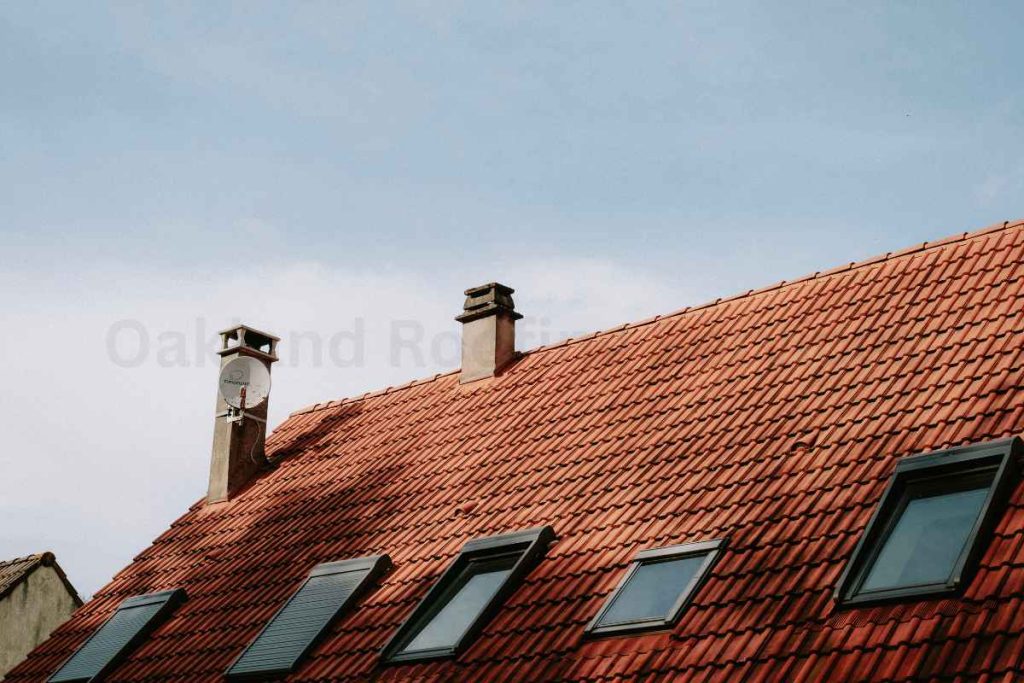
When your roof starts failing in Oakland, you don’t need a corporate roofing company flying in from three counties away. You need someone who understands why Rockridge Craftsmans develop skip-sheathing problems, why Montclair homes require Class A fire assemblies, and why the flats near Lake Merritt corrode faster than inland neighborhoods. That’s what Oakland roofing actually is — not one-size-fits-all. It’s neighborhood-specific, climate-specific, and fault-aware.
We are a licensed California C-39 roofing contractor, fully insured, and we work with the Oakland Planning & Building Department on permits every week. We’ve replaced roofs on 1912 Craftsmans in Rockridge, installed Class A fire assemblies in Montclair, tarped emergency leaks in the flats, and coordinated HOA approvals for multi-family buildings across downtown. This page is what we’d tell you if you called us right now.
Why Oakland Roofing Is Different From Everywhere Else
Oakland isn’t one climate or one housing type. It’s three distinct roofing worlds stacked on top of each other.
The Fog Belt — Lower Rockridge, Temescal & Piedmont Avenue (94609, 94610, 94618)
Cool, persistent moisture, shade from canopy. Moss and algae are your constant problem. The housing is dense pre-war Craftsman and period revival, often with skip-sheathing underneath the original shingles and multiple layers of roofing accumulated since 1910. Your roof fails not from heat or UV, but from moisture penetration and flashing pulling away as the house settles.
The Inland Hills — Montclair, Skyline & Redwood Heights (94605, 94611)
Warmer, drier summers. More intense UV exposure. High wildland-urban interface (WUI) with mature canopy creating fuel load. Wind exposure at elevation. Fire risk is real — the 1991 Oakland Hills firestorm burned roughly 3,000 homes and killed 25 people in a few hours. Building code now requires Class A fire assemblies in high-severity zones. Your roof isn’t just a roof; it’s a fire barrier. Ember-resistant vents, enclosed eaves, and noncombustible gutters aren’t optional upgrades here. They’re code.
The Flats & Waterfront — Downtown, Lake Merritt, East Oakland & the Estuary (94601, 94603, 94607, 94612)
Salt-air exposure from the bay. A large flat and low-slope roofing inventory — old tar-and-gravel, modified bitumen, now TPO. Standing water problems. Corroded metal from salt spray. Aging commercial stock that’s been patched, coated, and re-coated since the 1970s. And the Hayward Fault runs right under this area; slow ground movement causes flashing to separate and leaks to recur.
Most roofing companies don’t talk about this. They show up with a one-line estimate and leave. We price Oakland roofs differently because the work is actually different.
What We See on Oakland Roofs (And What Your Estimate Should Reflect)
Pre-War Homes in Rockridge & Temescal
Your 1912 or 1924 bungalow probably has skip-sheathing under that roof — wooden strips (1×4) spaced about 6 inches apart instead of solid plywood. That was intentional in 1912. It saved materials and allowed air to flow. Today it means:
- At tear-off, we find multiple layers of prior roofing (sometimes 3–4 layers deep)
- We find wood rot in the skip boards themselves — they don’t last 110 years
- We find original tar paper that’s turned to dust
- We find rafters or purlins that need replacement or sistering (structural repair)
An honest estimate for a Rockridge roof includes the cost of new plywood sheathing over the skip boards, not just “tear off and replace.” A cheap bid that doesn’t mention this discovers it mid-project and hits you with a 3,000–8,000 change order. We price it up front.
The valley flashing on your roof probably sits in exposed metal (copper, if original). Modern roofers love to seal this with tar and sealant. We let metal valleys breathe the way the original design intended. On pre-war homes, that detail matters. The chimney flashing — if original — is set into the brick mortar joints, not glued to the brick with sealant. We can match that if preservation matters to you. If you just want it sealed and done, we do that too. But we tell you the option.
Montclair & the Oakland Hills — Where the Roof Is a Fire Barrier
If you’re at elevation in the hills, your roof isn’t just shelter — it’s fire defense. A Class A assembly means the roof doesn’t ignite from wind-blown embers, and embers don’t find their way into the attic. That means:
- Material rated Class A: concrete tile, clay tile, standing seam metal, or premium designer shingle with a Class A label (not just any architectural shingle)
- Ember-resistant vents — not 1980s louver vents that let embers in; look for vents designed and tested to block ember intrusion
- Enclosed eaves — no open gaps for embers to enter
- Metal gutters (aluminum or galvanized steel), not vinyl or wood
- Clear valleys — no pine needles or debris for embers to lodge in
After the 1991 firestorm, this isn’t theoretical. Homeowners in Montclair know the risk, and your insurance company will ask about fire resistance — across the hills, carriers are flagging aging wood shake and worn composition roofs at renewal. We handle fire assembly work regularly, and we document the new system’s fire rating for your insurer as part of the job.
Flats, Downtown & Lake Merritt
Flat and low-slope roofing is a different trade entirely. The problem isn’t usually the membrane — it’s usually the drain.
Walk onto any older flat roof in downtown Oakland and you’ll find ponding water around clogged drains. The roof itself might be fine. The drain is blocked by years of roof debris. Water sits. The membrane fails from UV and standing-water pressure, the insulation underneath absorbs moisture, and the building gets mold and rot.
We don’t start with “replace the membrane.” We trace every drain, clear blockages, test slope, and check for low spots. Only after that do we decide: restore it with a coating, or replace it? Material choice in the flats matters differently than in the hills — TPO is our standard for flat roofs: heat-welded seams, reflective surface, long-term durability. In high-salt-exposure areas near the estuary, we spec aluminum or stainless fasteners, not galvanized — galvanized corrodes in salt air within about 10 years.
And near the Hayward Fault zone, the building itself shifts a little every year. Flashing joints separate, seams pull apart, and some leaks come back because the building is moving — not because the repair was bad. We inspect for fault movement and design for it (more on this below).
Neighborhoods We Serve & What’s Common There
| ZIP Code | Primary Neighborhoods | Housing Type | Roofing Focus |
|---|---|---|---|
| 94603 | Flats, industrial corridor | Warehouse, multi-family, commercial | Flat roof, TPO, seismic |
| 94607 | West Oakland, industrial | Warehouse, industrial, some residential | Flat roof, salt air, drainage |
| 94609 | Temescal, Lake Merritt area | Craftsman, period revival, multi-family | Historic detail, HOA, drainage |
| 94610 | Lake Merritt, Adams Point, Piedmont Ave | 1920s–1970s mix, architectural detail | Period detail, corrosion-resistant, hillside |
| 94611 | Montclair, Piedmont Avenue, Adams Point | Hillside, mid-century, early-century | Class A assembly, fire zone, elevation |
| 94612 | Downtown, Uptown Oakland | Commercial, mixed-use, office | Flat roof, TPO, certification |
| 94613 | Downtown, Jack London Square | Commercial, mixed-use | Flat roof, commercial spec |
| 94615 | Lake Merritt waterfront | Residential, some commercial | Salt air, corrosion-resistant |
| 94618 | Rockridge, Piedmont Ave | Craftsman, 1900s–1920s, dense | Skip-sheathing, period detail, moisture |
Beyond Oakland, Oakland homeowners reach us from across the East Bay and the wider area we serve — including Marin County, Daly City, and San Carlos — and we cover the San Pablo Avenue corridor end to end.
Our Oakland Roofing Services
Emergency Roof Repair (24/7)
A leak during a winter rain event in Oakland isn’t hypothetical — it happens November through March, and sometimes in atmospheric rivers outside that window. Our emergency process:
- Immediate assessment — photo documentation and a verbal report of damage extent
- Temporary fix — tarping the leaking sections, propped so water runs off and secured against wind
- Insurance documentation — photos and written notes for your claim adjuster
- Permanent repair scheduled — usually within days, once weather clears
We don’t upsell emergency calls, and we don’t insist you need a full roof when a raccoon chewed through a vent pipe. We tell you what we actually see. For active leaks, start with our roof leak repair process — and if water is coming in after a storm right now, our guide to roof leaks after rain covers the first 24 hours. Call +18338046249 for emergencies.
Roof Inspection (Pre-Insurance, Pre-Refinance, Pre-Sale)
Oakland lenders and insurance companies scrutinize roofs before refinancing or renewing coverage. A home inspection says “roof is 20 years old.” A professional roof inspection tells the lender exactly what condition it’s in. We provide:
- Written report with photos (insurance-friendly language)
- Age assessment and material identification (shingle, tile, metal, torch-down)
- Condition rating (excellent, good, fair, poor)
- Structural soundness check (soft spots, visible wood rot)
- Flashing and vent inspection
- Gutter and drainage assessment
- Roof certification for refinance or insurance purposes
Every inspection produces a detailed written report with photos — the kind lenders and insurers actually accept — ready within 2–3 business days.
Repair vs. Replacement Assessment
Not every leaking roof needs replacement. A 15-year-old shingle roof with one missing shingle and a loose flashing doesn’t need a $20,000 replacement — it needs a few hundred dollars of roof repair. Here’s how we think about it:
- Repair makes sense if the roof is under 15 years old, the damage is isolated, and the underlying structure is sound
- Replacement makes sense if the roof is 20+ years old, there’s widespread granule loss or deterioration, or leaks keep recurring in the same spot
- Coating (flat roofs) makes sense if the membrane is sound but aging, there’s no wet insulation, and you want 10–15 more years before replacement
We’ll tell you which path we’d choose for our own house.
Roof Replacement (Residential & Commercial)
From a 1,200 sq ft Rockridge bungalow to a 4,000+ sq ft downtown commercial building, we handle material selection, permit coordination with the Oakland Planning & Building Department, structural assessment, and installation. The full process is detailed on our roof replacement page. Material options we work with:
- Architectural & designer shingles — 25–50 year lifespan depending on grade; Class A available for fire zones
- Standing seam metal — 40–70 year lifespan; fire-resistant; colors to match period homes or modern aesthetics
- Concrete tile — 50+ year lifespan; fire-resistant; weight considerations for older framing
- Clay tile — 75+ year lifespan; period-appropriate for certain Oakland homes — see our tile roofing guide
- TPO (flat roofs) — 20–30 year lifespan; heat-welded seams; reflective, energy-efficient surface
- Modified bitumen — 20–25 year lifespan; torch-applied or cold-applied; common on older commercial buildings
- Silicone coating — 10–15 year lifespan; restoration option for sound flat roofs
We don’t push expensive material if your home and budget don’t need it — and we don’t cheap out if you’re in a fire zone and need a Class A assembly. Our roofing materials guide compares every option in one place.
Storm Damage & Insurance Claims Coordination
After a winter storm — high winds, heavy rain, fallen trees — we handle the assessment and the insurance coordination:
- Damage documentation — high-resolution photos, written description, measurements
- Estimate preparation — detailed, itemized scope of work
- Adjuster coordination — scheduling, walking the roof with the adjuster, answering technical questions
- Supplement negotiation — if the adjuster underpays due to depreciation or missed damage, we document and request a supplement
- Repair scheduling — once the claim is approved, your job gets priority
We also tell you upfront if the damage is cosmetic rather than structural — if it is, there’s no point filing a claim your deductible would eat anyway.
Multi-Family & HOA Roof Projects
If you’re a property manager or HOA board weighing a roof replacement for a 6-unit apartment building or a condo complex, the coordination is different from a single-family home. We handle HOA board presentations (materials, costs, timelines, disruption), tenant communication and notice requirements, phased scheduling to minimize disruption, financing and reserve-fund coordination, and permitting for multi-unit buildings. This is the same discipline we run on our commercial roofing work — including commercial roof repair for occupied buildings that can’t afford downtime
Flat Roof Maintenance & Restoration
A 25-year-old tar-and-gravel flat roof on a downtown commercial building doesn’t automatically need replacement. If the insulation is dry and the membrane is intact, a silicone restoration can add 10–15 years of life for a fraction of replacement cost. We start by:
- Clearing all drains — the single biggest reason flat roofs fail is clogged drains
- Testing for wet insulation — moisture scanning tells us if water has absorbed into the insulation (if so, replacement is the only real solution)
- Inspecting the membrane — splits, soft spots, lifted seams, pitch pan failures
- Proposing the right solution — coating, TPO replacement, or drainage repair plus coating
We don’t sell you a coating if the insulation is wet. Coating a wet roof just postpones the problem. Ongoing care is available through our roof maintenance programs.
How Oakland Roofing Costs Break Down (2026)
We get asked “How much is a roof?” three times a day. Here’s what we actually see in Oakland. Installed cost per square foot, by material — the same ranges we publish across our service area:
| Material | Typical installed cost |
| Architectural shingle | 6.50–10 per sq ft |
| Standing seam metal | 12–20 per sq ft |
| Concrete tile | 12–20 per sq ft |
| Clay tile | 15–25 per sq ft |
| Flat roof systems (torch down / TPO) | 7–13 per sq ft |
Most Oakland single-family replacements land between $15,000 and $40,000. What drives the price up: multiple existing layers (tear-off labor), skip-sheathing or wood rot requiring replacement, structural repairs discovered at tear-off, steep pitch or complex geometry, fire-zone requirements, and flashing complexity (multiple valleys, chimneys, skylights). What’s not in a standard quote until it’s confirmed: deck rot hidden under the old roof (nobody honest can price what they can’t see yet), and gutter replacement if yours are at end of life.
A real 2026 example: a Rockridge Craftsman with a 1,200 sq ft roof — tear-off, skip-sheathing assessment (minor damage, one section reinforced), new underlayment, architectural shingles, permit and inspection: $13,500. Not $10,000 (that bid was missing scope). Not $20,000 (that estimate included structural work the house didn’t need).
The Hayward Fault & How It Affects Your Oakland Roof
The Hayward Fault runs right through Oakland — from Richmond and Berkeley down through Fremont. It’s not a sudden, violent fault like the San Andreas. The Hayward moves slowly and continuously; your house shifts a few millimeters every year.
Why it matters for roofing: slow movement causes flashing joints to separate and seams to pull apart. A roof leak that recurs in the same spot, year after year, sometimes isn’t a roofing failure — it’s a building movement problem. We account for it by installing flexible flashing components where possible, using sealants that tolerate movement, and checking for recurring leak patterns. If you’re getting the same leak “fixed” twice a year, something else is going on — our leak detection process is built to separate workmanship problems from movement problems.
Oakland Roofing Permits & Regulations
Every roof replacement in Oakland requires a building permit from the Oakland Planning & Building Department. Small repairs — a few shingles, a minor flashing fix — generally don’t; full replacements and structural work always do. We handle all permitting. What the process looks like:
- We submit the permit application to the Planning & Building Department
- The city reviews and asks for clarification if needed
- The permit is issued and we schedule the work
- A city inspector checks the job (typically during or after tear-off, before final material is closed in)
- A final inspection after completion, and a certificate of completion is issued
Timelines run about 1–3 weeks from application to issued permit depending on city workload; the work itself takes 3–7 days depending on roof size. Permit fees are based on the project’s valuation, and permit coordination is included in our quote — some competitors charge it separately and don’t mention it until you sign. Fire zone note: if you’re in a high-fire-severity zone (Montclair, the Oakland Hills), the inspector specifically checks for Class A materials, ember-resistant vents, and enclosed eaves. We make sure everything is to code before inspection day.
Common Oakland Roof Problems & Real Solutions
Moss & Algae Growth
Problem: Dark streaks or thick moss on north-facing or shaded slopes, especially in fog-belt neighborhoods. Why: moisture (fog), shade, and organic growth on the granules. Solution: preventative treatment (zinc or copper strips under the top course of shingles), a soft-wash rinse — never pressure washing, which strips granules — and algae-resistant shingles at replacement. Our moss treatment guide covers the full routine. Cost: 200–400 preventative treatment.
Ponding Water on Flat Roofs
Problem: Standing water on a flat roof, especially after rain. Why: clogged drains, low spots in the deck, inadequate slope. Solution: clear the drains, assess slope, re-slope low areas or add supplemental drains — our ponding water guide explains the diagnosis. If the insulation is wet, replacement is necessary. Cost: drain clearing 300–600; re-sloping or added drains 1,500–4,000.
Roof Leaks in Valleys
Problem: Water intrusion along the valley where two slopes meet, especially in heavy rain. Why: separated flashing, lifted shingles, debris damming the valley. Solution: clear debris, verify flashing integrity, reseal or replace the flashing. On pre-war homes we also check the skip-sheathing under the valley for rot. Cost: 350–800 repair; full valley flashing replacement 1,000–2,500.
Multiple Roof Layers (Older Homes)
Problem: Tear-off uncovers 2–4 layers of prior roofing. Why: the historical habit of roofing over the old roof instead of tearing off. Solution: full tear-off to bare deck, sheathing assessment, damaged boards replaced, new single-layer installation. Cost: adds 2,000–5,000 (extra tear-off labor and wood replacement).
Skip-Sheathing Damage (Pre-War Homes)
Problem: The original 1×4 skip boards have wood rot or fastener damage. Why: 100+ years of moisture cycling. Solution: replace damaged boards, sister in new lumber, or infill with plywood for a solid modern deck — the same judgment call behind our dry rot repair work. Cost: 2,000–6,000 depending on extent.
Roof Rats & Pest Entry Points
Problem: Rats or squirrels reaching the attic through vents, pipe gaps, and missing soffit covers. Why: deteriorated vent boots and unsealed gaps. Solution: proper vent boots with seals, screened soffits, sealed pipe penetrations, gutter guards. Cost: 400–1,200 for comprehensive sealing and screening.
Frequently Asked Questions
Get an Oakland Roof Inspection or Estimate
Oakland roofing isn’t generic. Your Rockridge roof isn’t your neighbor’s Montclair roof isn’t the downtown commercial flat roof. We show up, we listen, we don’t oversell, and we do the work right.
- Phone: +18338046249 — including 24/7 emergency calls
- Licensed & insured: California C-39 roofing contractor
- Hours: Monday–Saturday, with emergency coverage around the clock
What to expect when you call: tell us the issue (leak, inspection, replacement), your neighborhood, and how urgent it is. We schedule the inspection within 3–5 business days. The inspector arrives on time, documents the roof with photos, and your itemized estimate arrives within 7–10 days. Once you approve it, we schedule the work around your availability. If you’re reading this because you found a leak — or because you’re planning ahead — the inspection is the right first step either way.