
Roof Waterproofing San Francisco | Stop Leaks
Roof waterproofing in San Francisco — parapet walls, flat roof decks, roof-to-wall transitions. Stop the leak before the next storm.
Roof Waterproofing in San Francisco — Stopping Leaks Before the Next Storm Finds Them
There’s a very specific search pattern that happens in this city every single winter, and if you’re reading this in the middle of an atmospheric river with a bucket somewhere nearby, you’re part of it. The rain shows up, sustained and heavy for a day or two, and suddenly every small weakness a roof’s been quietly carrying for years gets found all at once.
That’s not bad luck. Light, ordinary rain genuinely doesn’t test a roof the way an atmospheric river does. A hairline gap at a parapet wall, a slightly undersized drain, a roof-to-wall transition that’s been marginal for a while — none of that shows up during a normal drizzle. It shows up when real volume hits it for eighteen hours straight.
This page is about waterproofing specifically, which is a slightly different conversation than repair. Repair fixes something that’s already actively leaking. Waterproofing is about the broader system — the roof deck, the parapet walls, the transitions — that either holds during the next storm or doesn’t.
If you’ve had a leak trace back to one of these areas before, or you want to get ahead of it before it happens, this is what actually matters.
Roof Waterproofing Contractors San Francisco Homeowners Trust
Waterproofing isn’t one product or one process. It’s matched to where the moisture’s getting in, and that’s rarely obvious from the ground.
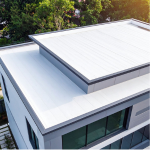
Silicone Coating Roof Systems
A liquid-applied silicone coating extends the life of an existing flat roof without a full tear-off. Works well on a membrane that’s sound but showing UV wear — cracking, fading, minor surface damage.
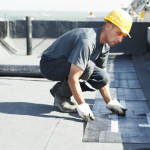
Roof Waterproofing Contractors for Flat Roofs
We waterproof roof decks, parapet walls, and roof-to-wall transitions — the spots where leaks actually start, even when the field of the roof looks completely fine from up top.
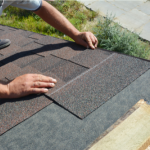
Best Roof Waterproofing Services in San Francisco
The right service depends on the building — a coating for a roof that’s aging but sound, a full membrane repair for one that isn’t, or targeted sealing at the edges and penetrations where most leaks originate anyway.
Best Roof Waterproofing Services Near Me — Bay Area Coverage
Waterproofing isn’t limited to roofs, either — a lot of San Francisco’s older buildings need it at the foundation and exterior walls too, especially anything built into a hillside.
Foundation Waterproofing San Francisco
Basements, crawl spaces, and below-grade walls get sealed against groundwater intrusion — common in a lot of the city’s older housing stock, especially homes built on a slope.
Exterior & Below-Slab Waterproofing Bay Area
Exterior wall sealing, below-slab waterproofing, and drainage correction — services we handle across the wider Bay Area, not just within city limits.
Why Waterproofing Matters More in a Fog-Heavy City
Most of the country deals with rain as a seasonal event — wet months, dry months, roofs that get a real chance to dry out completely between storms. San Francisco doesn’t really work that way, and it changes what “waterproof” actually needs to mean here.
Persistent Moisture vs Seasonal Rain — Different Problems
A roof in a climate with clear wet and dry seasons gets real recovery time. Materials dry out fully, minor moisture that got in during a storm evaporates before it can do lasting damage, and the whole system essentially resets between events.
San Francisco’s fog belt doesn’t offer that reset. Karl the Fog keeps surfaces persistently damp for large stretches of the year in neighborhoods like the Outer Sunset and Outer Richmond, which means any small vulnerability doesn’t get a chance to dry out and self-correct the way it might somewhere with a genuine dry season. Waterproofing here has to account for near-constant low-level moisture exposure, not just occasional storm events.
Parapet Wall Waterproofing — The Most Neglected System
If you’ve got a flat or low-slope roof section — extremely common across Sunset District additions, Mission District rowhouses, and plenty of SoMa properties — the parapet wall running around the perimeter is very often where water actually gets in, even when the field of the roof itself looks completely fine.
Parapet walls take a beating that’s easy to overlook because it’s mostly happening where nobody’s looking. Cap flashing degrades, counter-flashing behind it can crack or separate, and on older buildings, decades of San Francisco’s seismic activity — small tremors as much as any major event — can gradually open hairline cracks in the wall itself. Water finds every one of those over time.
Silicone Coating Systems for Flat Roofs
One of the most cost-effective waterproofing tools we have, and one that’s genuinely underused by homeowners who don’t realize it’s an option short of full replacement.
When Coating Is the Right Answer vs Replacement
Silicone coating is a liquid-applied system sprayed or rolled directly over an existing flat roof membrane, creating a seamless, monolithic waterproof layer on top of what’s already there. It’s not a fix for every roof — if the underlying membrane has significant structural failure, active leaks in multiple locations, or the decking beneath is already compromised, coating is patching over a problem that needs a real replacement instead.
But for a roof that’s structurally sound and simply showing its age — minor surface wear, early UV degradation, the kind of thing that’s not actively failing yet but clearly heading that direction — coating can add meaningful years of protection at a fraction of full replacement cost. We’ll tell you honestly which category your roof falls into before recommending either path.
Application Process and Thickness Requirements
Getting this right matters as much as the material itself. The existing surface has to be properly cleaned and prepped — any dirt, debris, or existing moisture trapped under the coating undermines the whole system before it’s even cured. Coating gets applied at a specific mil thickness, and going too thin to save material cost is exactly how a coating job fails to deliver the protection it’s supposed to.
We apply to manufacturer-specified thickness every time, and we’ll show you documentation of that, not just tell you to trust us on it.
Parapet Wall and Roof-to-Wall Transition Waterproofing
This is genuinely some of the most important, least glamorous work we do, because it’s rarely the first thing anyone thinks to check.
Where the Water Actually Gets In
Roof-to-wall transitions — anywhere a flat or low-slope roof meets a vertical wall surface that isn’t a simple parapet, like where an addition meets the original structure — are chronic weak points in San Francisco’s older housing stock specifically. These transitions were often built decades ago with flashing details that were adequate for their time but haven’t held up against this many years of the city’s specific moisture exposure.
We waterproof these transitions with properly integrated flashing and membrane work that ties the horizontal roof surface and the vertical wall surface together as one continuous waterproof system, rather than relying on caulk or sealant alone, which degrades and needs constant reapplication.
Deck and Balcony Waterproofing
A slightly different but related situation that comes up constantly in San Francisco’s denser neighborhoods, particularly where outdoor decks sit directly above living space.
Why This Fails Differently Than a Roof
A deck waterproofing system has to handle foot traffic in addition to weather exposure, which changes what materials and methods actually hold up. A membrane that’s perfectly fine under a flat roof’s gravel ballast can wear through fast under regular foot traffic on an exposed deck surface.
If you’ve got a deck sitting over a garage, a ground-floor unit, or any occupied space below, and you’ve noticed staining or moisture on the ceiling underneath, that’s very often a deck waterproofing failure rather than a roof issue in the traditional sense — worth mentioning specifically when you call, since it changes what we’re actually looking for.
Roof Waterproofing Services — Process
Professional Roof Waterproofing Process
Starts with an inspection to find where moisture’s actually entering, not just where it’s showing up inside. Then surface prep, repair of any damaged areas, and application of the right waterproofing system for that specific spot.
DIY Roof Waterproofing vs Professional Services
DIY sealants can patch a small, obvious leak temporarily. They don’t fix underlying membrane damage or drainage issues, and a bad DIY seal can actually trap moisture instead of keeping it out. Worth knowing before reaching for a tube of caulk.