Commercial Roofing San Francisco — New Installation & Repair Contractors
Commercial roofing contractor san francisco — new installs, repairs, flat roof systems & waterproofing. Licensed, insured.
Choosing a Commercial Roofing Contractor
san francisco commercial roofing isn’t the same trade as residential — a leak over someone’s living room is a bad night, but a leak over a retail floor or forty apartment units means a property manager’s phone blowing up and a lease clause nobody read until now. We handle commercial roofing San Francisco businesses actually rely on — installations, repairs, flat roofs, waterproofing — across the city and into the Bay Area.
san francisco commercial roofing Businesses Trust
Here’s the thing about commercial roofing contractor san francisco— the job almost never happens in a vacuum. There’s a business running underneath, or tenants who need to stay dry, or a lease agreement somewhere that says the roof has to be handled a certain way by a certain date. So the actual roofing work is maybe sixty percent of what we do. The rest is logistics, honestly. Scheduling around operating hours, protecting inventory, keeping noise down during a torch-down install when there’s a nail salon two floors below. We’ve learned that the hard way, a few times — including one job where we had to reschedule an entire membrane pour because a wedding was happening in the courtyard underneath. You adapt.
Commercial Roofing (New Installation)
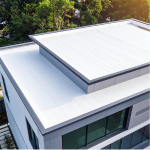
Ground-up systems for new commercial builds, additions, or buildings getting a full roof system swap. We size it to the building’s actual use — a warehouse doesn’t need the same roof as a mixed-use retail-over-residential building, and treating them the same is how you end up with premature failures five or six years in, right when everyone assumed the roof was still “new.” Structural load, drainage slope, insulation requirements, rooftop equipment placement — all of that gets planned before a single roll of material shows up on site.
Commercial Roof Repair
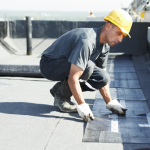
This is where most of our commercial calls actually start. A leak, a membrane puncture, flashing that’s pulled loose around an HVAC curb. We triage fast — commercial leaks tend to get expensive quickly once water’s tracking sideways under a membrane and showing up somewhere completely different from where it actually entered, so speed matters here, not just as a sales pitch. We’ve traced leaks that showed up on a ceiling forty feet from the actual failure point. It happens more than you’d think on a large flat roof.
Commercial Flat Roofing Systems
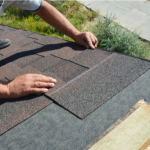
Most commercial buildings in this city run flat or low-slope, full stop. TPO, modified bitumen, built-up systems — we install and maintain all three, and honestly the right one depends less on personal preference and more on the building’s traffic, drainage, rooftop equipment load, and budget. A roof that gets walked on daily by maintenance staff needs a different wear profile than one nobody touches except during inspections.
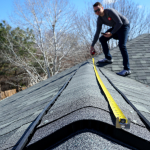
Retail & Commercial Business Reroof Contractor
Storefronts are their own animal. You can’t just shut a retail space down for two weeks while a crew works overhead. We stage the work, protect the interior, section off work zones, and — this part gets skipped by a lot of contractors — actually communicate with the business owner about what each day of the job is going to look like from the sidewalk. Nobody wants to explain to a customer why there’s a torch smell coming from the ceiling.
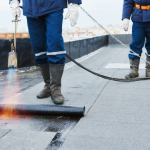
Apartment Complex & Multi-Unit Roofing
HOA boards, property managers, multi-unit owners — we’ve done enough of these to know the paperwork side matters almost as much as the roofing side. Getting sign-off from a board, coordinating access to units, working around residents who didn’t ask for construction noise starting at 8 a.m. on a Tuesday. It’s a process, and honestly it’s a big part of why some contractors avoid multi-unit work altogether. We’re used to running it, start to finish, including the resident notice letters if the property manager wants us to draft those too.
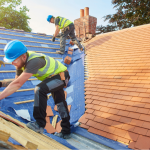
Commercial Roofing Contractor San Francisco
Licensed, insured, and we carry the coverage commercial property owners actually need to see before signing off on a job — not just a certificate that looks good on paper but doesn’t actually cover the scope of work being done. Ask to see it. Any legitimate commercial roofing contractor san francisco businesses should be working with will hand it over without hesitation.
san francisco commercial roofing & Systems
Material choice on a commercial roof isn’t really a style decision the way it can be on a house. It’s math — square footage, expected foot traffic, HVAC penetrations, budget, and how long the ownership plans to hold the building before selling or refinancing. A ten-year hold and a thirty-year hold call for genuinely different material strategies. We’ll walk you through it honestly instead of just pushing whatever’s easiest or most profitable for us to install.
TPO Commercial Roofing
Reflective, energy-efficient, and genuinely the most common choice we’re installing on commercial buildings right now. Lower cooling costs matter a lot more when you’re talking about a 10,000 square foot roof instead of a house — the utility savings actually show up on a monthly statement in a way that’s hard to ignore. Heat-welded seams, good UV resistance, and it’s become something of an industry default for a reason.
Commercial Roof Waterproofing
Parapet walls, roof-to-wall transitions, deck seams — commercial waterproofing usually isn’t about the field of the roof at all. It’s about the edges and the penetrations, which is where almost every commercial leak we’ve chased down actually started. A roof can look completely intact from the middle and still be actively failing at every rooftop unit curb and parapet cap around its perimeter.
Modified Bitumen Torch Down Roofing
Still a workhorse system, and for a lot of older commercial buildings in San Francisco, it’s what’s already up there — which sometimes makes a like-for-like reroof the more practical call instead of switching systems entirely and dealing with compatibility issues at the transitions. Multi-layer, proven, and it handles the marine layer moisture this city throws at every roof, residential or commercial, better than people assume.
san francisco commercial roofing & Systems
Some commercial jobs just don’t fit a standard template — unusual roof geometry, mixed-use buildings, older structures that were never really built to current code in the first place. We scope those individually instead of forcing a standard package onto a building that doesn’t need one, or worse, onto one that actually needs structural reinforcement before any roofing work even starts.
Types of Commercial Roofing Systems — Compared
Commercial owners asking “what are my options?” usually mean this table. These are the systems you will find on Bay Area commercial buildings, and what each is honestly best at:
| System | Best for | Typical lifespan |
| TPO single-ply | Large flat/low-slope roofs, energy efficiency | 20–25 years |
| Modified bitumen (torch down) | Smaller roofs, heavy foot traffic, detail-heavy roofs | 20–30 years |
| Built-up roofing (BUR) | Very large roofs, maximum redundancy | 25–40 years |
| Standing seam metal | Sloped commercial roofs, longest service life | 40+ years |
| Silicone coating (restoration) | Sound existing roofs — extends life without tear-off | Adds 10–20 years |
| SPF spray foam | Irregular shapes, seamless insulation + waterproofing | 20+ years with recoating |
| EPDM (rubber) | Simple large roofs; less common in SF’s fog belt | 20–25 years |
Our commercial roofing services cover the full cycle for each system: new installation, repair, preventive maintenance, restoration coating, and planned replacement — so the recommendation you get is based on your roof, not on the one system a contractor happens to sell.
commercial roofing san francisco bay area
San Francisco commercial roofing is the core of what we do, but property portfolios rarely stop at city limits. If you manage buildings across a few different Bay Area cities, that’s fine — we don’t make you find a separate contractor for each one, coordinate three different bids, and hope they’re all working off the same standards.
Learn More, Central Waterfront Roofing Services San Francisco
Commercial Roofing Bay Area
Multi-property owners and management companies working across the wider Bay Area — same crew, same standards, same documentation, no matter which city the building’s actually sitting in. One point of contact instead of a different vendor per address.
San Rafael & Healdsburg Commercial Roofing
North Bay commercial properties come with their own weather profile — more direct sun exposure inland, less of the marine fog layer you get right in the city, more thermal cycling on the membrane. Material choice and maintenance schedules shift a bit accordingly.
Industrial Re-Roofing San Francisco
Warehouses, light industrial buildings, distribution space — bigger roof areas, usually simpler geometry, but the drainage planning has to be right or you’re dealing with ponding water across a much larger surface than a typical retail roof would ever see. Industrial re-roofing also tends to involve more rooftop equipment coordination — exhaust systems, skylights, sometimes solar arrays that need to be worked around, not just over.
San Francisco Commercial Re-Roofing
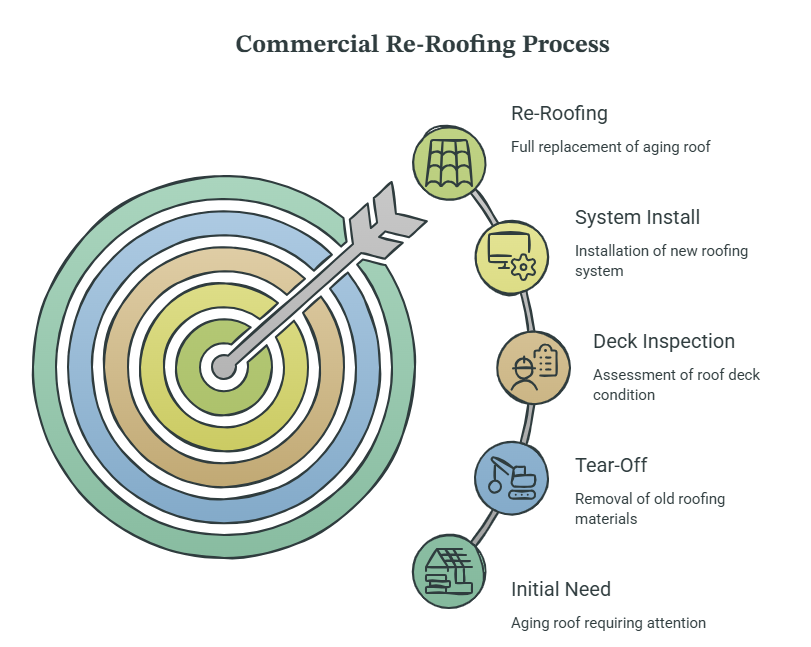
When it’s time to fully replace an aging commercial system instead of patching it again for the third year running, we handle the tear-off, deck inspection, and full system install — and we’ll tell you straight if a repair or a coating system could still buy another few years instead of committing to a full replacement budget this cycle.
Commercial Roofing Services in Pleasanton, San Carlos & Sausalito
Smaller commercial districts, but the same standards apply — proper permitting, licensed work, and a crew that actually shows up when scheduled. That last part matters more than people expect, honestly. We’ve picked up more than one job from a property manager who just wanted someone reliable after a previous contractor no-showed twice.
commercial roofing san francisco Services in Burlingame & San Ramon
Office parks and retail strips in this corridor tend to need faster turnarounds — tenants, leases, and business hours all factor into scheduling here more than almost anywhere else we work. We plan around that from the first site visit, not after the job’s already underway.
Roofing Company Serving Stanford & Palo Alto Businesses
Institutional and commercial properties around the Peninsula, handled with the same permitting and inspection standards we apply everywhere else. No shortcuts because the zip code changed, and no different pricing structure just because the buildings look a little nicer.
Commercial Roofing Services Across the Bay Area
While we’re based in San Francisco, we provide commercial roofing services across the greater Bay Area, including Oakland, San Mateo, Daly City, South San Francisco, and the Peninsula. Bay Area commercial properties face a wide range of roofing demands — from flat-roofed warehouses in Dogpatch and Bayview to office buildings in the Financial District to industrial facilities along the East Bay corridor. Whatever your building type, our team understands how local climate conditions, building codes, and commercial roofing systems — TPO, EPDM, modified bitumen, and spray foam — perform across different Bay Area microclimates, from the fog-heavy coastline to the warmer inland valleys.
Learn More, Retail Building Roof Repair in San Francisco
Commercial Roofing Services Across the Bay Area
Commercial roofing has no single price, because no two commercial roofs are the same size. What we can give you honestly is the per-square-foot range for each system, and the math for your building’s size. Prices below are installed ranges for the San Francisco Bay Area. Tear-off, insulation, drainage work, and permits sit on top of the system rate and vary by building.
| System | Typical Installed Cost |
|---|---|
| TPO single-ply | $7 – $11 per sq ft |
| Modified bitumen (torch down) | $8 – $13 per sq ft |
| Silicone coating (restoration) | $3.50 – $6 per sq ft |
| Standing seam metal | $12 – $20 per sq ft |
| Flat roof repair | $350 – $2,500 |
orked example, so you can sanity-check any quote: a 10,000 sq ft flat roof in TPO at $7–$11 per sq ft is $70,000–$110,000 for the membrane system itself, before tear-off, insulation upgrades, drainage corrections, and permit costs. That is arithmetic on the rates above, not a quote for your building — a roof with heavy rooftop equipment, poor drainage, or two layers to tear off lands higher.
What moves a commercial quote most: roof size first, then system choice, then tear-off layers, then insulation and drainage corrections, then rooftop equipment and flashing count, then access and staging. A warehouse with a simple rectangle and one drain is a different job from a mixed-use building with twelve HVAC curbs and a parapet on every side, even at the same square footage. Any contractor who quotes a commercial roof without walking it is guessing.
Commercial Roof Leak Repair in San Francisco
Commercial leaks rarely show up where they start. Water tracks sideways under a membrane and stains a ceiling forty feet from the actual failure point, which is why commercial roof leak repair starts with tracing, not patching.
- Triage first. We find the entry point — a failed seam, a pulled flashing at an HVAC curb, a cracked parapet cap — and stop active water before it reaches inventory, tenants, or electrical systems.
- Then the permanent fix. Seam repair, flashing rebuild, or membrane section replacement, matched to the existing system so the repair does not become the next failure point.
- Then the cause. Ponding water, blocked drains, and foot traffic over unprotected membrane cause most repeat commercial leaks. A repair without a drainage or protection fix is a repair you will pay for twice.
If the leak is in a home rather than a commercial building, our roof leak repair guide covers the residential tracing process. For Bay Area commercial roof repair — San Francisco, Oakland, San Mateo, Daly City, and South San Francisco — the process above is the same, the scale is what changes.
Learn More, Commercial Roof Restoration vs Replacement in San Francisco
Commercial Roof Maintenance in San Francisco
A commercial roof is the largest single surface on most buildings, and it is the one nobody looks at until it leaks. A maintenance program is what keeps a 20-year roof from becoming a 12-year roof.
Recommended schedule: a full inspection twice a year — spring and fall — plus an inspection after any major storm. That is a recommendation, not a code requirement, but it matches how commercial membranes actually fail: slowly, at seams and flashing, between storms.
What a maintenance visit covers:
- Drains, scuppers, and gutters cleared — ponding water is the number-one killer of flat commercial roofs
- Seams, flashing, and parapet caps checked for lifting, cracking, and punctures
- Rooftop equipment curbs and penetrations inspected — HVAC work by other trades is a common leak source
- Foot-traffic wear and debris documented, with walkway pads recommended where maintenance staff cross the roof daily
- A written report with photos, so a property manager or HOA board has a record, not a verbal “looks fine”
Maintenance does not replace replacement. It tells you honestly how many years a roof has left, so a replacement becomes a planned capital expense instead of an emergency..
Commercial Roof Replacement vs Restoration: Which One Your Building Needs
t every aging commercial roof needs a tear-off. This is the decision that saves owners the most money when it is made honestly — and costs the most when it is made wrong.
- Restore with a silicone coating when the existing roof is sound, dry, and structurally solid, but aging. Coating at $3.50–$6 per sq ft extends the roof’s life without tear-off, and it is the right call for a roof with years of deck life left.
- Replace when the deck is wet or rotted, when there are multiple failed layers, or when ponding and drainage problems mean a coating would just trap water under a new surface.
- Refurbish in stages for large industrial or multi-building properties: worst roofs first, sound roofs coated, the rest on a maintenance schedule. That is how portfolios avoid replacing everything in the same budget year.
We will tell you straight if a coating can buy a few more years instead of committing you to a full replacement budget this cycle — that line is already on this page, and this section gives it the numbers behind it.
Industrial Roofing in San Francisco
Warehouses, light industrial buildings, distribution space, and factory roofs are a different job from retail. The geometry is usually simpler, but the scale punishes mistakes: a drainage error that ponds water on a 2,000 sq ft retail roof floods a 50,000 sq ft warehouse roof.
Industrial roofing work covers full re-roofing, industrial roof replacement, and industrial roofing refurbishment (coating and restoration where the deck allows it). The planning centers on drainage slope across large surfaces, rooftop equipment coordination — exhaust systems, skylights, and solar arrays worked around, not just over — and staging that keeps loading docks and operations running. Factory roof repairs follow the same triage as commercial leak repair, with the added rule that production space underneath cannot wait for a convenient schedule.
Office Building Roofing in San Francisco
Office buildings add one constraint retail and warehouse jobs do not: tenants working directly underneath, all day, every day. Office building roof repair and reroofing is planned around that fact — phased sections so only part of the roof is open at a time, noise and odor scheduled around business hours, tenant notices drafted with the property manager, and rooftop HVAC curbs flashed without shutting down climate control for the whole floor. The Financial District, SoMa, and Peninsula office parks all get the same treatment: the building keeps working while its roof gets replaced.
Commercial Roofing Permits and Title 24 in San Francisco
A commercial reroof in San Francisco needs a permit from the San Francisco Department of Building Inspection (DBI), and we pull it. Title 24 energy rules apply to commercial reroofs as well — cool-roof requirements depend on the system and the building, and they are confirmed against the current code for your specific job, not quoted from memory. Structural load matters on commercial jobs in a way it rarely does on houses: rooftop equipment, solar arrays, and added insulation all change the load calculation, and that calculation happens before installation, not after. Permit fees and review timelines vary by project scope — we confirm them for your building rather than publishing a number that will be wrong for the next building.
Emergency Commercial Roof Repair
When a commercial roof is actively leaking over inventory, tenants, or operations, the first job is stopping water, not selling a replacement. Emergency commercial roof repair means same-day triage where possible: locate the entry point, apply temporary waterproofing or tarping, and schedule the permanent repair once the roof can be worked on safely. Document everything with photos before and after — insurers and ownership both need the record.
Note for you (page par ye line mat daalna): tumhari list me “24 7 commercial roofing service” query hai, lekin main 24/7 ka dawa page par nahi likh raha kyun ke ye verify nahi hai ke tum round-the-clock service dete ho ya nahi. Agar dete ho to is section me ek line add kar do — “After-hours emergency response available” — aur agar nahi dete to ye section jaisa hai waisa hi theek hai. Ghalat availability claim se behtar hai koi claim na ho.
Which Commercial Roof System Is Right for Your Building?
This answers “what are my options” properly — system by building, not system by sales pitch.
- Large flat roof, energy costs matter (warehouse, distribution, big retail): TPO single-ply. Reflective, heat-welded seams, the current industry default for a reason.
- Smaller roof, heavy foot traffic, detail-heavy (restaurant, small commercial): Modified bitumen torch down. Multi-layer, proven, and it handles San Francisco’s marine-layer moisture well.
- Very large roof, maximum redundancy: Built-up roofing (BUR). More layers, more forgiveness, higher upfront cost.
- Sloped commercial roof, longest service life: Standing seam metal.
- Sound existing roof, budget for years not decades: Silicone coating restoration.
- Irregular shape, seamless insulation need: SPF spray foam, with recoating planned into its life.
- Simple large roof, fog-belt caution: EPDM rubber — workable, but less common in San Francisco’s fog belt, and the table above says so honestly.
Add this line to the existing waterproofing section: commercial roof waterproofing lives at the edges — parapet walls, roof-to-wall transitions, deck seams, and every curb penetration — and a coating used as a waterproofing layer only works on a dry, sound deck. Waterproofing over a wet deck traps the problem, it does not solve it.
New Commercial Roof Construction
Roofing for a new commercial building is planned with the general contractor before the deck goes on, not after. Drainage slope, insulation requirements, structural load for rooftop equipment and future solar, and penetration layout are all set at design stage — fixing drainage on a finished building costs multiples of designing it right. New flat roof commercial space, ground-up retail, and additions all follow the same sequence: deck, insulation, membrane, flashing, and a final inspection record the owner keeps for the life of the building.
Choosing a Commercial Roofing Contractor in San Francisco
The best commercial roofing contractor in San Francisco is not the cheapest quote — it is the one whose scope survives reading. Ask for: a CSLB C-39 license you verify yourself, insurance certificates that actually cover the scope of work, manufacturer training documentation for the system being installed, references for the same building type (retail, apartment, industrial — not just “commercial”), and a written scope with system, layers, flashing, drainage, permit handling, and maintenance terms. A contractor who will not hand over insurance documentation before signing is telling you everything you need to know.
NAICS Code 238160 – Roofing Contractors