
Residential Roofing San Francisco | Best Quote+1 628 221-4900
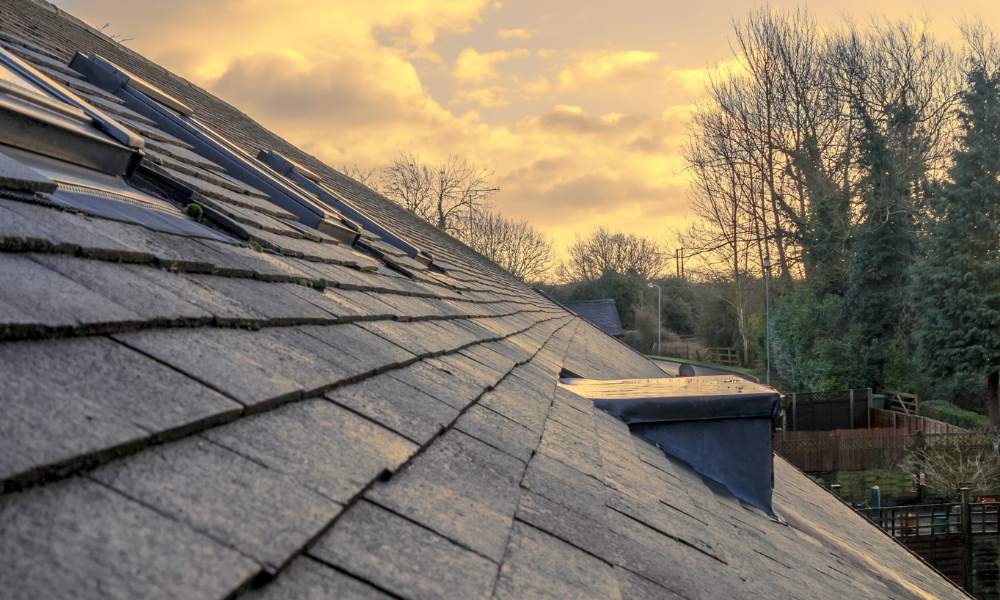
Residential Roofing in San Francisco — Built for Victorian Homes, Flat Roofs, and Fog
Your house probably isn’t like the house a national roofing chain trains its estimators on. If you’re in a Victorian rowhouse in Noe Valley with a turret and three different roof planes meeting at odd angles, or a mid-century flat-top out in the Sunset that’s been sitting under fog for sixty years, or a place with a flat rear addition tacked onto a pitched original roof — the standard playbook doesn’t really apply here.
We do residential roofing exclusively in San Francisco and the immediate Bay Area, which sounds like a small thing to specialize in until you actually try to quote a re-roof on a pre-1940 home without knowing what’s usually hiding under the third layer of shingles, or try to spec a flat roof system without accounting for the specific way Karl the Fog sits on a roof deck differently in the Outer Sunset than it does two miles away in Bernal Heights.
This page covers everything we do for homeowners — installation, replacement, repair, inspection, skylights, metal, tile — plus honest cost ranges, our actual process from first call to permit sign-off, and the problems we see most often in this city’s housing stock specifically. If you’re trying to figure out whether your roof needs a full replacement or just a repair, or what a project like yours actually costs in San Francisco right now, that’s what the rest of this page is for.
Why Residential Roofing in San Francisco Is Not Like Anywhere Else
Every city’s roofing market has its quirks, but San Francisco stacks three separate complications on top of each other — age of housing stock, climate, and permitting — in a way that most other cities only deal with one at a time.
Your Home Is Probably Pre-1940 — Here Is Why That Changes Everything
More than three-quarters of San Francisco’s residential buildings went up before 1940. That’s not a trivial fact, it’s the reason almost every residential roofing job here takes longer and costs more than the same square footage would in a newer suburb.
Pre-1940 homes in this city were mostly built with board sheathing — individual wood planks nailed across the rafters — rather than the plywood decking that’s been standard since the mid-20th century. Board sheathing behaves differently under fifty or eighty years of San Francisco’s persistent moisture. It’s more prone to gaps developing between boards, more prone to localized dry rot in spots that stayed damp longer than the rest of the roof, and it needs a more careful eye during tear-off than a modern plywood deck does.
We budget time for this on nearly every pre-1940 tear-off, because assuming the decking is fine and getting surprised by rot halfway through the job is how homeowners end up with unexpected costs and delayed timelines from contractors who didn’t plan for it.
Then there’s the roof geometry itself. Victorian and Edwardian homes weren’t built with simple gable rooflines — you’re often dealing with turrets, bay window roof sections, dormers, and multiple roof planes intersecting at odd angles, each intersection being a place where flashing has to be cut and fitted correctly or it becomes a leak point within a few years. A contractor who mostly does new-construction suburban roofs simply hasn’t spent the hours on this specific kind of flashing work that a genuinely SF-focused crew has.
Karl the Fog and Your Roof’s Real Lifespan
San Francisco’s marine layer — Karl the Fog, as it’s affectionately and somewhat accurately called — doesn’t behave like normal weather. It rolls in most evenings, sits over parts of the city for hours, sometimes doesn’t burn off at all during peak summer months in the foggiest neighborhoods, and leaves roofing material persistently damp in a way that occasional rain simply doesn’t.
This matters enormously for material selection and lifespan expectations, and it varies block by block across the city. A standard asphalt shingle roof in the Outer Sunset or Outer Richmond, sitting directly in the heaviest fog exposure, will develop visible moss and algae growth years earlier than the identical shingle roof installed in a sunnier, drier zone like Bernal Heights or Potrero Hill.
That’s not a manufacturing defect or bad luck — it’s just physics. Sustained moisture plus limited direct sun is exactly the condition biological growth needs, and standard asphalt shingle granules don’t resist it without specific algae-resistant treatment built in.
The practical result: if you’re in a fog-belt neighborhood, your material choice should account for that from day one — algae-resistant shingles at minimum, or standing-seam metal roofing if you want to essentially remove moss and algae as a maintenance concern entirely. We’ll walk through this specifically for your address during an inspection, because the right answer genuinely depends on which part of the city you’re in.
What DBI Requires for Residential Re-Roofing in 2026
San Francisco’s Department of Building Inspection requires a permit for essentially all residential reroofing work — full replacements without question, and most repair work beyond small patch jobs. This isn’t a formality you can skip to save time or money; unpermitted roofing work creates real problems later, particularly at resale, when buyers’ agents and inspectors routinely check permit history and unpermitted work can complicate or delay a closing.
We handle the entire permit process as part of every residential project — filing, coordinating the timeline with your project schedule, and scheduling the final inspection once work is complete. You shouldn’t need to think about DBI at all during your project; that’s our job, not yours. If a contractor quotes you a price that seems to skip this step entirely, ask directly whether the permit is included, because that gap in an estimate is one of the more common ways homeowners end up with an unpleasant surprise months or years later.
Residential Roofing Services We Provide
Here’s the full range of residential work we do, with a short honest breakdown of each — full detail pages linked below if you want to go deeper on any specific service.
Roof Installation — New Construction and Permitted Additions
If you’re building new, adding a permitted addition, or converting a garage to an ADU, we handle the roofing scope from the ground up — proper flashing at every penetration, ice-and-water shield at valleys and eaves (yes, this matters in San Francisco too, not just snowier climates), and material selected to match your home’s actual sun and fog exposure rather than whatever happened to be on sale that week.
Roof Replacement — Full Tear-Off Done Right
When a repair stops making financial sense — the roof’s at or past its expected lifespan, or damage covers too much of the surface for a targeted fix to hold — a full replacement means complete tear-off, a real decking inspection (not a glance from the ladder), DBI permit filing, and installation of a system built to last another 25-plus years, not just until whatever warranty period runs out.
Roof Repair — Single Visit for Most Issues
A small leak, a few shingles that came loose after a windy night, flashing that’s pulled away from a chimney — most residential repairs get handled in one visit. We’d genuinely rather fix the actual problem and let you keep the roof you have for another several years than talk you into a replacement you don’t need yet. That’s not us being generous; it’s just how we’d want to be treated as homeowners ourselves.
Roof Inspection — Free, In-Person, and Honest
We come out, get on the roof, take photographs, and tell you what we actually see — including when the honest answer is that you’re fine for a few more years and don’t need to spend anything right now. This is genuinely free, with no obligation attached, whether you’re buying a house and want a second opinion beyond the general inspection, dealing with an insurance letter about roof condition, or just doing a pre-rainy-season check before winter.
Skylight Installation and Leak Repair
Adding natural light to a foggy city is close to a public service. We install and flash skylights properly — including the more involved flashing work required on curved clay tile roofs, which trips up roofers who don’t do it regularly — so they don’t become the leak everyone’s complaining about five years later. If your existing skylight already leaks, it’s almost always a flashing problem rather than a glass or unit problem, and we can usually repair rather than fully replace.
Residential Metal Roofing
More San Francisco homeowners have been asking about standing-seam metal roofing lately, mostly for two reasons: the 40-plus-year lifespan compared to 20-25 years for asphalt shingle in this climate, and how well it holds up against the wind-driven moisture coming off the bay and the ocean, particularly in fog-belt and hillside neighborhoods. We install both standing-seam and panel systems.
Residential Tile Roofing
If you own one of San Francisco’s clay tile roofs — and there are plenty, especially on the older Mediterranean and Spanish-style homes scattered through neighborhoods like Pacific Heights and parts of Noe Valley — we know how to walk the roof and repair individual tiles without cracking half the field just to reach one broken piece, which is unfortunately a common outcome when a roofer who doesn’t regularly work on tile takes on the job.
Residential Roofing by Home Type
Different eras of San Francisco housing genuinely need different approaches, not just different price tags.
Victorian and Edwardian Homes
Steep pitch rooflines, turrets, bay window sections, dormers — Victorian and Edwardian homes in neighborhoods like Pacific Heights, the Haight, Noe Valley, and the Castro have roof geometry that a lot of contractors simply aren’t equipped to handle well. Every intersection between roof planes is a place where flashing needs to be custom-fitted, not pulled from a standard template, and getting it wrong is exactly how a beautiful century-old roofline develops a leak in its first rainy season under new material.
Mid-Century Sunset District Homes
The Sunset District’s housing — built largely in the mid-20th century as the neighborhood filled in westward — tends toward simpler flat and low-slope rooflines, often with a flat addition at the rear. These homes trade architectural complexity for climate complexity: they’re sitting directly in the heaviest fog exposure in the city, which means material selection and drainage design matter more here than roofline complexity does.
Modern Construction and Additions
Newer builds and permitted additions — ADU conversions, rear additions, full remodels — give us a cleaner slate to work with, but San Francisco’s building code and DBI review process still apply fully, and modern additions often need to tie their roofing system correctly into an older, existing roof without creating a new leak point at the junction. This transition detail is one we see done poorly fairly often by contractors focused only on the new portion of the project.
Residential Roofing Materials
What we actually recommend depends on where your house sits in the city — this isn’t a one-size answer.
Asphalt Shingles — Most Common in the Fog Belt
Still the most common residential roofing material in San Francisco, and for good reason — solid cost-to-lifespan ratio, wide range of colors and styles, and a reasonable install timeline. For fog-belt homes specifically, we specify algae-resistant architectural shingles rather than standard 3-tab, since standard shingles without that resistance built into the granules will show visible moss and algae within a few years in the heaviest-fog neighborhoods.
Standing-Seam Metal — 40-Plus Year Lifespan
Metal roofing’s biggest advantage in San Francisco specifically is how little it’s affected by the persistent moisture that shortens asphalt shingle life here. Higher upfront cost, but for homeowners planning to stay long-term or specifically in the foggiest zones, the total cost of ownership often works out favorably compared to two or three shingle replacements over the same time period.
Clay and Concrete Tile
The classic look for a lot of San Francisco’s older Mediterranean and Spanish-style housing stock. Heavy, genuinely durable, and — when installed and maintained by someone who actually knows tile — can outlast the house it’s sitting on. The install and repair work requires real specific experience; tile is unforgiving of a crew that doesn’t know how to walk it without cracking the field.
Flat Roof Systems — TPO and Modified Bitumen
For flat sections — rear additions, mid-century flat-top homes, anything low-slope — TPO and modified bitumen (including torch-down) are the two systems that dominate San Francisco’s residential flat roof market, and which one makes sense depends on your budget, how the space is used, and how much foot traffic the roof actually sees.
Roof Replacement Cost in San Francisco
This is the question everyone actually has, so here’s the real range rather than a vague “contact us for pricing.”
Residential roof replacement in San Francisco runs from roughly $13,000 on the low end for a smaller, simpler flat roof re-cover, up to $50,000 or more for a large Victorian home with complex rooflines, premium materials, and significant decking work discovered during tear-off. Most single-family homes doing a standard full replacement land somewhere in the $18,000 to $35,000 range — that’s the realistic middle of the market for a typical SF residential project, not the marketing-friendly “starting at” number some companies lead with.
This range tracks closely with what homeowners themselves report when comparing notes — the actual spread genuinely runs from around $13,000 for smaller, simpler flat roof jobs up toward $50,000 for large, architecturally complex homes with premium materials. If a quote you’ve received falls dramatically outside this range in either direction, it’s worth asking specifically why — either what’s being cut on the low end, or what’s driving the premium on the high end.
Cost by Home Size
Smaller flat roof sections and rear additions — often in the 600 to 1,000 square foot range — tend to fall on the lower end of the spectrum, roughly $13,000 to $20,000 depending on material and condition of the decking underneath. Full single-family home replacements, factoring in more typical SF lot sizes and rooflines, generally run $18,000 to $35,000. Larger homes, multi-unit buildings, or particularly complex Victorian rooflines with multiple planes and architectural detail push toward the $40,000 to $50,000-plus range. all price data is market and estimated for real quote contact us.
Cost by Material
Asphalt shingle replacement sits at the more accessible end of the range for steep-pitch homes. Standing-seam metal runs meaningfully higher upfront — often 40 to 60 percent more than an equivalent shingle job — reflecting both material cost and the more specialized labor required for correct installation. Clay and concrete tile, particularly if matching or restoring an existing historic profile, tends to run comparably to or above metal, depending on tile availability and complexity.
Flat roof systems — TPO or modified bitumen — are generally priced per square foot of flat surface and tend to be less expensive than steep-pitch shingle work of the same square footage, since there’s typically less complex flashing and no ridge/valley work involved.
DBI Permit Fee Included in Quotes
Every quote we give includes the DBI permit fee as a specific line item — we don’t bury it in a vague “materials and labor” lump sum, and we don’t add it as a surprise later. If a competing quote you’re comparing doesn’t list a permit fee at all, ask directly whether it’s included, because in our experience that’s one of the more common places a lower-looking bid ends up costing more than expected once the actual project starts.
Our Residential Roofing Process
What actually happens, in order, from your first call to a completed, permitted roof.
Best Inspection and Written Quote
We come out, physically get on the roof, take photographs of what we find, and give you a written, itemized quote — material, labor, permit fee, and what happens if we find decking damage during tear-off, all spelled out rather than a vague number. No pressure to sign on the spot. If the honest recommendation is that you don’t need work done yet, we’ll tell you that instead of manufacturing urgency.
DBI Permit Filing — We Handle It
Once you approve the scope, we file the DBI permit and manage the entire process — you don’t need to visit a city office, track paperwork, or coordinate with an inspector yourself. We build the permit timeline into your overall project schedule from the start, rather than treating it as an afterthought.
Installation with Daily Photo Updates
The crew that inspected your roof and quoted the job is generally the same crew running the installation — we don’t hand your project off to a subcontractor you’ve never met. You’ll receive photo updates as the work progresses, including documentation of the deck once old material is torn off, so you can actually see the condition underneath rather than taking our word for it. If we find dry rot or other decking issues, we photograph it, document the additional scope, and get your written approval before proceeding — never a surprise line item after the fact.
Final City Inspection
Once installation is complete, we schedule and attend the required DBI final inspection ourselves. When it passes, you get a copy of the signed-off permit for your records — something that matters more than most homeowners realize until they’re trying to sell the house and a buyer’s agent asks for exactly this document.
Common Residential Roofing Problems in San Francisco
Most calls we get start the same handful of ways. Here’s what’s actually usually going on.
Ceiling Stains After Rain
“There’s a stain on my ceiling” is probably the single most common call we get, and it’s rarely the shingles themselves — it’s almost always flashing that’s pulled away or failed at a chimney, skylight, or valley, or a seam issue on a flat section. We diagnose the actual source before quoting anything, sometimes with a targeted water test if the source isn’t obvious from a visual inspection alone, because guessing wrong means fixing the wrong thing and the stain coming right back next storm.
Missing Shingles After Wind
“I found shingles in the yard after that windy night” is the second most common opener. Usually this points to either age-related adhesive failure — the self-sealing strip on older shingles losing effectiveness over time — or, less commonly, an original installation issue where nailing wasn’t done correctly. Either way, it’s typically a straightforward single-visit repair unless the surrounding shingles show the same age-related wear, in which case we’ll tell you honestly if a full section replacement makes more sense than patching.
Dry Rot During Tear-Off
This is the one that catches homeowners off guard on older San Francisco homes — you’d genuinely be surprised what’s sometimes hiding under thirty-plus-year-old shingles once we start to tear-off. Board sheathing common in pre-1940 construction is more prone to localized dry rot than modern plywood decking, particularly in spots that stayed damp longer due to a slow, longstanding minor leak nobody noticed from inside. When we find it, we stop, photograph everything, and get your approval on the additional scope before continuing — you should never be surprised by this on a final invoice.
Skylight Leaks
The skylight glass itself is almost never actually the problem. It’s the flashing around it — and this is especially true on curved clay tile roofs, where the flashing work is more involved and a lot of roofers either can’t do it correctly or don’t want to take the time to. If your skylight leaks every time it rains, get the flashing checked before assuming you need an entirely new unit.