
Roof Repair San Francisco — Fast, Reliable Leak & Storm Damage Fixes
Fast roof repair San Francisco homeowners trust — leaks, storm damage, flat & shingle repairs. Best inspection.
Roof Repair in San Francisco — Most Leaks Fixed in a Single Visit
Here’s the thing nobody tells you until you’ve already lived it: the hardest part of getting a roof repaired in San Francisco usually isn’t the repair itself. It’s getting someone to actually call you back.
We hear this constantly, and honestly, it’s a fair complaint. You’ve got a stain spreading on your ceiling, water’s coming in somewhere you can’t see, and you call three companies — maybe four — and half of them never pick up, and the ones that do book you three weeks out like it’s not urgent at all.
That’s not how we operate, and I want to say that plainly rather than bury it in the middle of the page somewhere. If you call us with an active leak, you’ll get a real person, and we’ll tell you honestly how fast we can get there — not a vague “someone will follow up.”
Most residential leaks in this city get fixed in a single visit. Not always — sometimes there’s more going on once we’re actually up there — but the small stuff, the stuff that’s ruining your Tuesday, usually doesn’t need a second trip.
Common Causes of Roof Leaks in San Francisco
Before we get into cost or process, it’s worth actually explaining what’s causing most of these leaks, because the fix depends entirely on the cause, and half the roofers who show up here don’t slow down enough to diagnose it properly.
San Francisco’s roofs deal with a specific combination most cities don’t — persistent marine fog sitting on shingles overnight, sudden atmospheric river storms dumping real volume in short windows, decades-old flashing on pre-1940 housing stock, and flat or low-slope roofs that were never designed with today’s drainage standards in mind.
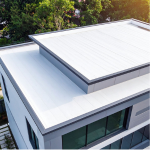
Emergency Roof Leak Repair
Active leaks don’t wait for business hours. We prioritize emergency calls because a delayed fix almost always costs more than the repair itself once water’s tracked into insulation or drywall.
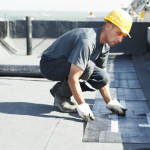
Failed Flashing at Chimneys and Skylights
This is the number one cause, hands down, in our experience across the city’s older neighborhoods — the Sunset, the Richmond, Bernal Heights, Noe Valley, wherever there’s a Victorian or Edwardian with a brick chimney poking through the roofline.
Flashing is the thin metal barrier that seals the joint where your roof meets a vertical surface — a chimney, a skylight curb, a wall. It expands and contracts with temperature, it corrodes over decades of fog exposure, and eventually the seal just gives out.
When it fails, water doesn’t drip straight down from the leak point either, which is the part that confuses homeowners. It runs along the underside of the roof deck and shows up on your ceiling somewhere entirely different from where the actual gap is. That’s exactly why we don’t guess — we get up there and trace it.
Seam Separation on Flat Roofs
If you’re in a building with a flat or low-slope section — common on Sunset District additions, Mission District rowhouses, plenty of SoMa and Bayview properties — the leak is very often a seam.
Modified bitumen, TPO, torch-down systems — all of them are built from sheets or rolls joined together, and those seams are the weak point. Years of San Francisco’s daily fog-to-sun temperature swing puts real stress on that bonded joint, and eventually a small gap opens up.
The frustrating part is a seam leak can sit dormant for months, only showing up during a heavy atmospheric river event when water actually pools against it long enough to find its way through.
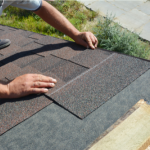
Wind-Damaged Shingles
Less common here than in a lot of the country, since San Francisco doesn’t get the same wind events as, say, the Midwest, but it happens — a strong gust off the ocean catches a lifted shingle edge and either cracks it or tears it loose entirely.
Once a shingle’s compromised, the layer underneath is exposed, and it doesn’t take much rain after that to start working its way in. This is usually one of the more straightforward repairs, assuming we can match the existing shingle color and profile close enough that it doesn’t look like an obvious patch.
Roof Repair San Francisco — Signs You Need One
Common Causes of Roof Leaks in San Francisco
Wind-driven fog and rain finding weak seams. Age-related shingle or membrane wear. Flashing that was never sealed quite right around a chimney or vent. Ponding water on flat roofs. Clogged gutters backing water up under the roofline.
Roof Repair vs Replacement — How to Decide
If the damage is localized and the rest of the roof is in decent shape, repair makes sense. If you’re calling about the third leak this year, or the roof’s past its expected lifespan, repair starts becoming a temporary fix for a bigger problem. We’ll tell you honestly which situation you’re in.
San Francisco Roof Repair — Service Areas
Roof Repair Specialist Bay Area
Repair work across San Francisco and into the wider Bay Area — same response standards no matter which city the roof’s in.
South San Francisco Roof Repair
Regular service coverage for South San Francisco homes and commercial buildings, residential and flat roof repairs both.
Emergency Repair During Atmospheric River Season
If you’ve lived here more than a winter or two, you already know what an atmospheric river is — it’s not just “rain,” it’s a sustained, heavy, days-long dump of moisture that overwhelms roofs, gutters, and drainage systems that were fine under normal conditions.
This is when we get the most calls, and it’s also when the difference between a company that answers the phone and one that doesn’t matters the most.
Same-Day Response for Active Leaks
If water is actively coming into your home right now, that’s not a “we’ll get to it next week” situation, and we don’t treat it like one. We prioritize active leak calls and get someone out the same day whenever it’s humanly possible.
We’ll also walk you through what to do in the meantime on the phone — where to place buckets, how to protect flooring, whether it’s safe to pull down a sagging ceiling section yourself or wait for us. You shouldn’t be figuring that out alone while water’s dripping on your kitchen table.
Temporary Waterproofing
Sometimes the permanent fix needs daylight, dry conditions, or a specific material that isn’t sitting in the truck that day. In those cases we’ll install a temporary waterproof patch or tarp system to stop the bleeding immediately, then schedule the full repair for the next dry window.
This matters more than people realize — a temporary patch done correctly buys you real time without making the permanent repair harder later. A bad temporary patch, the kind someone does themselves with a tarp and some bricks, sometimes makes the actual fix more complicated once we’re finally up there.
Learn More, Bayview Hunters Point Roofing.
Repair Cost in San Francisco
I’ll give you real numbers instead of the usual “it depends” dodge, because it genuinely does depend, but there are patterns worth knowing.
Small, targeted repairs — a section of flashing, a handful of shingles, a localized seam fix — commonly run somewhere in the low thousands, and plenty of straightforward jobs land well under that depending on scope and access.
Larger repair jobs, the kind that start creeping toward “should we just replace this section” territory, can run into five figures, particularly if we get up there and find rotted sheathing underneath — which, on an older San Francisco home, is honestly common enough that we budget for the possibility rather than treating it as some rare surprise.
Here’s the thing worth knowing before you get quotes from multiple companies: ask specifically whether sheathing replacement is included or billed separately as a per-sheet add-on. A lot of contractors quote the visible repair and leave rotted decking as a line item they add once they’re already up there — get that number upfront so your final bill matches what you were told.
Permits matter here too. Anything beyond a truly minor patch may require a permit in California, and while a small flashing repair usually doesn’t trigger that, anything approaching a larger section replacement often will. Skipping a required permit isn’t a shortcut worth taking — it creates real problems down the line, especially at resale.
What We Actually Do Differently
I’m not going to pretend every roofer in this city is bad at their job, because that’s not true. But a few things separate a genuinely good repair experience from a frustrating one, and it’s worth naming them directly.
We diagnose before we quote. A leak’s visible symptom and its actual source are often in two different places, and quoting off a guess means either overcharging you for work you don’t need or undercharging because the real problem wasn’t found yet.
We tell you honestly when repair beats replacement, and when it doesn’t. If your roof genuinely has years left in it and this is a contained, fixable issue, we’ll say so — we’re not trying to upsell every service call into a full tear-off.
We show up when we say we will. This shouldn’t need saying, but given how often we hear the opposite from new customers, apparently it does.