
Top Rated Skylight Installation San Francisco | Best Quote
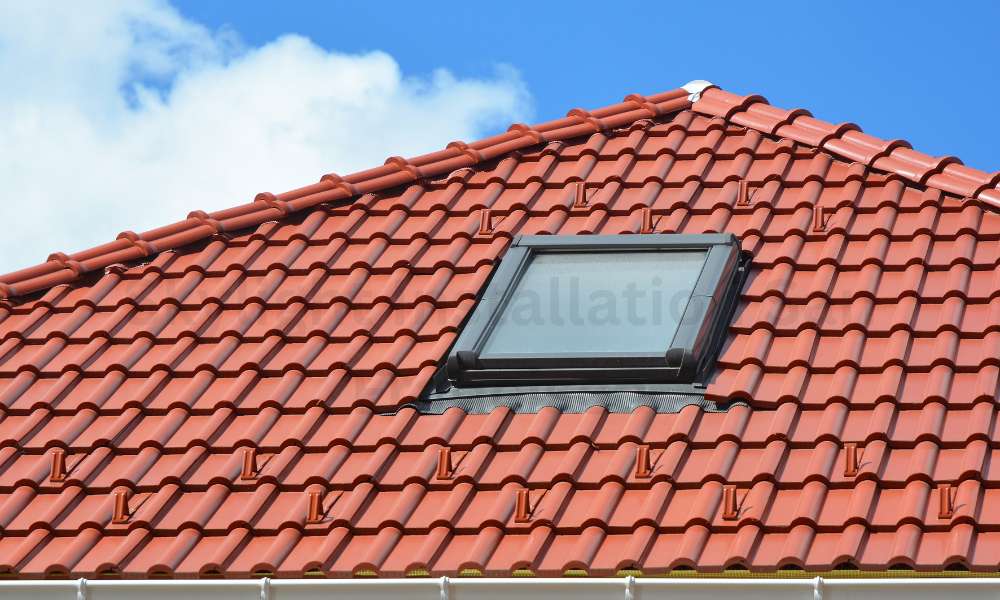
Skylight Installation in San Francisco — Done Right, Especially on Clay Tile
There’s a specific kind of question we get a lot, and it usually starts with someone half-apologizing before they even finish it. “This is probably a weird ask, but — I’ve got a curved clay tile roof, and I want to add a sun tunnel. Is that even possible?”
Yes. It’s possible. And no, it’s not a weird ask — it’s actually one of the more common renovation requests in this city, because a huge share of San Francisco’s older housing stock, especially the Mediterranean and Spanish-style homes scattered through Pacific Heights, the Marina, and parts of the Sunset, was built with clay tile roofing. People want more light. Fog does that to a person.
What’s actually true is that a lot of roofers either can’t do this flashing correctly or don’t want to take the time, and that’s where the real problem starts — not with whether it’s possible, but with whether the person doing it actually knows how.
This page covers what skylight and sun tunnel installation actually involves here, why flashing is the entire ballgame, what it costs, and what to do if an existing skylight is already leaking on you ofr inspection contact us .
Learn More About Flat Roofing of Residential.
Why Skylights Are Genuinely Worth It in a Foggy City
I’ll be honest about the tension here, because pretending there isn’t one would be dishonest. You live in a city where the marine layer sits over your roof for a good chunk of the year, and you’re asking about adding more openings to that roof. Feels a little counterintuitive.
But here’s the thing — fog doesn’t mean darkness, not indoors anyway. A well-placed skylight or sun tunnel pulls in diffuse daylight even on a properly grey, overcast Sunset District afternoon, and for a lot of homeowners in older SF housing with small original windows, that daylight difference is dramatic.
Adding natural light to a house that’s spent decades under Karl the Fog is close to a public service, honestly. We say that somewhat jokingly, but there’s truth in it — a dim interior room getting real daylight for the first time changes how a house feels to live in, not just how it looks.
Skylight Installation on Different Roof Types
The install approach genuinely changes depending on what’s already up there, and this matters more in San Francisco than most cities because of how varied the housing stock is block to block.
Asphalt Shingle Installations
This is the most straightforward version. Standard step flashing and pre-formed skylight curb kits handle most asphalt shingle installs cleanly, and the process is fairly predictable — cut the opening, frame it correctly, integrate the flashing under the shingle courses above and over the ones below, seal it.
Most manufacturer-standard flashing kits are engineered for exactly this scenario, which is part of why asphalt shingle skylight installs tend to be the fastest and most reliably leak-free option, assuming the install itself is done with any real care.
Clay Tile Skylight Flashing — The Hard Part Most Roofers Get Wrong
Here’s the real content of this page. Clay tile — especially the curved, barrel-style tile common on San Francisco’s older Mediterranean and Spanish Revival homes — does not accept a standard pre-formed flashing kit. The curve of the tile creates gaps and high points that a flat step-flashing system simply wasn’t designed to seal against.
Getting this right means custom-fabricated flashing, usually lead or a heavy-gauge metal formed specifically to match the curve profile of your existing tile, cut and shaped on site rather than pulled out of a box. It takes real time, and it takes someone who’s actually done it before, not someone improvising it for the first time on your roof.
We’ve been called out more than once to fix a skylight or sun tunnel that another company installed on a tile roof using a standard kit, basically forcing a flat flashing system to work against a curved surface it was never meant for. It usually holds for a season or two. Then the first real atmospheric river finds every gap the mismatch left behind.
If you’ve got a curved clay tile roof and you’re getting quotes for a skylight or sun tunnel, ask directly: “How do you flash this on tile specifically, and have you done it before?” If the answer is vague, or if they’re clearly describing a standard asphalt-shingle process, that’s your answer about whether to hire them for this particular job.
Flat Roof Curb-Mount Skylights
For flat roof sections — common on Sunset District rear additions and Mission District rowhouses — skylights get installed on a raised curb, typically four inches or more above the roof deck. That curb height genuinely matters, more than most homeowners realize going in.
A curb that’s too low lets water pond against the frame during heavy rain instead of draining away from it, and San Francisco’s atmospheric river events are exactly the kind of sustained, heavy rainfall that exposes an undersized curb fast. We build to correct curb height every time, not the minimum that technically passes.
VELUX, Fakro, and Manufacturer Options — What We Install
We work with VELUX most often, largely because their fixed, ventilating, and tubular sun tunnel product lines cover most of what San Francisco homeowners are actually asking for, and their flashing kits are solid for standard roof types.
We also install Fakro units, which are a genuinely comparable option and sometimes make more sense on a specific project depending on size constraints or budget. For clay tile applications specifically, the manufacturer’s stock flashing kit is really just a starting point — the real work is the custom fabrication around it, regardless of which brand’s glass unit sits on top.
Whichever brand ends up on your roof, the glass and frame themselves are rarely the point of failure. The flashing is where the job either holds for thirty years or leaks in three.
Skylight Leak Repair — When Your Existing Skylight Leaks
This is worth its own section because it’s one of the most common calls we get, and the pattern is remarkably consistent. Someone assumes their skylight leaks because the unit itself failed — the glass, the seal around the window, something inside the frame.
Almost every single time, it’s not that. It’s the flashing around it. The skylight glass and frame can be in perfectly fine condition while water is actively getting past a flashing detail that either failed over time or was never installed correctly to begin with.
We’ve seen this specifically after other companies did unrelated roof work nearby and inadvertently loosened or disturbed a skylight’s flashing without addressing it — the skylight itself was never touched, but the disruption to the surrounding roof system created a new gap. If your skylight started leaking right after some other roof work happened nearby, mention that specifically when you call, because it points us straight at the likely cause.
The other pattern we see constantly: a skylight that’s leaked before, got a quick patch, and is now leaking again in a slightly different spot. That’s usually a sign the original flashing repair addressed the symptom in one location without solving the underlying issue across the whole flashing system. We trace the actual water path before quoting a fix, not just seal wherever it’s currently dripping.
Repair vs Full Skylight Replacement — Decision Guide
Not every leaking skylight needs to come out entirely, and we’ll tell you honestly which situation you’re in once we’ve actually looked.
When Repair Makes Sense
If the glass unit and frame are structurally sound and the issue is isolated to a specific section of flashing, repairing and re-flashing that section is usually the right call. This is especially true on newer skylight installs where the underlying unit clearly has years of life left.
When Replacement Is the Honest Answer
If the frame has rotted from years of slow water intrusion, if the glass seal has failed and you’re getting condensation between panes, or if the unit is old enough that finding matching replacement flashing components has become difficult, full replacement is usually the more honest recommendation, even though it’s the more expensive one.
We’d rather tell you that upfront than have you pay for a repair that’s just delaying an inevitable full replacement by another rainy season.
Cost and Timeline for Skylight Installation in San Francisco
New skylight installation on a standard asphalt shingle roof, including the unit itself and standard flashing, generally runs in a moderate range depending on unit size and whether it’s a fixed, ventilating, or electric-operated model — sun tunnels tend to sit at the lower end of that range since they’re smaller and simpler to integrate.
Curved clay tile installations cost meaningfully more, and that added cost is almost entirely the custom flashing fabrication — the labor and material required to properly match a curved tile profile is a fundamentally different scope of work than a standard shingle install, not a markup for the sake of it.
Skylight leak repair, when it’s isolated to a flashing section, is typically a straightforward single-visit job. Timeline for new installation runs anywhere from a single day for a standard shingle roof to a couple of days for clay tile work requiring custom fabrication, weather permitting.