
How to Stop Moss on Your SF Roof — San Francisco Roof Moss Removal
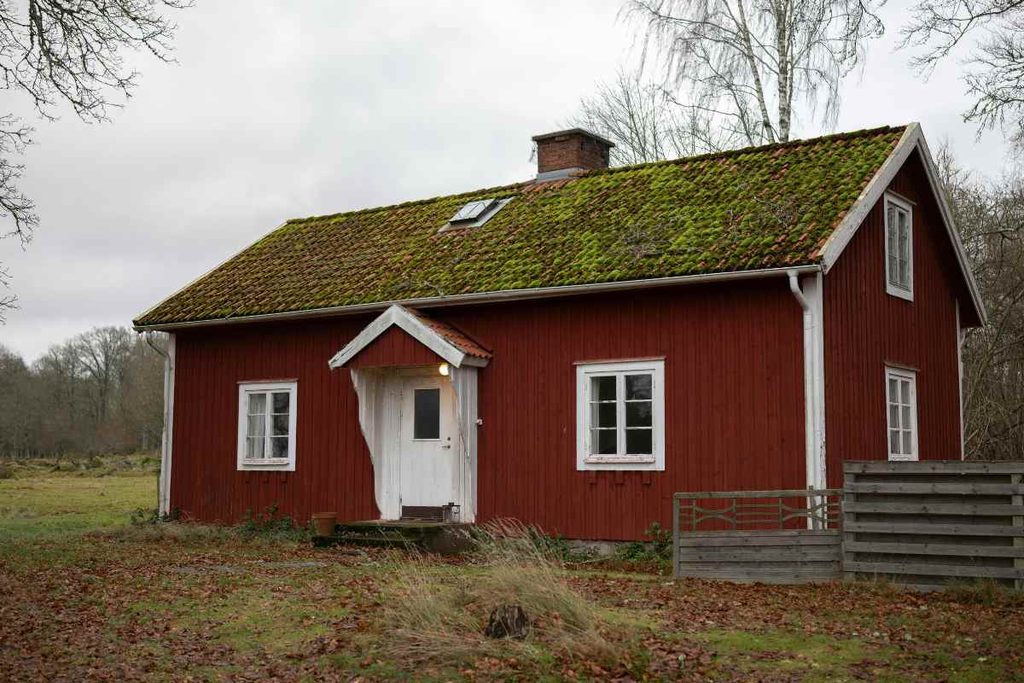
You’re standing there looking up at your roof. There it is. That green fuzzy stuff creeping across your shingles.
Maybe it’s just a little patch on the north side right now. Maybe it’s covering half your roof. I’ve seen both.
Either way, you’re asking: how do I stop this?
Here’s the short answer you don’t want to hear: you can’t really stop moss from trying to grow on a San Francisco roof. The fog, the trees, that marine layer rolling in from the Pacific—this city is basically moss paradise.
But you can remove it. Treat it. Make it way harder for moss to come back.
I’ve been cleaning roofs here since 2009. Outer Richmond, Sunset, Forest Hill, Glen Park, Pacific Heights—all of it. I’ve seen roofs so mossy they looked like lawns. I’ve seen homeowners wait so long the shingles started lifting.
And I’ve seen people waste money on stuff that doesn’t work.
This guide covers what actually works. Not what sounds good in theory. What works in San Francisco’s specific weird climate.
Why Your SF Roof Has Moss (And Why Your Neighbor’s Doesn’t)
Let’s start with the basics because understanding why moss grows helps you stop it.
Moss needs three things:
- Moisture
- Shade (or at least not constant direct sun)
- Something to eat (organic debris like leaves, needles, dust)
San Francisco gives moss two of those three automatically.
The Fog Factor
If you live in Richmond or Sunset—the “fog belt”—your roof gets wet even when it’s not raining.
The marine layer deposits actual liquid water on your roof. Not much. But enough.
I’ve been on roofs in the Outer Sunset in July. The middle of summer. Hasn’t rained in weeks. Shingles are damp at 8 AM.
That’s the fog. Comes in overnight. Condenses on everything. By the time the sun could dry it out (if the sun even hits your roof), the fog’s back.
Your roof out there can be damp 200+ days a year.
Compare that to the Mission. Bernal Heights. Way less fog. Sunny. Dry. Hot summers.
I see ten moss problems in Richmond for every one in the Mission. Not exaggerating.
The North-Facing Slope Problem
Even outside the fog belt, your north-facing slope gets way less sun than your south side.
In SF this is worse because our weather’s so mild. We don’t get those brutal 95-degree days that would bake a north slope dry. We get 65 and partly cloudy.
The north side stays wet longer after rain. Moss grows there first.
Go look right now. See? The south side’s clean (or cleaner). North side? Green.
Trees = Moss Fuel
Got trees near your house? Eucalyptus, redwood, oak, big Monterey pines?
You’ve got two moss problems.
One: Shade. Trees block sun. Less sun = wet roof.
Two: Debris. Leaves, needles, twigs—all lands on your roof, holds moisture, feeds the moss.
I see this constantly in Forest Hill. Glen Park. Twin Peaks. Anywhere with big trees.
Heavy tree cover = always mossier roofs.
So if you’re asking “why my roof and not my neighbor’s?”—check those three things. They might be blocks inland where it’s sunnier. Their roof might not be shaded. Their south slope’s probably clean too, you just can’t see it.
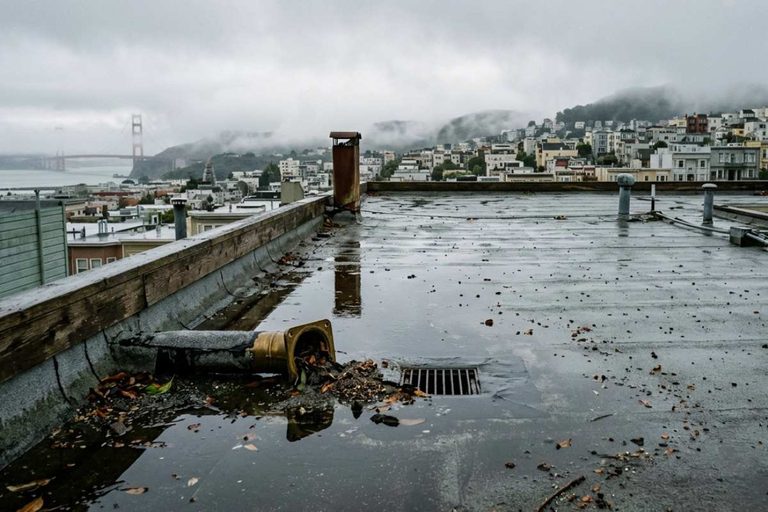
Learn More, Ponding Water on Flat Roofs
What Moss Actually Does to Your Roof (Why You Can’t Just Ignore It)
Okay, so moss is growing. Does it actually hurt anything?
Yes. It does. Let me show you why.
Moss Holds Moisture Against Your Shingles
When it rains, moss soaks up water like a sponge. Holds it against your shingles. For days. Sometimes weeks if you’re in the fog belt during winter.
Your shingles are designed to shed water. That’s their job.
But when moss is covering them? Water sits there. Shingles stay wet. Asphalt gets soft. Those granules—that gritty coating—start washing away.
I’ve pulled up moss and the shingles underneath look terrible. Faded. Soft. Granules missing.
That’s damage.
Moss Lifts Shingles
Here’s the thing most people don’t realize: moss doesn’t just sit on top of shingles. It grows under them.
Moss has these tiny root-like structures (rhizoids) that work their way under the leading edge of shingles. As the moss grows, it physically lifts the shingle tabs up.
Once shingles are lifted, water can run under them instead of over them. That’s when you start getting leaks.
I’ve seen roofs where the moss lifted shingles so much you could slide your hand underneath. That roof was leaking into the attic. Owner had no idea until there was a ceiling stain in the bedroom.
Moss Shortens Your Roof’s Lifespan
A typical asphalt shingle roof in San Francisco should last 20-25 years if it’s maintained.
A roof covered in moss? Maybe 15 years. Maybe less.
The constant moisture, the granule loss, the lifted shingles—all of that accelerates wear. You’re basically shortening your roof’s life by 5-10 years if you let moss sit there.
And replacing a roof in SF? $15,000-$30,000 depending on size and complexity. So yeah, removing moss is worth it.
How to Remove Moss from Your SF Roof (The Right Way)
Alright, let’s get to the actual removal process.
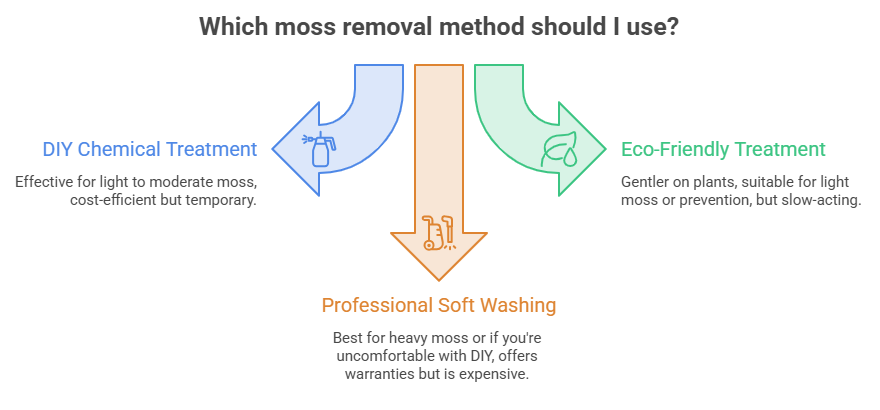
There are basically three approaches:
- DIY chemical treatment
- Professional soft washing
- Manual removal + treatment
I’m going to walk you through all three because which one you use depends on how bad your moss is, your budget, and whether you’re comfortable on a roof.
Method 1: DIY Chemical Treatment (For Light to Moderate Moss)
Most homeowners do this. Works pretty well if moss isn’t crazy thick.
What you need:
- Pump sprayer (1-2 gallon)
- Bleach (regular Clorox from Safeway)
- Water
- Gloves, eye protection, old clothes
- Ladder
How:
Mix 50/50 bleach and water. Half and half. That’s it.
Wet down your plants first. Seriously. Bleach runoff kills them.
Spray the moss. Soak it. Don’t just mist—really saturate it.
Let it sit 15-20 minutes.
Rinse with a regular garden hose. NOT a pressure washer. Just a regular hose.
Wet plants again after.
How long to work?
Moss starts turning white or brown in a day or two. That’s it dying.
Next few weeks—especially after rainstorms—dead moss washes off. Some might need gentle brushing but most comes off.
Does it work?
Yeah. I’ve done this hundreds of times.
But here’s the catch: it’s temporary. Bleach kills existing moss but doesn’t prevent new growth.
In the fog belt, moss can start coming back in 6-12 months.
Cost: $15 for bleach. Maybe $40 total if you need a sprayer.
Method 2: Eco-Friendly Treatment (Oxygen Bleach)
Don’t want regular bleach? Worried about landscaping or runoff?
Oxygen bleach works too.
Products:
- OxiClean (yeah, laundry stuff)
- Wet & Forget
- Spray & Forget
- Anything saying “sodium percarbonate” or “oxygen bleach”
How it works:
Oxygen bleach is basically powdered hydrogen peroxide. Breaks down into water and oxygen. Way gentler on plants.
How to use:
Mix with water, spray on, leave it. Don’t rinse.
Wait 3-6 months.
The problem:
Oxygen bleach is slow. Really slow.
Might not see results for 2-3 months. In SF’s rainy season, moss is still sitting there holding moisture for months while treatment works.
Heavy moss? I don’t love this. Light moss or prevention after you’ve removed most? Fine.
Cost: $15-$40.
Method 3: Professional Soft Washing (For Heavy Moss or If You Don’t Want to DIY)
This is what Maxx ECO Wash, Golden Gate Gutters, and others do.
What it is:
Soft washing uses specialized equipment—not a pressure washer—to apply cleaning solution at low pressure.
The process:
- Manually remove bulk moss (gentle brush/scrape)
- Apply solution with professional equipment
- Let sit 15-30 minutes
- Rinse with low-pressure water
- Treat whole roof, not just visible moss
Why hire someone:
- Right equipment
- Insured (if something goes wrong you’re not liable)
- Can reach steep or high roofs safely
- Many offer warranties (1-2 year moss-free guarantees)
Downside:
Cost. In SF, $400-$2,500 depending on roof size and moss severity.
When to do it:
- Steep or high roof
- Really thick moss
- Not comfortable on roofs
- Want a warranty
- Don’t want to deal with it
Cost: $400-$800 basic, $800-$1,500 soft washing with manual removal, $1,500-$2,500 complete with 2-year guarantee.
The Pressure Washing Debate (Spoiler: Don’t Do It)
Every few months someone asks me: “Can I just pressure wash the moss off?”
No. Don’t do that.
Here’s why:
Pressure Washing Strips Granules
Asphalt shingles have a protective layer of ceramic granules (that gritty coating). Those granules protect the asphalt underneath from UV damage and weathering.
A pressure washer—even at “low” pressure—blasts those granules off. Permanently.
I’ve seen roofs where homeowners pressure washed them and you could see bare asphalt in streaks where the wand went. That’s the opposite of what we want.
It Can Void Your Warranty
Most shingle manufacturers (GAF, CertainTeed, Owens Corning) explicitly say in their warranties: no pressure washing. If you pressure wash and then try to make a warranty claim, they’ll deny it.
It Can Force Water Under Shingles
Pressure washers force water upward and sideways, not just down. That can drive water up under shingle edges and into your roof deck.
I’ve seen pressure washing cause leaks that didn’t exist before.
What the Manufacturers Say
The Asphalt Roofing Manufacturers Association (ARMA) is clear: “Do not use a power washer or any type of brush or broom to clean algae from the roof surface.”
So if you’re thinking about renting a pressure washer from Home Depot, don’t.
Long-Term Prevention: How to Keep Moss from Coming Back
Okay, you’ve removed the moss. Now how do you keep it from coming back?
Here are the strategies that actually work in San Francisco’s climate.
1. Zinc Strips (The Most Common Prevention Method)
You’ve seen these. Thin metal strips near the ridge.
How they work:
Rain runs over zinc. Carries tiny zinc particles down roof. Zinc’s toxic to moss. Creates environment where moss can’t grow.
Do they work?
Yes… but.
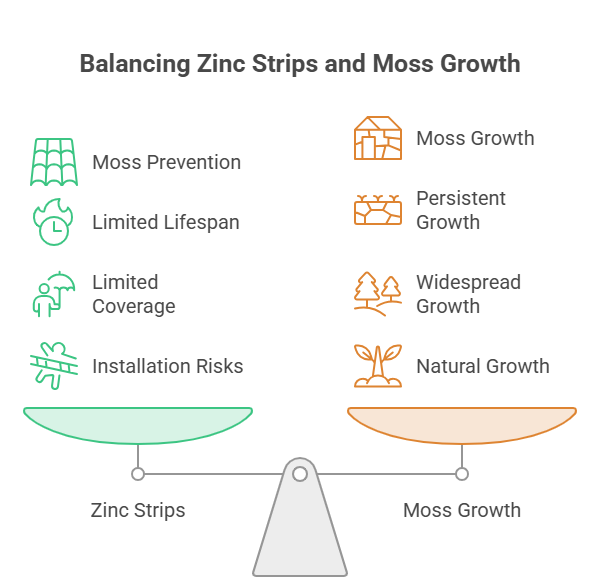
Work for 5-7 years, then zinc oxidizes.
Only protect about 15 feet downslope.
Wrong installation = leaks.
Heavy fog and shade? They help but don’t completely prevent moss.
I’ve seen roofs with zinc strips that still have moss. Helps on south slopes. Outer Richmond under heavy trees? Not a miracle.
Cost: $100-$300 if you hire someone. $30-$80 DIY.
2. Copper Strips (Alternative to Zinc)
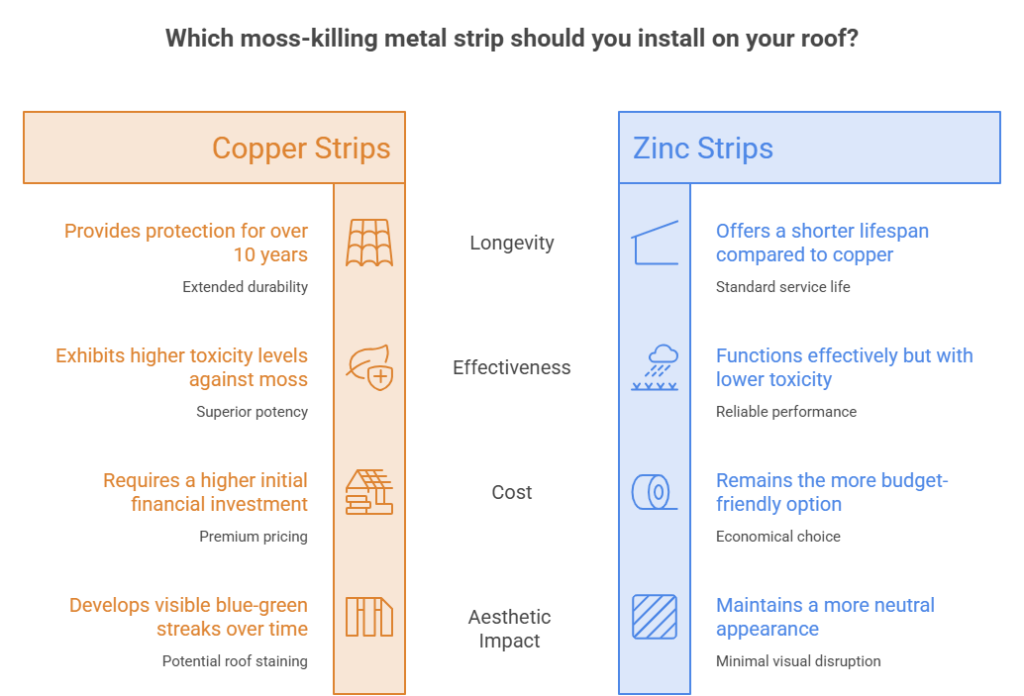
Copper works the same way as zinc—water leaches copper particles that kill moss.
Advantages:
- Lasts longer than zinc (10+ years)
- Slightly more effective (copper is more toxic to moss than zinc)
Disadvantages:
- More expensive
- Can stain your roof (blue-green streaks over time)
I don’t see copper strips as often in SF. Zinc is more common and cheaper.
3. Algae-Resistant Shingles (For Roof Replacement)
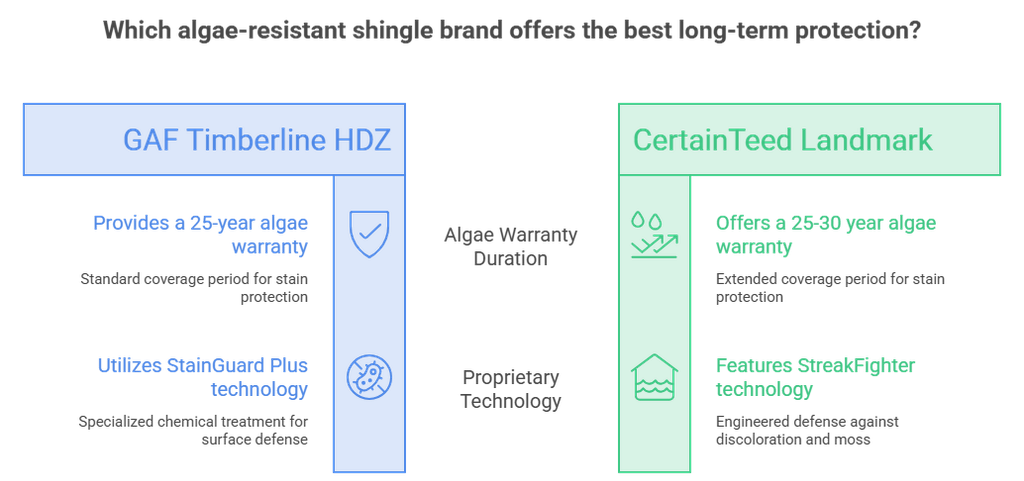
When you’re replacing your roof, you can upgrade to shingles with built-in algae/moss resistance.
How they work:
Manufacturers (GAF, CertainTeed) embed copper granules into the shingle surface. Every time it rains, tiny amounts of copper leach out and kill moss/algae.
Products:
- GAF Timberline HDZ with StainGuard Plus (25-year algae warranty)
- CertainTeed Landmark with StreakFighter (25-30 year algae warranty)
Do they work?
In moderate climates, yes. In San Francisco’s fog belt with heavy tree cover… they help, but they’re not foolproof.
I’ve seen 5-year-old algae-resistant roofs in the Outer Richmond with moss starting to grow. It’s less moss than you’d get on regular shingles, but it’s still there.
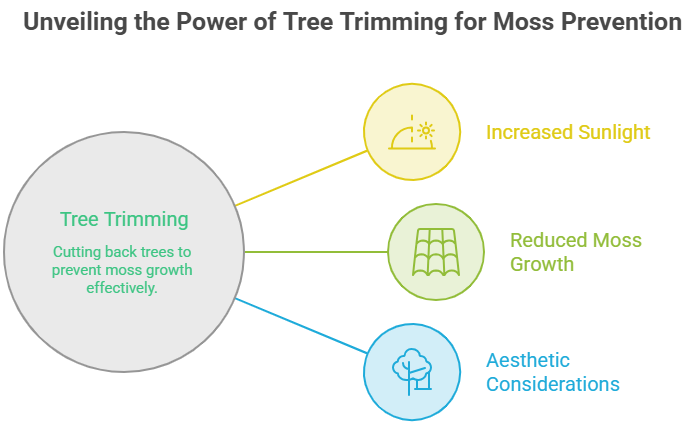
4. Tree Trimming (The Most Effective Prevention)
This is the one nobody wants to hear, but it’s the truth:
The single most effective way to prevent moss is to cut back trees and let more sunlight hit your roof.
Moss hates sun. Give your roof 4-6 hours of direct sunlight per day and moss will have a really hard time growing.
What to do:
- Trim back branches that overhang your roof
- Thin out tree canopy to let more light through
- Remove trees that are shading your roof heavily (I know, I know—but it works)
I get it. Trees are beautiful. They provide shade, privacy, and character. Nobody wants to cut down a 50-year-old oak.
But if you’re fighting a constant moss battle and there’s a massive redwood 10 feet from your house blocking all sunlight… the tree is the problem.
5. Regular Roof Cleaning (Annual or Biannual)
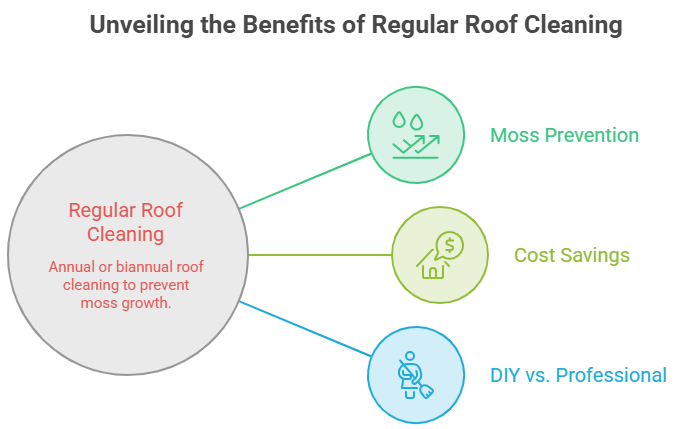
In the fog belt, the reality is you might need to clean your roof every 1-2 years to keep moss at bay.
That sounds like a lot, but compared to replacing a roof 10 years early because moss destroyed it? It’s worth it.
What “regular cleaning” means:
- Fall (before rainy season): Blow off leaves and debris, apply moss treatment if you see any growth starting
- Spring (after rainy season): Check for new moss, treat if needed
Some people hire a roof cleaning company to do this on a schedule. Some people DIY it.
Product Comparison: What Actually Works in SF’s Climate
Let’s talk about the products you’ll see recommended and which ones are worth your money.
Chlorine Bleach (Sodium Hypochlorite)
What it is: Regular household bleach. Same stuff you use for laundry.
Pros:
- Cheap ($3-$5 per gallon)
- Works fast (kills moss in 24-48 hours)
- Easy to find (any grocery store)
Cons:
- Harsh on plants (can kill landscaping if runoff isn’t managed)
- Temporary (moss can come back in 6-12 months)
- Requires rinsing
Best for: DIY removal of moderate to heavy moss when you want fast results.
My take: This is what I use most often. It works, it’s cheap, and if you protect your plants it’s fine. Yeah, it’s not “eco-friendly” but neither is replacing your roof 10 years early.
Wet & Forget / Spray & Forget
What it is: Pre-mixed sprays with alkyl dimethyl benzyl ammonium chloride (a quaternary ammonium compound).
Pros:
- No rinsing required
- Gentler on plants than bleach
- Convenient (just spray and leave it)
Cons:
- Slow (3-6 months for full results)
- Expensive ($20-$40 per bottle, and you need multiple bottles for a whole roof)
- Mixed results in heavy fog (sometimes doesn’t work well in constantly damp conditions)
Best for: Light moss or preventive treatment after you’ve already removed bulk moss.
My take: I’ve used both Wet & Forget and Spray & Forget. They work okay for light moss. For heavy moss in the fog belt? I don’t have 6 months to wait. I use bleach.
Oxygen Bleach (Sodium Percarbonate)
What it is: Powdered hydrogen peroxide. Same active ingredient as OxiClean.
Pros:
- Eco-friendly (breaks down into water and oxygen)
- Safe for plants
- Effective for light to moderate moss
Cons:
- Very slow (2-4 months for results)
- Less effective on heavy moss
- Requires multiple applications sometimes
Best for: Preventive treatment or if you’re very concerned about environmental impact.
My take: If you’ve got time and light moss, this is a good option. In SF’s rainy season with heavy moss? It’s not my first choice.
30 Second Cleaner
What it is: Proprietary blend (contains sodium hypochlorite + TSP/trisodium phosphate).
Pros:
- Works fast (hence the name)
- Effective on moss, algae, and black streaks
Cons:
- Contains bleach despite marketing saying otherwise
- More expensive than straight bleach
- Still requires the same precautions (protecting plants, rinsing)
Best for: People who want a “professional” product but are DIYing.
My take: It’s fine. It works. But it’s basically bleach with some TSP added. You’re paying extra for the brand name. I’d rather buy a gallon of bleach for $4 than a bottle of this for $20.3
Seasonal Timing: When to Remove Moss in San Francisco
This matters more than people think.
Best Time: Late Spring / Early Summer (April-June)
Why:
- Rainy season is over (roof is drying out)
- You’ve got warm, dry weather for treatment to work
- Moss is actively growing (easier to kill)
- You’re treating BEFORE next rainy season (so your roof is protected when wet weather returns)
This is when I do most of my moss removal work.
Second Best: Early Fall (September-October)
Why:
- Still dry enough to treat effectively
- You’re treating BEFORE rainy season starts
- Warm enough that chemicals work well
Downside: Less ideal because the rainy season is right around the corner. If you treat in October and it starts raining in November, the treatment doesn’t have as much time to work before the roof is wet again.
Worst Time: Winter (November-March)
Why:
- Roof is constantly wet (chemical treatments don’t work as well when diluted by rain)
- Dangerous (wet roofs are slippery)
- Moss is dormant (harder to kill)
- You need stronger concentrations of chemicals to get results
I avoid winter moss removal unless it’s an emergency (like insurance is requiring it and the deadline is now).
If you call me in January saying “my roof has moss,” I’ll usually recommend waiting until April unless there’s a specific urgent reason.
Cost Breakdown: What You’ll Actually Pay in San Francisco
Let’s talk real numbers.
DIY Costs
Materials:
- Bleach (2-3 gallons): $10-$15
- Pump sprayer (if you don’t have one): $20-$40
- Safety gear: $10-$20
- Total: $40-$75
Time:
- 2-4 hours depending on roof size
Effectiveness: Works well for light to moderate moss. Saves you $400-$800 in professional fees.
Downside: You’re on the roof (safety risk), no warranty, might need to retreat in 6-12 months.
Professional Costs (SF Market Rates)
Basic Treatment (spray and leave, no manual removal):
- $400-$800
- Works for light moss
- No warranty usually
Soft Washing (chemical treatment + gentle manual removal):
- $800-$1,500
- Works for moderate to heavy moss
- May include 1-year warranty
Complete Service (manual removal + treatment + 2-year warranty):
- $1,500-$2,500
- Best for heavy moss
- Includes guarantee (if moss comes back, they retreat for free)
Add-ons:
- Gutter cleaning: +$150-$300
- Zinc strip installation: +$200-$500
- Roof inspection: Usually included free
Factors That Affect Price
1. Roof Size
- Small (under 1,500 sq ft): Lower end of price range
- Medium (1,500-2,500 sq ft): Mid range
- Large (2,500+ sq ft): Higher end
2. Moss Severity
- Light (just starting, mostly north side): Cheaper
- Moderate (covering 30-50% of roof): Mid range
- Heavy (thick moss, multiple slopes): Most expensive
3. Roof Access
- Easy access (one-story, low pitch): Cheaper
- Difficult access (two-story, steep pitch, tight lot): More expensive
4. Neighborhood
- Outer Richmond, Sunset (heavy moss area, companies see it all the time): Competitive pricing
- Pacific Heights, Russian Hill (high-value homes): Sometimes higher pricing
SF Neighborhood-Specific Moss Challenges
Not all San Francisco neighborhoods are equal when it comes to moss.
Outer Richmond / Outer Sunset (ZIP 94121, 94122, 94116)
Moss risk: VERY HIGH
Why:
- Constant fog (200+ foggy days/year)
- Close to ocean (marine layer hits here first)
- Lots of mature trees
- North-facing slopes stay wet almost year-round
What to expect:
- Moss will come back every 1-2 years even with treatment
- North-facing slopes especially bad
- Tree trimming helps but won’t eliminate the problem
- Zinc strips help but aren’t sufficient alone
Best strategy:
- Annual or biannual professional cleaning
- Aggressive tree trimming
- Consider algae-resistant shingles at next roof replacement
Inner Richmond / Inner Sunset (ZIP 94118, 94117)
Moss risk: HIGH
Why:
- Still get significant fog (just slightly less than outer neighborhoods)
- Mature tree coverage
- Mix of sun and shade
What to expect:
- Moss every 2-3 years
- South-facing slopes might stay relatively clean
- North sides will have moss
Best strategy:
- Treatment every 2-3 years
- Zinc strips + tree trimming
- Focus on north-facing slopes
Pacific Heights / Presidio Heights (ZIP 94115, 94123)
Moss risk: MODERATE
Why:
- Less fog than Richmond/Sunset
- Mix of sun and shade
- Some large trees (depends on specific property)
What to expect:
- Moss on shaded roofs or under heavy tree cover
- South-facing slopes usually stay clean
- Can go 3-5 years between treatments
Best strategy:
- Treatment every 3-4 years or as needed
- Tree trimming very effective here
- Zinc strips usually sufficient for prevention
Mission District / Bernal Heights (ZIP 94110)
Moss risk: LOW TO MODERATE
Why:
- Way less fog (sunny microclimate)
- Warmer, drier summers
- Less tree coverage in many areas
What to expect:
- Moss mostly on heavily shaded roofs only
- Most roofs stay clean naturally
- If you do get moss, it’s slower-growing
Best strategy:
- Treatment only as needed (might be 5-10 years between treatments)
- Tree trimming usually solves it
- Preventive treatment not usually necessary
Glen Park / Forest Hill / Twin Peaks (ZIP 94131, 94132)
Moss risk: HIGH
Why:
- Heavy tree coverage (eucalyptus, redwood, oak)
- Some fog exposure
- Lots of north-facing slopes (hillside homes)
What to expect:
- Moss under tree canopy
- South-facing slopes in sun might be okay
- Heavily dependent on specific tree coverage
Best strategy:
- Tree trimming is critical
- Treatment every 2-3 years
- Consider thinning tree canopy (not just trimming branches)
Safety First: Don’t Be a Statistic
I’m going to be the responsible adult here and say: roofs are dangerous.
Falls from roofs are one of the top causes of serious injury and death in construction and home maintenance. And most of those falls happen because someone wasn’t properly protected.
If You’re Going on Your Roof:
1. Use proper footwear
- Rubber-soled shoes with good grip
- NOT smooth-soled shoes
- NOT wet shoes
2. Work on a dry day
- Never work on a wet roof
- Wait 24 hours after rain
- Avoid early morning when dew is present
3. Use a properly set up ladder
- Extend 3 feet above roof edge
- Set at proper angle (1 foot out for every 4 feet up)
- Have someone stabilize it
4. Consider fall protection
- Roof anchors and harnesses for steep roofs
- Available at hardware stores
- Worth the $100-$300 investment if you’re doing this yourself
5. Know your limits
- If the roof is steep (over 6/12 pitch), consider hiring a pro
- If you’re afraid of heights, hire a pro
- If the roof is wet or you’re unsure, hire a pro
6. Have someone with you
- Don’t work alone
- Someone should be on the ground to call 911 if needed
I’ve been doing this for 15 years and I’m still careful. Every time. This isn’t the place to cut corners.
Insurance Requirements: What Your Insurance Company Actually Wants
Here’s something a lot of homeowners don’t know: some insurance companies in SF are requiring moss removal as a condition of coverage or renewal.
Why Insurance Companies Care
Insurance companies see moss as a risk factor because:
- Moss holds moisture = higher leak risk = water damage claims
- Moss deteriorates shingles = early roof failure = replacement claims
- Moss indicates lack of maintenance = higher overall risk
After the big insurance crisis in California (wildfire-related), some insurers are getting pickier about roof condition.
What They’re Requiring
If your insurance company says you need moss removal, they usually want:
1. Proof of cleaning
- Before and after photos
- Receipt from licensed contractor
- Certificate of completion
2. Timeline
- Usually 30-90 days to complete
- Proof must be submitted or they may non-renew your policy
3. Licensed contractor (sometimes)
- Some insurers require a licensed roofing contractor to do the work
- DIY might not be accepted
Which Insurers Are Requiring This?
Based on what I’m seeing in 2025-2026:
- State Farm: Sometimes requiring moss removal (depends on underwriter)
- Allstate: Becoming stricter about roof condition
- Farmers: Varies by policy and location
- CSAA (AAA): Generally more lenient but still flag heavy moss
- FAIR Plan (CA insurance of last resort): Less strict
If you get a notice from your insurance, don’t panic, but don’t ignore it either.
What to Do If Your Insurance Requires Moss Removal
1. Get documentation ready
- Take “before” photos showing current moss
- Date stamp them
2. Hire a licensed contractor (if required)
- Ask them to provide a certificate of completion
- Make sure they include before/after photos
- Get a receipt
3. Submit everything to your insurance promptly
- Don’t wait until the last minute
- Follow up to confirm they received it
4. Keep records
- Save all photos, receipts, certificates
- You might need them next year
Common Mistakes to Avoid (Things I’ve Seen Go Wrong)
After 15+ years, I’ve seen people make the same mistakes over and over. Here’s what NOT to do.
Mistake #1: Waiting Too Long
“I’ll deal with it next year.”
Then next year becomes the year after. Then the moss is so thick it’s lifting shingles and you’ve got a leak.
Fix: If you see moss, address it within 6-12 months. Don’t let it sit for years.
Mistake #2: Pressure Washing
“I’ll just rent a pressure washer and blast it off.”
You’ll also blast off your granules and probably void your warranty.
Fix: Soft washing only. Low pressure or no pressure. Chemical treatment does the work, not physical force.
Mistake #3: Not Protecting Plants
“I’ll just spray bleach and worry about the plants later.”
Then you kill a $500 Japanese maple.
Fix: Pre-soak plants with water before you start. Cover them with tarps if possible. Rinse them afterward.
Mistake #4: Mixing Chemicals Wrong
“More bleach = better, right?”
Not really. 50/50 bleach to water works. Stronger concentrations don’t work much better and waste bleach.
Fix: Stick to the 50/50 ratio. If it doesn’t work, apply a second coat. Don’t go 100% bleach.
Mistake #5: Ignoring the Cause
“I removed the moss, done!”
But you didn’t trim the trees. And you’re in the fog belt. So the moss comes back in 6 months and you’re confused.
Fix: Address the root cause. Tree trimming, zinc strips, preventive treatment. Otherwise you’re just playing whack-a-mole.
Mistake #6: Hiring the Cheapest Quote
“This guy said $300, everyone else said $800. What a deal!”
Then the pressure washes your roof, doesn’t seal anything properly, and you’ve got leaks.
Fix: Get 3 quotes. Don’t automatically pick the cheapest. Ask about their method, warranty, and licensing.
Mistake #7: Doing It in Winter
“I’ll just do it now even though it’s January and raining.”
Wet roof = slippery = dangerous. Plus treatments don’t work well when diluted by rain.
Fix: Wait for spring/summer unless there’s an urgent insurance deadline.