
Dry Rot in San Francisco Roof Decks (2026): Sheathing, Rafters & Structural Repairs
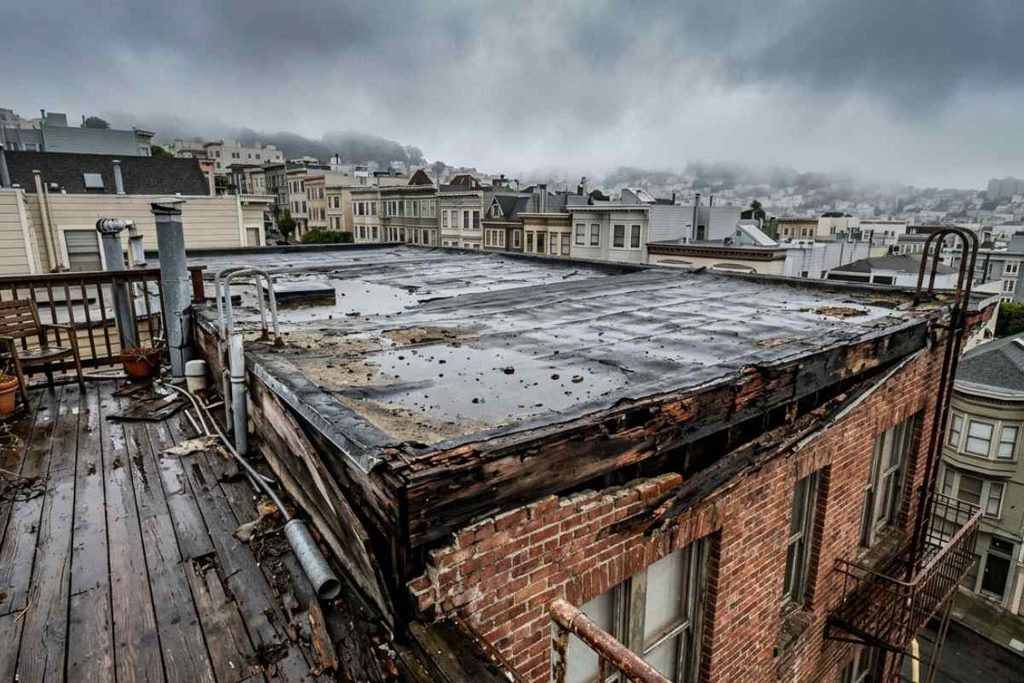
Look, I get the calls every winter. Someone in the Sunset or Richmond notices a soft spot on the roof deck, or the fascia looks a little crumbly, or the new roof they just paid for is already leaking again. Then we open it up and it’s not just surface stuff. The plywood sheathing is toast. The rafters are hollow in places. Sometimes the whole cantilever is pulled away from the building.
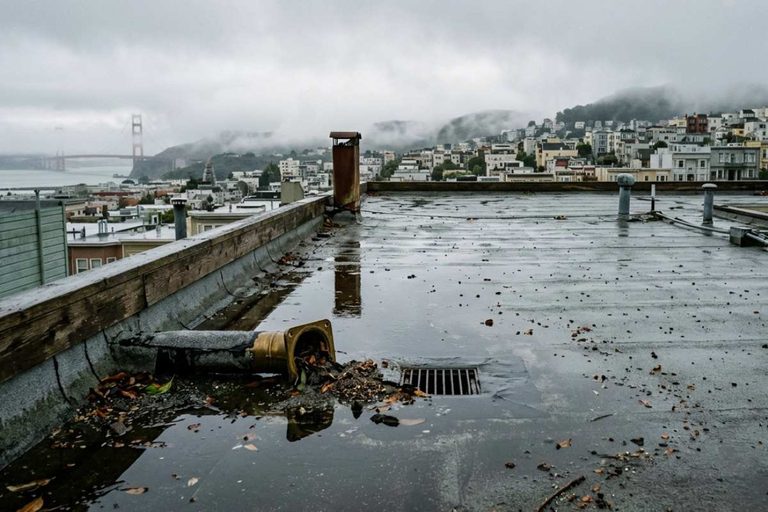
That’s dry rot in a San Francisco roof deck. And it’s almost always tied to water that sat too long — ponding after those atmospheric rivers, clogged scuppers, failed flashing around a rooftop deck, or just the fog that never really dries anything out here.
I’ve been doing this in the city long enough to know it’s not “just some wood rot.” In our older wood-frame buildings it turns into a structural problem fast. Load-bearing stuff. Insurance companies start asking questions. And if it’s a cantilever deck? Those things can go without warning. We’ve all seen the videos.
This isn’t a general dry-rot article. This is specifically about the roof deck, the sheathing, the rafters, the fascia, and the eaves on San Francisco flats and low-slope roofs. The stuff that happens after ponding water finds a way in.
What Dry Rot in a Roof Deck Actually Looks Like Here
Dry rot is a fungus. It likes damp, poorly ventilated wood. In SF that wood is usually the roof sheathing (plywood or skip sheathing on older jobs), rafter tails, fascia boards, and the joists that stick out to hold a rooftop deck.
You don’t always see it from the street. The paint still looks fine. The membrane on top might even be new. Then you probe it or we pull a section during a reroof and the wood crumbles. Musty smell. Sometimes white or brown fungal growth. Soft spots that give under a screwdriver.
On cantilever decks — the ones where the joists just keep going out from the building with no posts underneath — the rot starts at the connection and works its way back inside. Golden Gate Enterprises has a bunch of videos showing exactly this: fascia gone, rim joists rotted, plywood sagging, water trapped because the membrane failed years ago.
Reddit’s full of it too. People find dry-rotted plywood when the roofers tear off the old stuff. Or a $34k hit on a load-bearing wall. Or a new roof put right over rotten sheathing because someone didn’t want to deal with it.
The fungus doesn’t stop at the obvious damage. It travels along the grain. That’s why we probe past the soft spots until we hit solid wood. Leave any of it and it keeps going.
Learn More, Roof Leak After Rain in San
How Ponding and Roof Leaks Turn into Dry Rot in San Francisco
This is the part most generic dry-rot pages skip. They talk about crawl spaces and decks. We talked about the roof.
Ponding water — anything still sitting 48 hours after rain — finds the low spots. Clogged drains in the Sunset. Poor slope on older buildings. HVAC units blocking flow. Then it works under the membrane or through a failed flashing.
Fog slows everything down. Salt air in 94116 and 94122 (Sunset) and 94118/94121 (Richmond) eats the metal fasteners and flashing first, then the wood. Atmospheric rivers dump a lot of water in a short time. Older Victorians and Edwardians in Bernal Heights (94110, 94131) and the Mission weren’t built for this.
Common paths:
- Water running back under the eaves during downpours (classic on long rafter tails)
- Failed waterproofing on a rooftop deck over a flat roof
- Skylight leaks rotting the deck boards underneath
- New roof installed over skip sheathing or already-rotten plywood
- Gutters dumping at corners, or no overflow drains on older systems
Once the wood stays wet, the fungus takes over. Then you’ve got compressed insulation, sagging decks, and interior stains. Sometimes mold. Sometimes the insurance company drops you because the inspection report mentions “significant dry rot.”
I’ve seen roofers just overlay new sheathing on top of the bad stuff to save the homeowner money. That’s not a repair. That’s hiding the problem until the next leak.
Neighborhoods Where We See This Most
Sunset and Richmond take the worst of the salt and fog. Those 1920s–1940s buildings with the original wood framing. Bernal Heights, Mission, SOMA mixed-use. Cantilever decks on multi-family in the Castro or Nob Hill. Older houses in Fremont and Hayward too, but the marine climate here in the city accelerates it.
Zip codes we get the most calls from: 94116, 94122, 94118, 94121, 94110, 94131, 94103. Plus the ones where people just bought a 100-year-old house and the inspection missed the roof structure.
Signs It’s More Than Cosmetic
You don’t need to climb up there. Look for:
- Soft or sagging areas on the roof deck or eaves
- Crumbling fascia or rafter tails
- Water stains inside, especially near the roof line
- Musty smell in the attic or top floor
- Paint bubbling or flaking on soffits
- A rooftop deck that feels spongy or is pulling away from the building
- Recent ponding that never really goes away
If a roofer already told you “it’s just surface” but the wood feels hollow, get a second look. Especially if they want to put new material over it.
Why This Gets Dangerous Fast in SF Buildings
The wood in these roofs is often the original Douglas fir. No weather resistance once it gets wet. On a cantilever, the joists are carrying the whole deck. When they rot, the deck sags or pulls away. No countdown. It just fails.
We’ve had jobs where the stairs to the deck were completely disconnected because the structural connection rotted out. Or the rim joist on a cantilever was so far gone we had to open the stucco and go several feet back into the building.
Load path matters. That’s how the weight of the house gets to the ground. Rot in rafters, trusses, or sheathing messes with that. Then you’ve got seismic issues on top of it — a lot of these buildings already need cripple-wall work or bolting.
Insurance hates it. Multiple SF homeowners have been non-renewed over flat roofs plus documented rot. Home value takes a hit. Liability if someone gets hurt on a failing deck.
And the fungus keeps spreading if you don’t cut it all out.
How We Actually Diagnose It
We don’t guess. Moisture meter. Probing with a screwdriver or awl past the visible damage. Sometimes infrared if we suspect wet insulation. Camera if the drain lines are involved.
We look at the water source first. Is it still ponding? Failed flashing? HVAC condensate? Gutters? Then we see how far the rot has traveled.
On cantilevers we measure how far out it goes and calculate how far back into the building we have to go (roughly 2 feet in for every 1 foot out). That’s why these jobs get bigger than people expect.
If it’s over 50% of a deck or changing the structural footprint, you’re looking at a permit. DBI doesn’t mess around with that.
The Repair Process That Actually Lasts
First we stop the water. Clean the drains, fix the slope if needed, replace failed flashing or membrane. No point replacing wood if the leak is still there.
Then we cut out every bit of rotten wood. All of it. Treat the surrounding area. Replace with pressure-treated or properly matched kiln-dried stock. Proper flashing, new membrane on rooftop decks, engineered connections on structural members.
For cantilevers we sister or fully replace the joists, often with temporary shoring. Sometimes we have to open walls or ceilings to get the new members far enough back.
We tie it into any seismic work if it’s happening at the same time — sill plates, cripple walls, the whole load path.
Stucco, siding, interior finishes get restored. Waterproofing done right so it doesn’t happen again.
This is why a dual-license contractor (roofing + general) matters. A roofer who only does the membrane will overlay. A handyman might patch. We do the structure and the roof together.
What It Costs in the Bay Area in 2026
Drain cleaning and small fascia repairs: a few hundred to low thousands.
Localized sheathing and rafter work: several thousand, depending on access and how much we have to open up.
Full cantilever rebuild or major structural plus new waterproofing: $10k to $40k+ is the range we see. Permits, engineering, labor, and the 415 surcharge add up. One Reddit post mentioned $34k on a load-bearing wall. Roof replacements with sheathing work often land $16k–$30k for typical SF sizes.
Get three quotes from people who actually do this work, not just roofers. Small jobs aren’t always cheaper per square foot here.
Prevention That Works in Our Climate
Keep the water moving. Clean drains twice a year — before the rains and after. Photo log any ponding.
Walkway pads around HVAC so techs aren’t compressing the insulation.
Proper flashing on any rooftop deck or penetration.
If you’re reroofing, inspect the sheathing. Don’t let anyone cover rotten wood.
Maintenance plan. It’s cheaper than opening the whole roof later.
When It’s Time to Call Someone Who Does This Regularly
If the wood is soft, if there’s been ponding, if a new roof is already leaking, if the deck feels off, or if insurance is asking questions. Don’t wait for the next atmospheric river.
A contractor who understands both the roof system and the structure — and has done these cantilever and fascia jobs in the Sunset and Richmond — is what you want. Permits, engineering, the whole thing in-house.
We’ve pulled apart enough failed “repairs” by other crews to know the difference.