
Ponding Water on Flat Roofs in San Francisco (2026): Causes, Fixes & Costs
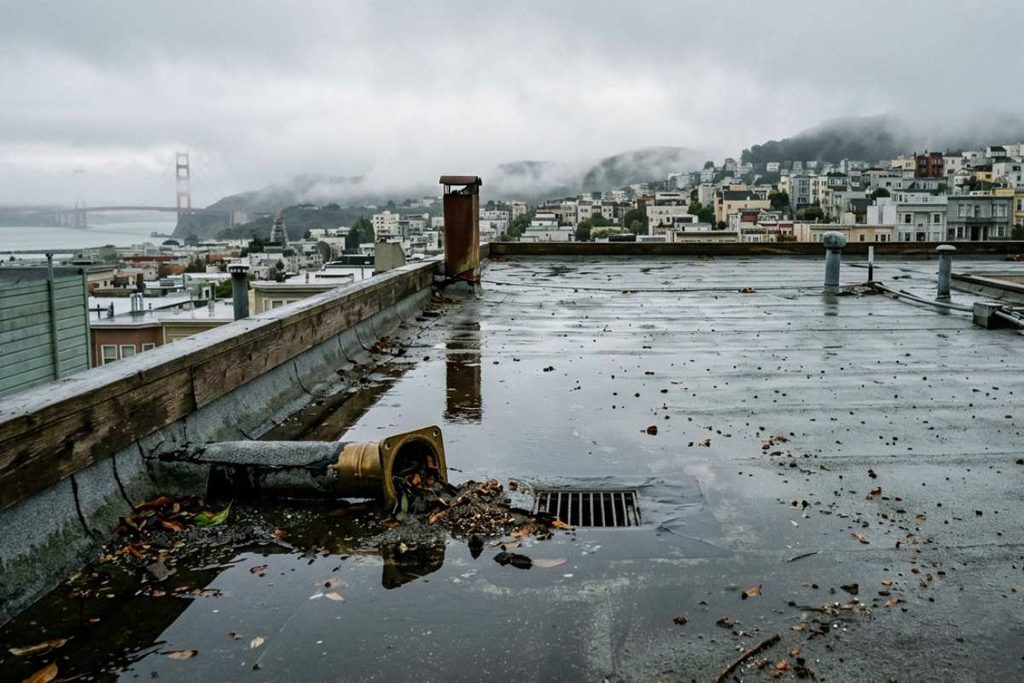
If water is still sitting on your San Francisco flat or low-slope roof 48 hours after the rain stops, you are ponding. That is not normal, and it is not something a competent installer leaves behind. Proper slope (at least ¼ inch per foot), correctly placed drains or scuppers, and overflow protection are required. When they are missing, the membrane, insulation, and structure take the damage.
San Francisco’s coastal fog, salt air, wind-driven rain, atmospheric rivers, and thousands of older buildings make ponding worse than in most cities. Evaporation is slow. Salt corrodes metal components, especially in the Sunset and Richmond. Older wood-frame and mixed-use buildings settle. Rooftop HVAC, skylights, and poor original drainage create dams. We see this constantly across 94116, 94122, 94118, 94121, Bernal Heights (94110/94131), the Mission, SOMA, and into Fremont and Hayward.
This guide covers the exact problems homeowners, property managers, and condo boards deal with here, the solutions that actually last in our marine climate, realistic 2026 Bay Area costs, insurance realities, and how to stop the cycle before it becomes leaks, mold, or structural issues.
What Counts as Ponding Water on a San Francisco Flat Roof?
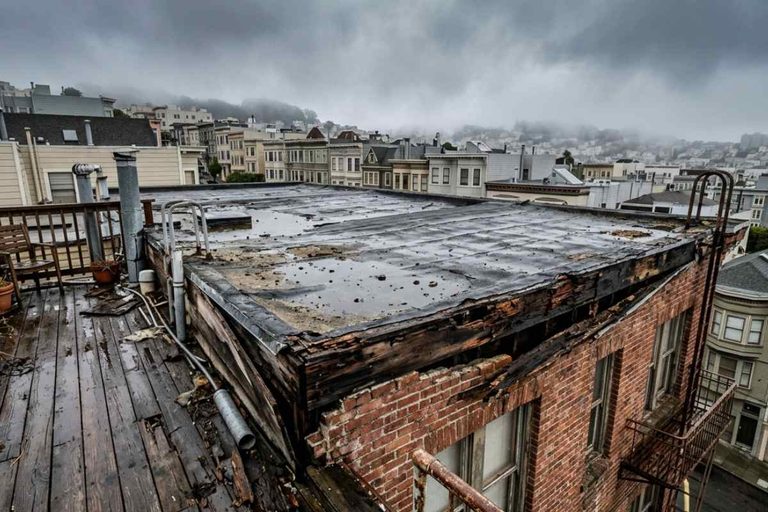
Ponding water is standing water that remains on the roof more than 48 hours after rainfall ends under normal drying conditions. The 48-hour threshold is the industry standard used by manufacturers and associations like ARMA. Recurring puddles in the same spots, dirt rings, algae, or water that gets deeper after each storm still need attention even if they sometimes disappear sooner.
Fog and high humidity in San Francisco slow evaporation. A puddle that would dry in 24 hours elsewhere can linger here.
One inch of water over 100 square feet weighs about 520 pounds. On older SF buildings never designed for extra live load, that adds up quickly.
Signs of Ponding You Can Spot Without Climbing the Roof
- Water still visible 48 hours later
- Staining or algae in the same locations after every storm
- Ceiling stains, bubbling paint, or damp spots inside, especially under low spots or near drains
- Overflowing edges or slow drainage during rain
- Soft or sagging areas on the membrane
Do not walk a wet membrane without proper fall protection. Wet surfaces are extremely slippery and skylights may not support weight.
Why Ponding Happens So Often on SF Flat and Low-Slope Roofs
Most pondering is not one single failure. These are the patterns we see on San Francisco and Bay Area jobs every rainy season.
Clogged Drains, Scuppers, and Downspouts
Urban debris, leaves, bird nesting material, and roofing granules pack around strainers. Wind-blown trash from nearby streets and trees makes it worse. Cast-iron piping in older buildings collapses or gets root intrusion. The blockage is often in the vertical pipe, not just the roof surface. Camera inspection finds it.
Insufficient Slope or Lost Pitch
Building codes require at least ¼ inch per foot. Many older SF buildings were built closer to dead-level or have settled. Previous overlays add weight and reduce effective pitch. HVAC curbs, skylights, and penetrations act as dams.
Structural Settling and Deck Deflection
Older buildings shift. Even a fraction of an inch creates a bowl. Once water collects, the extra weight deepens the low spot. This is common on longer spans and pre-1970s construction.
Compressed or Wet Insulation
Foot traffic from HVAC techs, equipment weight, and trapped moisture compress insulation. The surface drops and traps more water. This creates a self-reinforcing loop.
Improper Drain or Scupper Installation and Flashing
Legacy systems on older SF buildings often have poor flashing at internal drains. Water finds the weak point even if the rest of the roof looks okay. New roofs that pond immediately usually missed slope, drain height, or overflow details.
HVAC Condensate and Rooftop Equipment
Units dump water onto the roof instead of piping it away. Curbs and penetrations block flow.
Salt Air and Corrosion (Sunset, Richmond, Coastal Neighborhoods)
Metal drain bowls, fasteners, and pipes rust fast in 94116, 94122, 94118, and 94121. PVC or coated components last longer here.
Poor Original Design or Successive Repairs
Thick patches, uneven coatings, or missing overflow drains (required on modern systems) trap water. Some older roofs were even intended to hold water; that is no longer allowed and it is not safe.
Why Ponding Water Damages San Francisco Roofs Faster Than You Think
Ponding is not just a cosmetic issue here.
- Membrane deterioration accelerates. Water acts like a magnifying glass for UV. TPO, EPDM, PVC, and modified bitumen all age faster. A 20-year system can fail in 12–15 years.
- Extra structural load. Repeated ponding can approach or exceed original design limits on older decks.
- Wet insulation, mold, rot, and interior damage. In wood-frame SF buildings this leads to expensive restoration and electrical hazards.
- Algae, vegetation, and insect issues.
- Warranty void. Most manufacturers exclude ponding-related damage. Evidence of chronic ponding (dirt rings, algae) can kill a claim.
- Insurance problems. Multiple SF homeowners have been dropped or non-renewed specifically because of flat roofs and lack of documented maintenance. Insurers see ponding as a leak waiting to happen.
A nearby Sonoma near-collapse (over 13,500 pounds of water on a roof designed for far less) shows how fast this becomes structural. Many older SF buildings lack overflow drains and carry the same risk.
How to Diagnose Ponding Problems on Bay Area Roofs
You can note locations, take dated photos 24 and 48 hours after rain, and check interiors. A professional inspection should include:
- Visual of drains, scuppers, gutters, downspouts, and strainers
- Slope around low spots
- Membrane seams, flashing, penetrations, and previous patches
- Moisture testing or infrared for wet insulation
- Camera on drain lines when blockage is suspected
- Structural check if deflection is visible
Do not rely on a quick patch or coating over a wet or poorly sloped area. That is a temporary cover-up.
Proven Solutions for Ponding Water in San Francisco (Ranked from Simplest to Permanent)
These are the approaches that actually work in our climate, ranked by typical starting point.
1. Professional Drain Cleaning and Maintenance
Clear all drains, scuppers, gutters, and downspouts. Do this quarterly and after major storms, especially before the rainy season. This solves many cases and typically costs a few hundred dollars in the Bay Area.
2. Repair or Replace Damaged Drain Assemblies and Flashing
Corroded metal components get swapped for PVC or coated materials. Re-flashing around internal drains stops hidden leaks.
3. Crickets, Saddles, and Additional Drainage
Small triangular diversions move water around HVAC units and penetrations. Extra scuppers or internal drains (properly sized and located) help on larger or poorly designed roofs. Overflow/emergency drains are critical on older buildings that lack them.
4. Tapered Insulation
This creates artificial slope toward drains. It is often the most cost-effective permanent fix when done during a re-roof. It also adds R-value. Bay Area pricing is higher than national averages due to labor and permits.
5. Silicone Coatings for Ponding Resistance
Silicone coatings resist standing water better than acrylics. They protect the membrane but do not fix slope or drainage. Address the underlying problem first, then coat. Products like Gaco work as restoration on sound roofs, not as a slope correction.
6. Localized Fill or Leveling Compounds
Products similar to Green Slope can fill small, isolated low spots. They require proper prep, priming, and top coat. They are not a substitute for proper slope on a whole roof.
7. Full Re-Roof with Proper Slope and Drainage
When insulation is wet, the deck has deflected, or the system is at end of life, this is the right move. Options include modified bitumen (torch-down, still common and proven in the Bay Area), TPO, PVC (excellent ponding resistance), or silicone restoration systems. White/reflective surfaces help with heat but ponding still needs to be solved. Fire-retardant versions matter in some areas.
Black vs. white roof: White is generally better for energy in our climate, but ponding performance depends on the membrane and drainage, not just color.
Converting a flat roof to pitched is possible but usually several times more expensive and involves structural work and permits.
San Francisco and Bay Area Specific Factors
Neighborhoods and Zip Codes Most Affected
Sunset (94116, 94122) and Richmond (94118, 94121) see the worst salt corrosion. Bernal Heights (94110, 94131), Mission, SOMA (94103, 94107), and multi-family properties across the city plus Fremont and Hayward also show frequent ponding from settling and older drainage systems.
Local Costs in 2026
Labor and permits are higher here (the “415 surcharge” is real). Recent owner reports include around $16k for ~1,700 sq ft in Hayward a few years ago and $29k estimates for 3,000 sq ft. Drain cleaning is a few hundred dollars. Tapered insulation and added drains run into the thousands. Full replacement varies widely by size, access, material, and condition. Get three local quotes from licensed contractors. Small roofs are not always cheaper per square foot.
Insurance and Permitting
Documented maintenance, inspections, and drainage corrections help. Flat roofs are a known red flag for some carriers. SF has specific requirements around overflow drainage, Title 24 energy, and seismic considerations. A good contractor handles permits.
Prevention That Works in San Francisco’s Marine Climate
- Inspect and clean drains twice a year (before winter rains and after the season) plus after major storms.
- Keep a photo log of ponding locations with dates.
- Protect the membrane from extra foot traffic (walkway pads around HVAC).
- Address HVAC condensate piping.
- Schedule professional inspections, especially if the building is over 20 years old or has had repeated issues.
- Consider a maintenance plan. Preventative work costs far less than water damage, mold remediation, or emergency repairs.
When to Call a San Francisco Flat Roof Specialist
Call if:
- Water remains 48 hours after rain
- You have interior stains or bubbling
- The roof is new and already ponding
- You have been dropped by insurance or are shopping coverage
- Repeated backups or overflow
Temporary coatings or patches buy time but do not fix slope, blocked pipes, or structural sag. A licensed CA contractor who understands marine climate, older SF construction, and current codes is required for lasting results.