Flat Roofing San Francisco — Torch Down, TPO & Modified Bitumen Experts
Commercial roofing San Francisco businesses trust — new installs, repairs, flat roof systems & waterproofing. Licensed, insured.
Torch Down, TPO & Modified Bitumen Experts
Walk down almost any residential block here and look at the roofs, not the fronts. Flat, most of them — Victorians up front, flat roofs on top. Flat roofing san francisco properties need isn’t a niche service, it’s the default. We install and repair torch down, TPO, and modified bitumen across the city — most weeks, it’s the bulk of what our crews do.
Searching torch down roofing, ponding water, or why your flat roof needs constant attention? You’re in the right place. Quick note first: a flat roof and a shingle roof are basically different trades. A great shingle roofer isn’t automatically good at torch down — the skills barely overlap.
Torch Down Roofing San Francisco — Installation & Repair
Torch down gets requested more than anything else we quote. It’s the standard on most of San Francisco’s older flat roofs, so a lot of our calls are replacing an existing torch down roof with another one.
What Is Torch Down Roofing?
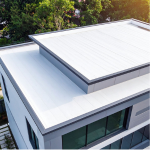
Torch down — sometimes called torched roofing or torch applied roofing — is a modified bitumen system applied with an open flame. The underside melts and bonds to the layer below when heated. Done right, you get a fully sealed, watertight membrane. Done wrong, you get bubbling, weak seams, and early failure.
Torch Down Roofing Material & Installation Process
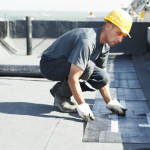
Old roofing comes off, or in some cases stays as a base layer if the deck’s sound. A base sheet goes down first. The cap sheet gets heat-welded on top, seam by seam, with every penetration sealed individually. It’s slow, precise work — not a weekend DIY project, given the open flame.
Torch Down Roof Coating & Rejuvenation
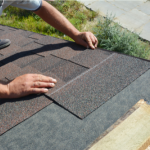
Not every aging torch down roof needs a full tear-off. If the membrane’s sound but UV-worn — cracking, faded, granule loss — a coating can add years of life for a fraction of replacement cost. It’s maintenance, not a miracle fix, and we’ll tell you honestly when it’s too late for that option.
How Much Does Torch Down Roofing Cost?
Depends on roof size, how many old layers come off, deck condition, and roof complexity. Multi-layer tear-offs cost more than a clean single-layer job. We give real numbers after a free inspection, not a phone estimate — square footage alone doesn’t tell the whole story.
Flat Roof Contractors San Francisco — Systems We Install
Torch down isn’t always the right call. Depends on the building, the budget, and what’s already up there.
TPO Flat Roofing
Single-ply, heat-welded, reflective. TPO’s become the go-to for a lot of newer flat roof installs, residential and commercial. Handles UV well, and the reflective surface helps with cooling costs — homeowners notice it on south-facing additions especially.
Flat Roof Installation
New installs need proper slope built into the deck or insulation, correct insulation for the building’s use, and materials matched to how the roof actually gets used — foot traffic changes the detailing needed.
Modified Bitumen Roofing
Torch down actually falls under this category — modified bitumen can be torch-applied, cold-applied, or self-adhered. Multi-layer, proven, and a big part of San Francisco’s flat roof stock for decades.
Flat Roof Repair
Most repairs come down to a short list — an open seam, a puncture, pulled-away flashing, or ponding water that’s found a weak spot. Caught early, it’s a same-visit fix. Ignored, it turns into deck damage.
Flat Roofing San Francisco — Why It’s Different Here

Flat roofing behaves differently here than in a drier, sunnier climate. Worth understanding before picking a material.
Best Flat Roof Materials for San Francisco’s Climate
The fog is the main factor — constant moisture, rolling in most nights, gone by mid-morning, repeat. Materials built for moisture cycling — quality TPO, properly installed torch down, UV-resistant modified bitumen — hold up better here than systems designed for drier climates.
Flat Roofing San Francisco — Why It’s Different Here
A “flat” roof isn’t actually flat — it needs a slight slope, or water just sits. Ponding water kills roofs fast, since standing water finds weak seams and UV exposure breaks down a wet membrane faster than a dry one. The fix is usually tapered insulation to correct slope, or clearing a drain that’s been undersized for years.
Standing water gone within 24–48 hours after rain is normal. Still sitting there after three or four days, especially in the same spot every time — that’s a drainage issue worth fixing before it becomes a leak.