
Roofing FAQ San Francisco | Honest Answers 2026
Roofing FAQ — San Francisco Homeowner Questions Answered Honestly
Most roofing FAQ pages are written to sell you something. Every answer somehow ends with “call now for a free quote Call +1 628 221-4900 ,” even the ones that should just be a straight yes or no. That’s not what this page is.
These are the actual questions San Francisco homeowners ask us — on the phone during a first call, during a free inspection, in emails after we’ve already quoted a job and someone’s doing their homework before signing anything. We’ve grouped them by category so you can jump to what you actually need, and every answer is written to stand on its own, whether you found this page through a search engine or an AI assistant that pulled the answer straight off this page.
If your question isn’t covered here, that’s not a dead end — call us at [PHONE NUMBER] and ask directly. We’d rather answer it in a two-minute conversation than have you guess.
Cost and Pricing Questions
This is where most people start, and honestly, we get it. Nobody wants to sit through a sales conversation just to learn whether a project is in the ballpark of what they can afford. So here’s the actual numbers, upfront.
How Much Does Roof Replacement Cost in San Francisco?
A full roof replacement in San Francisco typically runs $18,000 to $35,000 for a standard single-family home, depending on roof size, pitch, material, and what’s found underneath the old roofing once tear-off begins. Flat roof re-covers — common on Sunset District rowhouse additions and Mission District flat sections — tend to land on the lower end, roughly $8,000 to $16,000, since the labor and material complexity is lower than a steep-pitch Victorian roofline. Large or architecturally complex Victorian and Edwardian homes with multiple roof planes, turrets, or dormers run higher, sometimes into the $40,000-plus range.
Three things move that number more than anything else: whether the decking underneath needs replacement due to dry rot (extremely common in SF’s older, pre-1940 housing stock), whether you’re upgrading material — say, moving from asphalt shingle to standing-seam metal for better fog resistance — and the DBI permit fee, which is a required line item on essentially every reroof in the city.
The only way to get an accurate number for your specific home is a physical inspection, because a quote given over the phone without someone actually walking your roof isn’t a real quote — it’s a guess. We do free inspections and give you a written, itemized number before anything is signed.
Why Is SF Roofing More Expensive Than Other Cities?
Three real reasons, none of which are roofers padding their margins.
First, labor. Licensed, insured roofing crews in San Francisco cost meaningfully more than the national average — this is the same reason a plumber, an electrician, or a general contractor costs more here than in most of the country. It’s the local cost of skilled labor, full stop.
Second, the housing stock itself. More than three-quarters of San Francisco’s residential buildings went up before 1940 — Victorians, Edwardians, homes with complex roof geometry, steep pitches, turrets, and flashing details that a standard suburban ranch house simply doesn’t have. That complexity takes more time, which means more labor cost, which shows up in the quote.
Third, the permit and inspection process itself. San Francisco’s Department of Building Inspection requires a permit for essentially all reroofing work, and that permit fee, plus the time built into scheduling and passing the required inspection, is baked into every legitimate quote you’ll receive from a licensed contractor in this city. A quote that seems dramatically cheaper than everyone else’s is often a quote from someone planning to skip the permit — which creates real problems for you later, particularly at resale.
Permit Questions
San Francisco’s permitting process trips up more homeowners than any other part of a roofing project, mostly because nobody explains it clearly until you’re already mid-project and confused about why work stopped for two weeks.
Do I Need a DBI Permit to Reroof in San Francisco?
Yes, in essentially every case. San Francisco’s Department of Building Inspection (DBI) requires a permit for roof replacement, and generally for any reroofing work beyond very minor repairs — patching a small section of shingles, for instance, may not trigger the same requirement as a full tear-off. Because the threshold isn’t always obvious to a homeowner, the safest approach is to ask your contractor directly whether your specific project requires a permit, and if they say no for something that sounds like a full reroof, ask them to point you to the specific DBI code exemption — a licensed contractor working legitimately in this city should be able to answer that without hesitation.
Skipping a required permit isn’t just a technicality. Unpermitted roofing work can create real problems at resale — buyers’ agents and inspectors in San Francisco routinely check permit history, and unpermitted work can affect your ability to close a sale smoothly, sometimes requiring retroactive permitting or even removal and redo of the work.
How Long Does an SF Roofing Permit Take?
For a standard residential reroof, DBI permit approval commonly takes a couple of weeks from filing to issuance, though this varies with DBI’s current workload and whether your project requires any additional review — historic district properties, for instance, sometimes face longer timelines due to added review layers. Filing correctly the first time matters more than almost anything else for keeping this timeline short; incomplete or incorrectly filed applications are the most common cause of delays, which is part of why using a contractor experienced specifically with SF’s DBI process — not just roofing in general — saves real time.
A licensed contractor who does regular business with DBI will typically handle the permit filing as part of the project, which is worth confirming upfront: ask whether permit filing and the fee are included in your quote, or whether that’s an additional step you’re expected to handle yourself.
Material Questions
Material choice matters more in San Francisco than in most cities, because this isn’t one uniform climate — it’s several distinct microclimates packed into 49 square miles, and the right material genuinely depends on which part of the city your roof sits in.
What Is the Best Roofing Material for the Fog Belt?
If your home sits in one of San Francisco’s fog-belt neighborhoods — the Outer Sunset, Outer Richmond, Parkside, and similar zones where Karl the Fog sits low and heavy for large stretches of the day, sometimes not burning off at all in peak summer — material selection should be built around moisture and biological growth resistance first, appearance second.
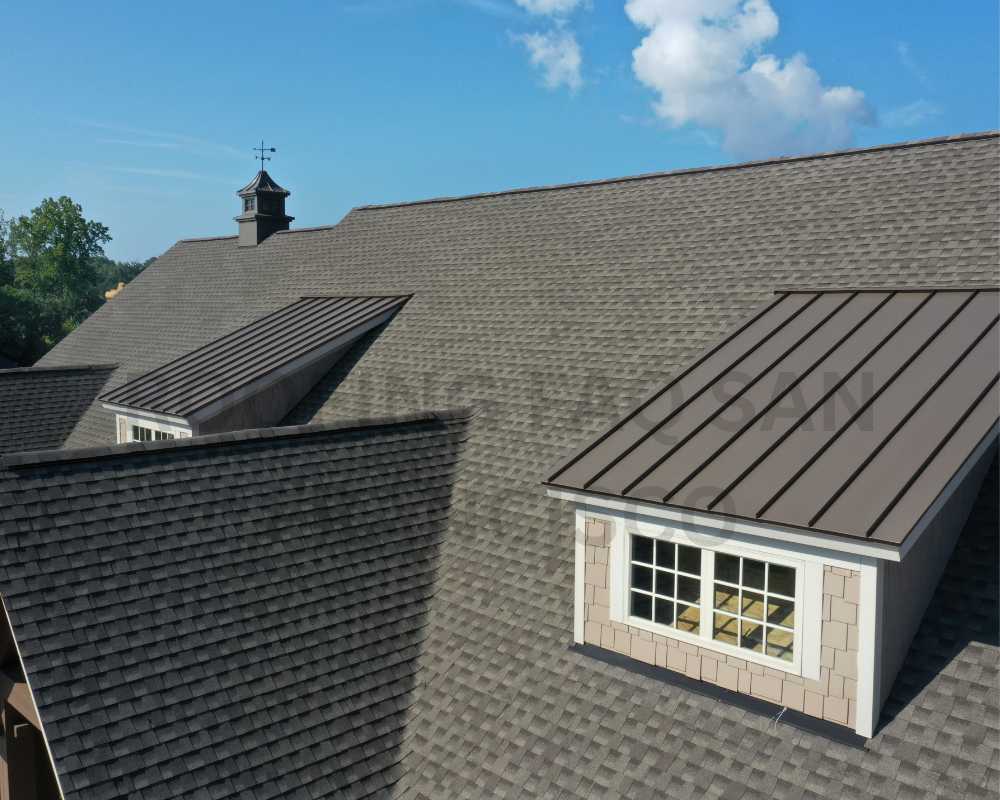
For steep-pitch roofs, algae-resistant architectural shingles are the practical minimum; standard shingles without algae resistance will develop visible moss and algae growth within a few years in these zip codes. Standing-seam metal roofing is the strongest long-term option for fog-belt homes specifically because it doesn’t retain surface moisture the way shingle roofing does, which means dramatically less biological growth and less maintenance over the life of the roof — the tradeoff is a higher upfront material and installation cost.
For flat roof sections, common on rowhouse additions throughout these neighborhoods, SBS-modified bitumen (an asphalt-based, torch-applied or cold-applied membrane system) tends to hold up better in consistently cool, moist conditions than some alternative flat roof systems, because it stays more flexible in lower temperatures — which matters when a roof rarely gets the kind of consistent warm-weather curing that flat roof membranes in sunnier parts of the city get.
How Long Do Flat Roofs Last in San Francisco?
A properly installed flat roof in San Francisco generally lasts 15 to 20 years, though the specific number depends heavily on material choice, installation quality, and — significantly in this city — which microclimate the roof sits in. A flat roof in a sunnier, drier zone like Bernal Heights or Potrero Hill will often outlast an identical system installed on a fog-belt rowhouse in the Outer Sunset, simply because it isn’t dealing with the same daily moisture exposure.
The bigger factor in flat roof lifespan, more than the material itself, is drainage and maintenance. A flat roof with poor drainage — standing water that doesn’t clear within a day or two after rain — will fail well before its rated lifespan regardless of what membrane system was used. Regular inspection, particularly before and after the atmospheric river season each winter, catches drainage and seam issues early enough to matter.
Insurance and Claims Questions
More SF homeowners are dealing with this than most people realize — insurance carriers have gotten noticeably more aggressive about roof-condition-related non-renewals in California over the past couple of years, and it catches people off guard.
Does Homeowner Insurance Cover Roof Replacement in SF?
It depends entirely on the cause of the damage and your specific policy. Insurance typically covers roof damage from a sudden, covered event — wind damage, a fallen tree limb, storm damage from something like a named atmospheric river event. It generally does not cover roof failure due to age, wear, or lack of maintenance, which insurers usually classify separately from storm damage.
This distinction matters a lot in San Francisco specifically, because so much roof deterioration here is gradual — moss growth, slow moisture damage, dry rot developing over years — rather than a single dramatic storm event. If you’re filing a claim, the timeline and documentation of what actually caused the damage matters enormously to whether it’s covered. Read your specific policy, and if you’re unsure whether your situation qualifies, that’s a conversation for your insurance agent directly — we can document roof condition for you, but we don’t make coverage determinations.
What Do I Do If My Insurer Threatens to Cancel Over Roof Conditions?
This has become increasingly common across California, not just San Francisco. Insurers are sending non-renewal notices tied specifically to roof age or visible condition issues, sometimes with a 30- to 90-day window to address it before coverage lapses.
The first move is calling your agent directly to understand exactly what triggered the notice and what specifically needs to happen to keep coverage — sometimes it’s a full replacement requirement, sometimes documented repair and a follow-up inspection is enough. From there, get a professional roof inspection with written documentation of current condition; this is usually what the insurer’s underwriting department actually wants to see, whether that leads to a repair scope or a replacement. Don’t wait until close to the deadline — between scheduling an inspection, getting repair or replacement work scheduled, and the DBI permit timeline if replacement is needed, this process takes real weeks, not days.
Maintenance and Problem Questions
These are the questions that come up once you already own the roof, not while you’re shopping for one.
How Often Should I Have My SF Roof Inspected?
Once a year is a reasonable baseline for most San Francisco homes, ideally scheduled in late summer or early fall — before the atmospheric river season starts bringing sustained heavy rain, typically running November through March. That timing lets you catch and fix small issues (a lifted shingle, minor flashing wear, early moss growth) before winter rain turns them into an active leak.
If your home is in a fog-belt neighborhood, or your roof is more than 15 years old, or you’ve had any prior leak or repair history, twice-yearly inspection is worth considering — once before the rainy season and once after, to check for any storm-related damage that wasn’t obvious from the ground.
What Causes Moss on SF Roofs?
Moss and algae growth on San Francisco roofs comes down to sustained moisture combined with limited direct sun exposure — exactly the conditions Karl the Fog creates across large parts of the city, especially the Outer Sunset, Outer Richmond, and other fog-belt zones. Asphalt shingle roofs without algae-resistant granules are the most susceptible; the biological growth actually feeds on organic material in standard shingle granules, which is why algae-resistant shingle products (built with copper or zinc-infused granules that inhibit growth) exist specifically to interrupt this.
Once moss establishes itself, it’s not just cosmetic — moss retains moisture directly against the shingle surface, which accelerates granule loss and shortens the roof’s actual lifespan, and root structures from moss can work into shingle seams over time. Left unaddressed for years, what starts as a moss problem can become a premature reroof.
What Is an Atmospheric River and What Does It Do to My Roof?
An atmospheric river is a narrow band of concentrated moisture in the atmosphere that can move enormous volumes of water vapor from the Pacific directly into California, producing sustained, heavy rainfall over days rather than a typical passing storm. San Francisco’s rainy season, roughly November through March, is largely shaped by these events — several strong atmospheric rivers each winter are typically responsible for the majority of the city’s annual rainfall.
For roofs, the risk isn’t usually the rain volume alone — it’s sustained volume hitting existing weaknesses. A roof with a small, previously unnoticed flashing gap or a slightly undersized drain that’s never been tested by real volume can hold up fine through routine rain and then fail during an atmospheric river event, when hours of sustained heavy rainfall exposes exactly the vulnerability that lighter rain never revealed. This is part of why pre-season inspection matters specifically in San Francisco — catching a small issue in October is dramatically cheaper and less disruptive than dealing with an active leak during a January atmospheric river.
FINAL CTA SECTION
Didn’t find your question here? That happens — every roof and every homeowner’s situation is a little different, and we’d genuinely rather talk it through directly than have you guess based on a generic answer.
Call or Text: +1 628 221-4900 Free Inspection. Honest Answers. No Pressure.