
Standing Seam Metal Roofing San Francisco |Bay Area Installers | Best Estimate
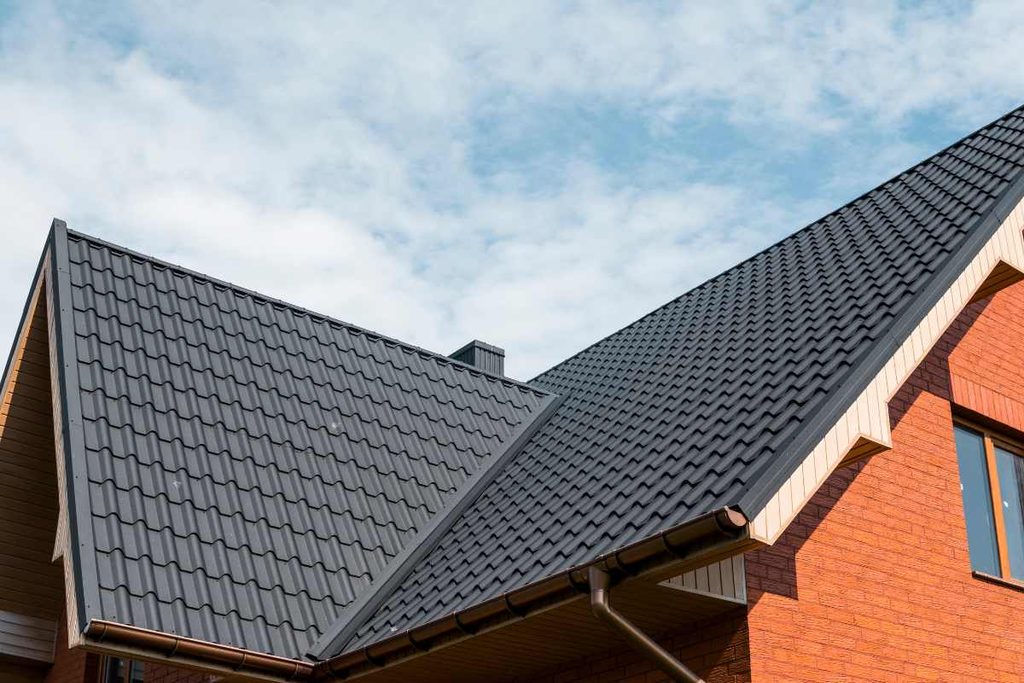
CSLB-licensed standing seam metal roofing contractors serving San Francisco & Bay Area. Kynar-coated steel, copper & aluminum standing seam for Victorian homes & commercial buildings. Fog-zone specified. DBI permits.
San Francisco’s Standing Seam Metal Roofing Specialists — Fog-Zone Engineered, Victorian-Compatible, DBI-Permitted
If you’ve been searching for a standing seam metal roof contractor near me in San Francisco or the Bay Area, you’ve already done the most important part of your research correctly — recognizing that standing seam metal roofing is genuinely the superior long-term specification for a significant portion of San Francisco’s residential and commercial building stock.
The question most San Francisco property owners reach next is: why is it so difficult to find a standing seam metal roofing contractor who actually understands San Francisco’s specific building types, fog-belt microclimate, and the access logistics that steep-slope Victorian properties on the city’s residential hills require?
The answer is that most standing seam metal roofers near me searches in San Francisco surface contractors whose primary market is suburban tract housing or commercial warehouse construction — not the Victorian rowhouses of Pacific Heights and the Western Addition, not the steep-slope hillside homes of Twin Peaks and Bernal Heights, and not the historic masonry and Edwardian buildings of the Marina and North Beach where standing seam metal roofing provides the greatest performance advantage over membrane alternatives.
We are sanfrancisco roofing, a CSLB-licensed roofing contractor specializing in standing seam metal roof installation across San Francisco and the Bay Area — serving every ZIP code from 94102 to 94134 with crews trained specifically for San Francisco’s building stock, its fog-belt microclimate, and the DBI permit process that every metal roofing installation in this city requires. NAICS Code 238160 — Roofing Contractors.
Learn More, Metal Roofing San Francisco
Why Standing Seam Metal Roofing Makes Specific Engineering Sense in San Francisco
Standing seam metal roofing isn’t the right answer for every San Francisco building. It is, however, the correct long-term specification for a much larger percentage of San Francisco’s building stock than most property owners realize — and understanding why requires understanding what San Francisco’s fog-belt microclimate actually does to conventional roofing systems over time.
The Fog Belt Performance Argument — Why Standing Seam Outperforms in SF
San Francisco’s marine layer creates a continuous moisture cycling pattern that no other Bay Area market experiences at the same intensity. The fog that sits over the Outer Richmond (94121), Outer Sunset (94122), Twin Peaks (94131), and the western residential hills between October and May doesn’t just bring rain — it deposits continuous moisture on every roofing surface during fog events, even when there is zero measurable rainfall.
What this continuous moisture cycling does to conventional roofing systems:
Asphalt shingles lose granule integrity through repeated moisture cycling faster in San Francisco’s fog belt than anywhere else in the Bay Area. A quality asphalt shingle system rated for 30 years in a dry California climate may deliver 15 to 18 years of actual service life in Twin Peaks (94131) or the Outer Sunset (94122) under continuous marine moisture exposure. The granule loss that accelerates in this environment isn’t primarily UV-driven — it is moisture-cycling-driven, which is why SF fog-belt shingle roofs fail faster than their ratings suggest.
Modified bitumen flat roofs accumulate biological growth — moss, algae, lichen — at rates that drive drain blockage and membrane lifting within three to five years of installation in high-fog-frequency ZIP codes without algae-resistant granule specification and regular drain maintenance.
Standing seam metal roofing in the same environment: zero biological growth accumulation. No granule loss through moisture cycling. No membrane seam vulnerability to ponding. The concealed fastener system eliminates the primary moisture infiltration pathway that exposed-fastener metal systems create. A properly specified standing seam metal roof in Twin Peaks or the Inner Richmond will deliver 40 to 60 years of service with minimal maintenance — outperforming asphalt shingle alternatives by two to three complete replacement cycles.
The Victorian and Craftsman Compatibility Argument
San Francisco’s Victorian and Craftsman residential buildings — concentrated throughout Pacific Heights (94115), the Western Addition (94115), Noe Valley (94114), the Castro (94114), and the hillside residential neighborhoods approaching Twin Peaks (94131) — carry original architectural details that make standing seam metal roofing not just a performance choice but frequently the period-appropriate material choice.
Victorian and Craftsman homes historically featured metal roofing on steep-slope sections, decorative dormers, and bay window caps. Standing seam systems in period-appropriate profiles — Kynar-coated steel or copper in profiles that match original architectural intent — integrate with Victorian building character in ways that asphalt shingle alternatives don’t. A standing seam metal roof on a Victorian-era Pacific Heights home isn’t a modern imposition on a historic building — it’s a return to the material language the building’s original architects understood.
The Zero-Maintenance Biological Growth Argument
For San Francisco property owners whose buildings sit adjacent to the Presidio’s forest canopy (94118), Golden Gate Park’s tree line (94117, 94122), or in the canyon moisture corridor of Glen Park (94131), standing seam metal roofing eliminates the single most chronic maintenance burden on fog-belt roofing: biological growth management.
Moss, algae, and lichen that colonize modified bitumen and asphalt shingle surfaces in these high-moisture, debris-loading environments physically lift membrane sections, block drainage systems, and accelerate material degradation in ways that require professional intervention every three to five years. Standing seam metal roofing supports zero biological growth — eliminating that maintenance cycle entirely for the life of the roof.
Standing Seam Metal Roofing — What It Is and How It Works
For property owners researching standing seam metal roofing contractors near me for the first time, a clear explanation of what standing seam metal roofing actually is and why its construction method matters for performance.
Standing seam metal roofing is a metal panel roofing system characterized by raised interlocking seams that run vertically from eave to ridge. The seams stand above the panel field — typically one to two inches — and interlock with adjacent panels through a mechanical or snap-lock connection. Fasteners are completely concealed within the seam joint, meaning no fastener penetrates the exposed panel surface.
This concealed fastener geometry is the source of standing seam’s primary performance advantages:
No exposed fastener penetrations — Every exposed fastener on a conventional metal or shingle roof is a potential moisture entry point as the fastener’s neoprene washer ages and the hole through which it passes enlarges through thermal expansion cycling. Standing seam eliminates all exposed fasteners from the panel field.
Thermal expansion accommodation — Metal panels expand and contract with temperature cycling. Standing seam’s floating clip attachment system allows panels to move freely through thermal cycles without the stress concentration that fixed-fastener systems develop at fastener points over time.
Seam geometry sheds water — The raised seam profile physically redirects water away from the seam joint rather than relying on sealant or lapping to manage water at panel junctions.
Standing Seam Metal Roofing Systems We Install in San Francisco
Kynar-Coated Steel Standing Seam
The most common specification for San Francisco residential and commercial standing seam installations. Kynar 500 or Hylar 5000 PVDF coating systems provide superior color retention and corrosion resistance in marine air environments — a critical specification advantage in San Francisco’s salt-laden coastal atmosphere where standard polyester coatings fade and chalk faster than in inland markets.
Why Kynar matters in San Francisco’s marine air: The continuous salt-laden marine air that San Francisco’s western and northern neighborhoods experience accelerates coating degradation on standard polyester-coated metal panels. Kynar PVDF coating systems maintain color integrity and corrosion resistance in marine air environments for 40+ years — the correct specification for San Francisco properties facing the Pacific Ocean or San Francisco Bay.
Copper Standing Seam
The premium specification for historic Victorian and Edwardian buildings in San Francisco where period-appropriate material is the priority. Copper develops a natural patina that integrates with historic building character, requires zero coating maintenance, and delivers service life that outlasts the building itself when properly installed.
We fabricate and install custom copper standing seam panels for historic San Francisco residential buildings — matching original architectural profiles, integrating with existing copper gutter and downspout systems, and ensuring material compatibility with the building’s original metal elements.
Aluminum Standing Seam
Specified for applications where weight is a structural constraint — particularly relevant on San Francisco’s older Victorian buildings where original framing was engineered for lighter roofing loads than modern steel systems deliver. Aluminum’s natural corrosion resistance also makes it appropriate for extremely high marine air exposure properties along the Marina (94123) waterfront and the Embarcadero (94105) corridor.
Standing Seam Metal Roofing Applications in San Francisco
Residential Standing Seam — Steep-Slope Victorian and Craftsman Homes
The primary residential application for standing seam metal roof installation in San Francisco is on the steep-slope sections of Victorian and Craftsman homes throughout the city’s residential hill neighborhoods. These buildings often combine steep-slope front elevations — gabled dormers, cross-gabled facades, pitched front sections — with flat or low-slope rear sections. The steep-slope sections are precisely where standing seam delivers the greatest performance advantage over asphalt shingle alternatives.
Neighborhoods where we install residential standing seam most frequently:
- Pacific Heights / 94115 — Victorian and Edwardian rowhouses with complex gabled front elevations. Standing seam on front-facing steep sections with Kynar coating in period-appropriate profiles.
- Twin Peaks / 94131 — Highest fog-catchment elevation in the city. Standing seam outperforms every membrane and shingle alternative at this elevation’s continuous moisture loading.
- Bernal Heights / 94110 — Hillside Craftsman and Victorian homes with steep south and west-facing sections. Standing seam on exposed faces, modified bitumen on flat rear sections.
- Noe Valley / 94114 — Victorian rowhouses with dormers and gabled sections. Custom standing seam profiles matching original Victorian architectural details.
- Russian Hill / 94109 — Hillside properties with complex roof geometries. Standing seam on accessible steep sections with copper accent details on dormers and bay caps.
- Glen Park / 94131 — Canyon-adjacent Victorian and Craftsman homes. Standing seam eliminates the biological growth cycle that affects membrane alternatives in this canyon moisture environment.
Commercial Standing Seam — San Francisco Commercial Corridor Buildings
Standing seam metal roofing on San Francisco commercial buildings serves a different function than on residential properties — here the primary driver is often the combination of long service life, minimal maintenance requirements, and the load-bearing capacity of standing seam systems for rooftop mechanical equipment mounting.
Commercial standing seam applications we handle in San Francisco:
- Mixed-use buildings on Geary Boulevard (94118), Valencia Street (94110), and Mission Street (94110, 94112) where long service life reduces the disruption of repeated re-roofing cycles on active commercial occupancies
- Light commercial and industrial buildings in Potrero Hill (94107) and Dogpatch (94107) where structural standing seam panels span between purlins without requiring a continuous deck substrate
- Institutional buildings throughout the city where 50+ year service life specification is required
Historic Building Metal Restoration — Cornices, Bay Caps, and Architectural Metal
San Francisco’s Victorian and Edwardian building stock carries original decorative metal elements — bay window caps, decorative cornices, parapet copings, and architectural fascias — that have corroded or been replaced with incompatible materials over decades of deferred maintenance. We fabricate and install period-appropriate replacement metal elements in copper, Kynar-coated steel, and zinc for historic building restoration projects throughout the city.
Common historic metal restoration scopes we handle:
- Bay window cap replacement and flashing on Victorian buildings throughout 94115, 94114, 94117, and 94118
- Decorative cornice cap restoration on commercial Victorian buildings on Mission Street, Valencia Street, and Fillmore Street
- Parapet coping replacement in heavy-gauge copper or Kynar-coated steel on masonry commercial buildings
- Valley flashing fabrication in copper or Kynar steel on Victorian pitched roof sections
The Standing Seam Installation Process in San Francisco
Installing standing seam metal roofing on San Francisco properties requires a more complex process than suburban standing seam installation — because San Francisco’s building stock, street logistics, and DBI permit requirements add variables that suburban installations don’t encounter.
Step 1 — Structural Assessment and Load Calculation
Before any standing seam scope is finalized, we assess the existing roof structure’s capacity to support the new metal roofing system. On San Francisco’s older Victorian and Edwardian buildings, original framing was engineered for the dead load of original roofing materials — frequently wood shingles or early composition roofing lighter than modern steel panel systems. We verify structural adequacy before finalizing the material specification and adjust — specifying aluminum rather than steel where weight constraints warrant — rather than discovering structural limitations after material has been ordered.
Step 2 — DBI Permit Application
Every standing seam metal roofing installation in San Francisco requires a San Francisco Department of Building Inspection permit. On historic buildings — particularly those in designated historic districts or with landmark status — the permit process may require additional review by the San Francisco Planning Department’s Historic Preservation staff. We manage the complete permit process including any historic review coordination required for your specific property.
Step 3 — Staging and Access Planning
Standing seam metal roofing installation on San Francisco’s residential hill properties requires specific staging and access planning that flat-terrain installations don’t:
- Material delivery to steep-slope properties on Twin Peaks Boulevard, Burnett Avenue, Divisadero Street, and the residential streets climbing Bernal Heights and Russian Hill requires advance coordination with delivery vendors for equipment capable of handling steep grade approaches
- SFMTA street space permits for materials staging on narrow residential streets throughout the city’s hill neighborhoods
- Fall protection planning specific to each property’s roof pitch, height, and parapet or eave configuration
Step 4 — Substrate Preparation and Underlayment
Proper underlayment specification under San Francisco standing seam installations is more critical than in drier Bay Area markets because the fog-belt moisture cycling that metal panels must manage creates condensation on the underside of panels during temperature transitions. We specify synthetic or self-adhering underlayment systems that manage this condensation without trapping moisture against the roof deck — a specification detail that directly affects the longevity of the wood decking beneath the metal system.
Step 5 — Panel Fabrication and Installation
Standing seam metal panels are roll-formed on-site for most San Francisco residential installations — allowing panels to be fabricated to the exact length required for each roof section without field-cutting that compromises panel integrity. On-site roll-forming also eliminates the transportation logistics of pre-fabricated full-length panels on San Francisco’s narrow residential streets.
Panel installation proceeds from eave to ridge with floating clip attachment that accommodates thermal expansion. Seams are mechanically crimped or snap-locked depending on the panel profile specified. Ridge, hip, valley, and eave trim elements are custom-fabricated to match the panel profile.
Step 6 — DBI Inspection Sign-Off and Documentation
Final DBI inspection and permit sign-off is managed by our team. You receive the complete permit package — permit application, inspection records, and final sign-off documentation — formatted for insurance carrier review and property title records.
Standing Seam Metal Roofing Cost in San Francisco | What to Expect
Standing seam metal roofing cost in San Francisco is higher than asphalt shingle or modified bitumen alternatives — and understanding the total cost-of-ownership over the ownership horizon is the correct framework for evaluating that premium.
Typical Standing Seam Metal Roofing Cost Ranges — San Francisco 2024-2025:
| System | Cost Per Square (100 sq ft) | Expected Service Life |
| Kynar Steel Standing Seam | $900 — $1,400 | 40-60 years |
| Aluminum Standing Seam | $1,000 — $1,500 | 40-60 years |
| Copper Standing Seam | $1,800 — $2,800 | 60-100+ years |
| Asphalt Shingle (comparison) | $350 — $600 | 15-20 years SF fog belt |
| Modified Bitumen (comparison) | $400 — $700 | 15-20 years |
The total cost-of-ownership calculation for Twin Peaks (94131):
An asphalt shingle roof in Twin Peaks at $500/square that requires replacement every 17 years costs $500 + $500 (replacement) + $500 (second replacement) = $1,500/square over 51 years plus three mobilization costs, three sets of permit fees, and three tear-off disposals.
A Kynar steel standing seam roof at $1,100/square that delivers 50+ years of service in Twin Peaks’ fog-catchment environment costs $1,100/square over the same period — with zero replacement cycles, one permit, and one mobilization.
The standing seam premium pays for itself in the first replacement cycle you avoid.
How to Choose the Right Standing Seam Metal Roofing Contractor in San Francisco
Whether you searched “standing seam metal roof contractor near me,” “standing seam roofing contractors near me,” or “metal roofing near me” and found us, these are the questions that separate a contractor who installs standing seam metal roofing correctly in San Francisco from one who brings suburban installation experience to a market it doesn’t fit:
- Ask about on-site panel roll-forming capability. On-site fabrication eliminates the logistics problem of transporting full-length panels on San Francisco’s narrow residential streets.
- Ask about Kynar versus polyester coating specification. In San Francisco’s marine air environment, Kynar PVDF coating is the correct specification. A contractor defaulting to polyester coatings is under-specifying for this climate.
- Ask about underlayment specification for fog-belt condensation management. The underlayment system beneath standing seam panels in San Francisco’s continuous moisture environment requires specific selection — not a generic synthetic underlayment applied as a standard detail.
- Ask about DBI permit management. Every standing seam installation in San Francisco requires a permit. A contractor who suggests otherwise is proposing unpermitted work.
- Ask about structural assessment on Victorian-era buildings. Original Victorian framing requires load verification before standing seam steel panels are specified.
Serving Every San Francisco Neighborhood | Standing Seam Metal Roofing
We install standing seam metal roofing across every San Francisco ZIP code:
Residential Hill Neighborhoods (Primary Standing Seam Market):
- Twin Peaks / 94131 — Fog catchment elevation. Standing seam optimal specification.
- Pacific Heights / 94115 — Victorian and Edwardian steep sections. Custom period profiles.
- Noe Valley / 94114 — Victorian dormer and gabled sections.
- Bernal Heights / 94110 — Hillside Craftsman and Victorian homes.
- Russian Hill / 94109 — Complex multi-pitch Victorian roof geometries.
- Glen Park / 94131 — Canyon moisture environment. Zero biological growth advantage.
Fog-Belt Western Neighborhoods:
- Inner Richmond / 94118 — Presidio-adjacent. Maximum fog exposure. Standing seam optimal.
- Outer Richmond / 94121 — Highest fog frequency ZIP. Standing seam longevity advantage maximum.
- Inner Sunset / 94122 — Victorian and Craftsman homes with steep gable sections.
- Outer Sunset / 94122 — Ocean Beach marine air. Kynar coating critical specification.
Northern and Commercial Neighborhoods:
- Marina District / 94123 — Waterfront salt air. Aluminum or Kynar steel specification.
- North Beach / 94133 — Historic masonry buildings. Copper accent details and cornice restoration.
- Pacific Heights / 94115 — Historic Victorian copper restoration and standing seam installation.
Frequently Asked Questions: Standing Seam Metal Roofing San Francisco
Get Your Free Standing Seam Metal Roofing Estimate Today
From the fog-intercepting summit of Twin Peaks to the Victorian streetscapes of Pacific Heights, from the Craftsman bungalows of Glen Park to the Edwardian rowhouses of the Inner Richmond, san francisco roofing is San Francisco’s dedicated standing seam metal roofing specialist — fog-zone specified, Victorian-compatible, DBI-permitted, and built for the long-term ownership horizon that San Francisco property owners deserve. NAICS Code 238160 | All San Francisco ZIP Codes.