Metal Roofing San Francisco | Standing Seam
Standing seam metal roofing for San Francisco’s fog belt — 40+ year lifespan, zero moss growth. Free estimate. Call Us ++1 628 221-4900
Metal Roofing in San Francisco — Why Standing Seam Makes the Most Sense in the Fog Belt
I want to make an argument on this page, not just describe a product. If you live in the Outer Sunset, the Outer Richmond, Parkside, or anywhere else Karl the Fog sits heavy most mornings, standing seam metal roofing isn’t just an option worth considering. It’s arguably the single best material match this city’s climate has for its housing stock, and almost nobody’s actually explaining why.
Most roofing content treats metal as a premium upgrade — nicer, pricier, maybe worth it if you’ve got the budget. That’s true as far as it goes, but it misses the actual point for a fog-belt home specifically. This isn’t about luxury. It’s about a material that genuinely doesn’t care about the exact conditions that wear out everything else faster out here.
This page walks through why that’s true, what standing seam actually is if you’re not familiar with the term, what it costs against the alternative, and where in the city it makes the most sense versus where it’s more of a nice-to-have.
Contac us for Silicone Roof Coating or TPO Roofing in San Francisco.
Why Metal Roofing Makes More Sense in San Francisco Than Anywhere Else
Every material has a climate it’s built for. Asphalt shingle was engineered for a market that gets real seasonal variation — hot dry summers, cold wet winters, sun that actually bakes a roof for months at a stretch. San Francisco doesn’t really have that. We have persistent, low-grade dampness that never fully lets up in the neighborhoods that get it worst.
40-50 Year Lifespan vs 20-25 for Asphalt in Fog Conditions
A standard asphalt shingle roof in a sunnier part of the country might genuinely hit its rated 25-30 year lifespan without much drama. In the Outer Sunset or Outer Richmond, that same shingle roof is often showing serious wear well before then, because the fog belt’s persistent moisture accelerates granule loss and shortens the material’s functional life in a way dry-climate warranties were never tested against.
Standing seam metal, properly installed, routinely lasts 40 to 50 years regardless of climate, and in a consistently damp environment specifically, it actually outperforms its own reputation, because it simply doesn’t have the same failure points that moisture exploits in a shingle roof.
Zero Moss and Algae Growth — No Annual Treatment
This is the part that should matter most to anyone who’s already dealing with a moss problem, or watching a neighbor deal with one. Moss and algae need a surface they can actually attach to and retain moisture against — asphalt shingle granules are exactly that kind of surface, and in a fog-belt zip code, biological growth on an untreated shingle roof within a few years isn’t unusual, it’s close to the default outcome.
Metal roofing simply doesn’t give moss anything to hold onto. There’s no annual zinc sulfate treatment to remember, no ridge strip installation to maintain, no seasonal check for early growth before it gets out of hand. It’s one of the only genuine “set it and mostly forget it” answers to a problem that otherwise never really goes away out here.
Lightweight — Better for Seismic Load Requirements
This one surprises people. Metal roofing is significantly lighter per square foot than clay tile, and often lighter than a multi-layer asphalt shingle system on an older home that’s had material added over the decades rather than properly torn off.
For older San Francisco housing stock — a lot of which has been standing since well before modern seismic engineering standards existed — reducing roof load is a genuinely meaningful structural consideration, not just a roofing preference. Less weight up top is less stress on framing that’s already carried a century of this city’s specific geological history.
Standing Seam vs Exposed Fastener Panel Systems
“Metal roofing” isn’t one single product, and the distinction between these two approaches matters more than most homeowners realize going in.
Standing Seam — Concealed Fasteners, Superior Water Resistance
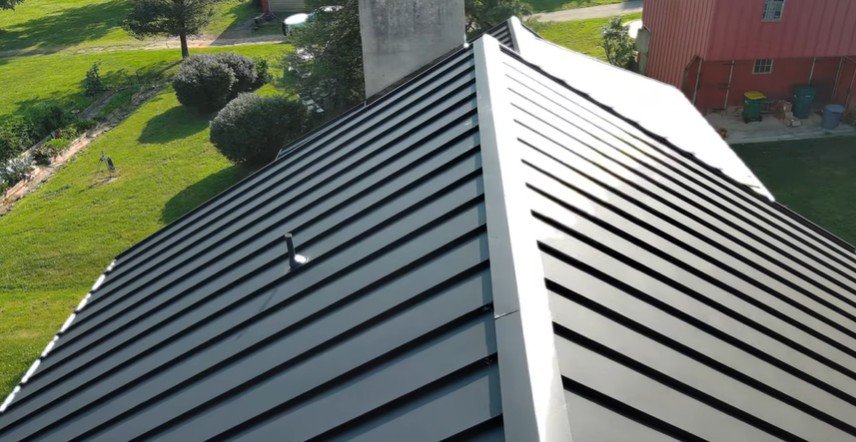
A standing seam is the system where panels interlock along raised vertical seams, and the fasteners that actually hold the panel down are hidden underneath that seam, never exposed directly to weather. Because there’s no exposed screw head anywhere on the roof surface for water to work its way around over time, standing seam is meaningfully more water-resistant over its lifespan than any system that relies on exposed fasteners.
This is the system we recommend for essentially every residential fog-belt application, because the entire failure mode that eventually creates small leaks in an exposed-fastener system — fastener backing out slightly, gasket degrading, water finding that gap — simply isn’t present in a properly installed standing seam roof.
Corrugated Panel — Lower Cost, Appropriate for Some Applications
Corrugated or exposed-fastener panel systems cost less upfront and are a completely reasonable choice for garages, sheds, or lower-stakes applications where the small ongoing maintenance of checking and occasionally re-tightening fasteners isn’t a dealbreaker.
For a primary residence in a genuinely wet, fog-heavy zip code, though, we’d steer most homeowners toward standing seam specifically, since the price difference is usually smaller than people expect once it’s weighed against decades of avoided maintenance.
Metal Roofing Cost and Lifespan in San Francisco
Let’s talk honestly about the number, because “it’s more expensive” without context doesn’t actually help anyone make a decision.
Upfront Cost vs Asphalt Shingle
Standing seam metal roofing costs meaningfully more upfront than asphalt shingle — commonly somewhere in the range of 40 to 60 percent above an equivalent shingle job, reflecting both material cost and the more specialized labor standing seam installation genuinely requires compared to a standard shingle crew.
That gap is real, and we’re not going to pretend it isn’t a real consideration for a lot of San Francisco homeowners already dealing with this city’s overall cost of living.
The 50-Year Math
Here’s the honest comparison, though. If a fog-belt asphalt shingle roof is realistically getting 15 to 20 years of good service life before it needs replacement — shorter than its rated lifespan, for the moisture reasons already covered — a homeowner planning to stay in a fog-belt home long-term is potentially looking at two or even three shingle replacements across the same 40-to-50-year window a single standing seam metal roof would cover.
Once you run that math out, the total cost of ownership gap between metal and repeated shingle replacement narrows considerably, and sometimes flips entirely in metal’s favor, depending on how long you’re actually planning to stay in the home and how the numbers shake out for your specific project.
Best Neighbourhoods for Metal Roofing in SF
Metal roofing works everywhere, honestly, but it earns its keep most dramatically in specific parts of the city.
Outer Sunset and Richmond — Fog Belt Primary Choice
This is the argument this entire page is built around. If you’re in the Outer Sunset (94116, 94122) or Outer Richmond (94121), you’re dealing with the heaviest, most persistent fog exposure anywhere in San Francisco — sometimes not burning off at all during peak summer months. This is precisely the environment where standing seam’s moss resistance and moisture durability deliver the most value relative to what you’d get from the same roof in a drier part of the city.
Twin Peaks and Bernal Heights — Wind and Moisture Exposure
Hillside properties in Twin Peaks and upper Bernal Heights deal with a different but related challenge — significant wind exposure combined with real fog catchment at elevation. Standing seam’s interlocking panel design handles wind uplift meaningfully better than shingle systems, which makes it a strong fit here for reasons beyond just the moisture argument.