
Roofing in San Leandro | Repair, Replacement & Tile-Relay Specialists
Quick Answer
Most San Leandro roof problems are not what they look like from the street. On a pre-war tile home, the tile is usually fine — the felt underneath it has failed. On a post-war shingle home, the shingles are usually the symptom — the attic ventilation is the cause. And near the Marina, the roof is usually losing to salt, not storms. This page covers all three, with real costs, the actual permit office, how to avoid being scammed, and a straight answer on repair versus replacement for every roof type in San Leandro.
Why San Leandro Roofs Fail Differently
San Leandro was built in one long burst between the 1920s and the 1950s, and that history decides what fails. Once you know the era of a house, you usually know what is overhead.
Pre-war tile homes (1920s–1940s). Estudillo Estates, Broadmoor, and the blocks around the Bal Theatre are full of Spanish Revival and Mediterranean homes, many still wearing clay or concrete tile. The pattern repeats constantly: a 1920s or 1930s tile roof sitting on felt that wore out a generation ago. From the sidewalk the roof looks handsome. Up close the tiles are mostly fine, but the paper underneath — the layer that actually keeps water out of the attic — has dried, cracked, and given up. Owners usually call expecting the worst, and they are often relieved by what the inspection finds.
Post-war shingle homes (1950s tracts). Washington Manor, Bonaire, and Floresta are mostly architectural shingle. Two problems dominate here: shingles aged past their service life, and attics with too little ventilation by today’s shingle-maker standards. Hot, damp attics shorten shingle life and can put a warranty at risk — and adding vents while the roof is open is cheap compared to doing it later.
Bayfront and industrial flat roofs. Down by the water, along Doolittle Drive and around the Marina, warehouses and plants sit under big flat roofs of single-ply membrane, modified bitumen, or coated surfaces. Here the enemy is salt air plus ponding water, not age alone. Salty air eats flashing, nails, gutters, and vent caps sooner than standard inland parts are built to handle.
Roofing Services in San Leandro
- Roof repair in San Leandro — leak repair, missing shingles, cracked tile, failed flashing, and storm damage. Most repairs fall in the 450–1,800 band; flat roof repairs run 350–2,500. And if a small patch will genuinely fix it, that is what we recommend — a patch is not a failed sale, it is the right job.
- Roof replacement in San Leandro — full tear-off and replacement in shingle, tile, metal, or flat systems, with a written itemized scope.
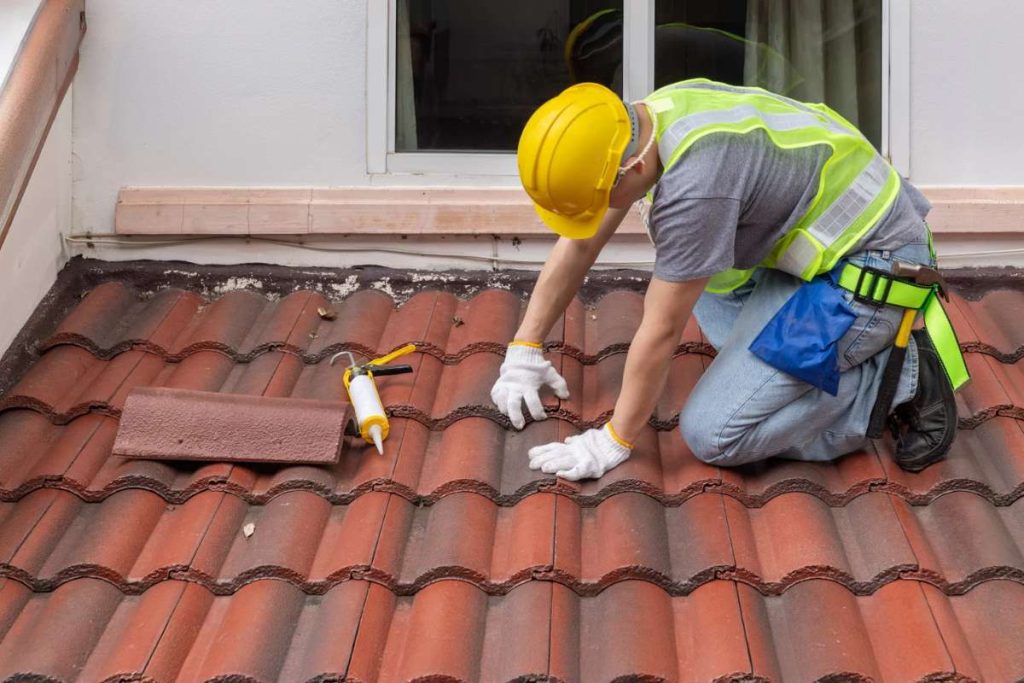
- Tile lift-and-relay — the San Leandro specialty: remove the tile by hand, renew the underlayment, and relay the same tile. See the section below.
- Skylight installation and flashing repair — the two most common leak sources on older San Leandro homes.
- Flat roofing for Marina and industrial buildings — TPO, modified bitumen, and coatings, with drains sorted before any coating goes down.
- Commercial roofing — warehouses and plants along Doolittle Drive and the Marina corridor. See the commercial roofing hub for system comparisons.
How Much Does Roofing Cost in San Leandro?
Per-square-foot rates below are material and installation rates. An all-in project total runs higher because it also includes tear-off, underlayment, flashing, ventilation, and the permit — which is why the worked examples below land where they do.
| System | Rate per sq ft | Typical Life |
| Architectural shingle | $6.50 – $10 | 25–30 years |
| Concrete tile (new) | $12 – $20 | 50+ years |
| Clay tile (new) | $15 – $25 | 50+ years |
| Standing seam metal | $12 – $20 | 40–50 years |
| TPO flat roofing | $7 – $11 | 20–25 years |
| Torch / modified bitumen | $8 – $13 | 20–30 years |
| Silicone roof coating | $3.50 – $6 | Adds 10–20 years |
| Typical full replacement (all-in) | $17,000 – $42,000 | Varies by size and system |
Work example 1 — post-war shingle home. A typical 1,500–1,800 sq ft San Leandro ranch in Washington Manor, full architectural shingle replacement, all-in: 17,000–28,000. That includes tear-off, new underlayment, flashing replacement, and added attic ventilation where the attic needs it.
Work example 2 — pre-war tile relay versus replacement. A 1,800 sq ft tile home in Estudillo Estates, full new tile at 15–25 per sq ft: 27,000–45,000 in rates alone. A lift-and-relay of the same home’s existing tile runs roughly 40–60% less than full tile replacement — arithmetic on the rates, not a quote — because the tile itself, the most expensive part, goes back on. That gap is the whole reason to check the felt before accepting a full-replacement quote.
Why Roofing Quotes Differ So Much in San Leandro
Roofers price by the square: one square equals 100 square feet of roof. That is the first thing to know, because it explains the second: roof square footage is almost always larger than house square footage. Pitch, overhangs, valleys, and hips add area, and waste factor on cuts adds more. A 1,500 sq ft house does not have a 1,500 sq ft roof — so a quote built on house size alone will always look wrong.
Beyond size, five scope items move almost every San Leandro quote: number of tear-off layers, decking condition (rotted boards found after tear-off), flashing (new versus reused), ventilation work, and access/pitch (steep or tight lots cost more labor). A quote far below the bands above usually means something on that list is missing. Compare written scopes line by line, not headline prices.
One more honesty note: some third-party San Leandro cost guides publish lower totals than the all-in band on this page. The difference is scope, not dishonesty — those guides often assume a simple single-layer tear-off on a walkable ranch with no decking replacement. Your home’s scope is what decides your price, and the written scope is where that scope becomes visible.
Why a Small Leak Quote Has a Floor
A small leak can still carry a quote that surprises homeowners, and there is a structural reason: truck, ladder, inspection time, liability, and crew minimums exist whether the repair takes one hour or four. That is why most repairs fall in the 450–1,800 band rather than near zero. A quote is not “huge” because the leak is small — it is priced for the visit, the diagnosis, and the fix together. If a quote seems high, ask for the scope breakdown: what was inspected, what is being repaired, and what is excluded. A legitimate roofer answers all three without hesitation.
Tile Lift-and-Relay: The Decision That Saves San Leandro Homeowners the Most Money
On an older San Leandro tile home, ask whether the layer under the tile has failed before anyone tells you the tile has. One answer means relaying the tile you already own; the other means buying a new roof. Sorting out which one you have is the most useful thing an inspection can do on these houses.
A lift-and-relay works like this: tiles come off by hand and are stacked on the roof or the lawn; the worn felt is torn down to bare wood; soft or rotted boards are fixed; fresh underlayment goes down with peel-and-stick membrane in the valleys, along the eaves, and around every pipe; then the old tiles go back on over new flashing, with new battens and fasteners where needed. Some tiles always crack coming off old roofs, so matching spares are lined up before the job starts.
Two complications to plan for. First, many tile shapes and colors on 1920s and 1930s houses are no longer made — the fix is a close match, with salvaged originals moved to the front of the house so newer pieces end up where nobody looks. Second, fresh underlayment under relaid tile should give another 25 to 30 years, and good tile itself can keep going well past that — so the underlayment’s age, not the tile’s age, is the figure to ask about.
If the tile itself is spent, new concrete or clay goes on in the closest profile and color still made. For a period house coming off wood shake, a heavy designer shingle in a cedar-toned blend keeps the old look and gives a Class A fire rating.
San Leandro Roofing Permits: The Real Office, Not a Guess
Re-roof permits in San Leandro go through the City of San Leandro, Division of Building & Safety Services, 835 E 14th St, San Leandro, CA 94577, phone (510) 577-3405, email [email protected], through the city’s Online Permit Portal. A licensed C-39 contractor normally pulls the permit and includes the fee in the written bid — confirm that in your scope rather than assuming it.
Two things to check before filing. First, some addresses near the city edge actually sit in unincorporated Alameda County (Ashland, San Lorenzo, and Castro Valley neighbors) — confirm which office your parcel belongs to before filing, or the application goes to the wrong desk. Second, San Leandro falls under California Climate Zone 3, so Title 24 cool-roof rules apply to reroofs — ask your contractor to confirm the product’s compliance before installation rather than after. Before replacing, also check current local and state energy programs — cool-roof and insulation upgrades sometimes qualify, and program names change, so verify before relying on any single program.
Bayfront Salt: The Marina Problem Nobody Inland Has
Near the Marina and the shoreline, salt in the air wears out ordinary flashing, nails, and gutters early. The fix is specific, not generic: stainless fasteners instead of galvanized, marine-grade flashing metals, and salt-tolerant vent caps and gutters. On flat industrial roofs, the sequence matters more than the product — sort out the drains first, test the insulation for trapped water before any coating goes down, and only then choose between single-ply membrane, modified bitumen, or a coating over the existing roof. A coating over wet insulation is money thrown away.
For fog and moss, which hit north slopes and shaded corners hardest: pick algae-resistant shingles, keep the pressure washer off the roof (it strips granules and drives water under tile), and check attic venting on older houses.
Storm Damage and Insurance in San Leandro
Most of San Leandro’s 18 to 22 inches of annual rain lands between November and March, often several storms in a row. Days of soaking rain are when tired felt under a good-looking tile finally lets water through. If a storm damages your roof:
- Photograph everything before any repair, including the attic side of the leak.
- Get a written scope and price before authorizing work — not a verbal estimate.
- California law caps deposits at $1,000 or 10% of the contract price, whichever is less. Any contractor asking for more upfront is asking for something the law does not allow.
- Waiving your insurance deductible is illegal in California. A contractor offering to “cover” or “eat” your deductible is not doing you a favor — they are putting your claim at risk.
- Keep the claim number, adjuster name, and all photos together; supplements for hidden damage (rotted decking, delamination) are normal and should be documented, not feared.
Actual cash value versus replacement cost — the distinction that decides your payout. Actual cash value pays the depreciated value of your roof — a 15-year-old roof may pay far less than replacement cost after depreciation. Replacement cost coverage pays to repair or replace with new materials of like kind and quality, without depreciation deductions. Check which one your policy carries before a storm, not after one.
Two more insurance realities. Standard homeowners policies exclude flood damage — San Leandro Creek overflow is a separate flood-policy question, not a standard claim. And whole neighborhoods of 1950s tracts are reaching end of life together, which is why some homeowners are now hearing from insurers about replacement or non-renewal. An honest inspection report, with photos and remaining-life assessment, is your best document in that conversation either way.
How Not to Get Scammed: Roofing Scam Protection in San Leandro
Scam fear is the biggest emotional driver in this niche — bigger than price. The most common roofing scams are simple: unlicensed operators who take money and disappear, pressure tactics after storms, vague contracts, illegal deposits, and unapproved “upgrades” billed mid-job. Protect yourself with five checks, in order:
- Verify the C-39 license on the Contractors State License Board lookup at cslb.ca.gov before anyone climbs on your roof. Do not rely on a truck logo, a website badge, or a salesperson’s word.
- Confirm insurance — general liability and workers’ compensation, in writing.
- Get three written estimates for the same scope — same system, same materials — so the comparison is real.
- Refuse pressure. Today-only pricing, storm door-knockers with no local address, cash demands, and “sign now” urgency are all red flags. An urgent leak calls for temporary protection and a written repair plan, not a rushed full contract.
- Check the work, not just the stars. Read reviews for language about communication, cleanup, follow-up, leak repairs, scheduling, and whether the final bill matched the estimate — not just the star count.
Your Roofing Contract: What California Law Requires
Under California Business & Professions Code §7159, any home improvement work over $500 must have a written contract, and any change orders must also be in writing and signed. If a contractor demands 3,000–10,000 extra for upgrades you never approved, that demand has no standing without a signed change order — and a contractor claiming “insurance fraud” to pressure payment is using a legal threat as a sales tactic. A complete contract lists: the contractor’s full legal information and license number, detailed materials (manufacturer, model, quantity, specifications), total price and payment structure, start and completion timelines, change-order procedure, warranty terms, and your 3-day cancellation rights notice. Never sign a contract with vague material descriptions or a blank change-order section — vagueness is where surprise fees live.
When to Replace a Roof in San Leandro
Roofing can be done year-round in San Leandro’s mild climate, but late spring through early fall (April–October) is the most reliable window — winter work happens between rain events, and November–March is leak season, when tired felt finally gives way. For a typical 1950s ranch, installation itself is usually a one- to two-day job; permit issuance and inspection scheduling sit on top of that timeline. If your roof is over 20 years old with widespread curling, granule loss, or multiple leaks, replacement is usually more cost-effective than another repair. If damage is isolated and the rest of the system is sound, a repair can extend life by years — and an honest inspection will tell you which one you have.
San Leandro Neighborhoods We Serve
| Neighborhood | Dominant Roof Type | Most Common Issue |
| Estudillo Estates | Pre-war clay and concrete tile | Failed felt under sound tile |
| Broadmoor | 1920s–40s period tile | Discontinued tile profiles |
| Bal Theatre & Downtown | Older tile and mixed small-commercial | Aging flashing, mixed roof types |
| Washington Manor | Post-war architectural shingle | Under-ventilated attics |
| Marina & Bayfront | Industrial flat, single-ply and modified bitumen | Salt corrosion, ponding, drains |
| Bonaire | Mid-century shingle | End-of-life shingle, moss |
| Floresta | Mid-century shingle | End-of-life shingle, ventilation |
| Bay-O-Vista | Mixed hillside residential | Drainage, salt air, access |
ZIP codes served: 94577, 94578, 94579. This page serves San Leandro and the East Bay. Note: roofing supply houses are a separate intent — if you are looking for materials suppliers rather than a roofing contractor, this page is not that directory.
How to Vet a Roofer in San Leandro
- Verify the C-39 license on the Contractors State License Board before signing anything.
- Get a written, itemized scope: material, tear-off layers, per-sheet decking rate, flashing (new, not reused), ventilation, permit fee, cleanup, and written workmanship warranty.
- Confirm the deposit is within the $1,000/10% cap, and that change orders will be written and signed.
- Ask how they handle board sheathing on pre-war homes, and how they match discontinued tile.
- Ask who pulls the permit — and confirm it is the San Leandro office, not the county, unless your parcel is unincorporated.
- Get the warranty in writing: manufacturer material coverage and the contractor’s workmanship warranty are two different things, and only the written versions count.
Our 5-Step Process in San Leandro
- Detailed inspection — roof walk, attic check, and test-lifting a few tiles on older homes to see the felt directly.
- Written scope and set price — including a per-sheet price for any rotted decking found once the old roof is off.
- Permit filing — with the correct office for your parcel, inspections booked.
- Installation — tile stacked and protected on tight lots, flashing and valleys photographed before they are covered, magnet sweep of the yard at the end. Photographing work before it is covered is also how workmanship defects — like exposed nailheads left against walls and windows — get caught before they become leaks.
- Final walkthrough — with photos of the finished flashing, valleys, and ventilation work.
Why Homeowners in San Leandro Call Us
Because the first answer is an honest one. Many San Leandro calls start with a quote for a whole new roof. If a relay or a smaller repair will do the job, that is what we recommend, and we put the reasons in writing. We are a licensed & insured C-39 contractor serving Oakland and the East Bay, with flat roofing and waterproofing capability for Marina and industrial buildings.
NAICS Code 238160 – Roofing Contractors
SIC 1761 / NACE 43.91 / ISIC 4390