How to Choose a Roofing Contractor in San Francisco (2026)
Key Facts
- License: active C-39 Roofing classification, verified on the Contractors State License Board website
- Insurance: $1,000,000 general liability per occurrence plus workers compensation for every worker on the roof
- Deposit: $1,000 or 10% of the contract price, whichever is less, under California law
- SF replacement cost: 17,000–42,000; repairs 450–1,800; flat roof repair 350–2,500
- Get 3 written, itemized quotes and compare scope, not just the total
- Checked: November 16, 2026
A roof in San Francisco fails differently from a roof anywhere else. Fog rolls in off Ocean Beach and sits on the Sunset for hours. Salt air works on flashing in the Richmond. This guide shows you how to verify a license, what a San Francisco roof costs, how to read three quotes, and which red flags are specific to this city.
The Short Answer: Five Checks Before You Call Anyone
Do these five things. Each takes about two minutes.
- Look up the license on cslb.ca.gov: active, C-39 Roofing, current bond and workers compensation.
- Ask for a certificate of insurance sent directly from the contractor’s insurance agent: $1,000,000 in general liability per occurrence and workers compensation for every person on your roof.
- Get 3 written, itemized quotes. Each must name the material brand and line, the underlayment, whether flashing is new or reused, the decking allowance, the permit, and the warranty term.
- Never pay more than $1,000 or 10% of the contract price as a deposit, whichever is less.
- Ask who will be on your roof, and drive past 3 recent local jobs.
A contractor who fails two or more comes off your list.
1. Start With Your Roof, Not the Contractor
Not every leak needs a replacement, and not every old roof needs to come off.
Ask these four questions first, and get the answers in writing with photos:
- What is causing the problem: flashing, membrane, ponding, or a soft deck?
- Is a repair a practical long-term fix, or is the roof at the end of its life?
- What is underneath: how many layers, and what condition is the deck in?
- What will stop it coming back: drainage, new flashing, ventilation, or a different system?
Most homes in the Sunset (94122), Richmond (94118, 94121) and Parkside (94116) have flat or low-slope roofs. Most in Noe Valley (94131), the Castro (94114) and West Portal (94127) have pitched roofs, often with steep access and tight side yards. Homeowners report a new roof leaking within a year because the roof was low slope and should never have had shingles.
Two more San Francisco realities shape this step. First, small repair jobs get ignored: homeowners report roofing companies ghosting them on leak repairs. Second, check your insurance position before you sign anything: homeowners report being dropped by their insurer because of a flat roof.
2. Check the C-39 License Yourself in Two Minutes
In California, roofing work on any job over $500 in labor and materials requires a contractor license, and roofing has its own classification: C-39. Check the number yourself, not the number on the truck.
- Go to cslb.ca.gov and open the license check tool.
- Type in the license number and confirm the business name matches.
- Confirm the classification is C-39 Roofing and the status is active.
- Confirm the bond and workers compensation insurance are both current.
- Read the complaint history.
A contractor without an active C-39 cannot legally pull a permit in California. If they offer to skip the permit, or ask you to pull it in your name, move on.
Two more checks matter in San Francisco. Ask whether the company holds a San Francisco business license, since contractors from other counties sometimes work here without one. And check how long it has existed under the same name: federal data shows about 44% of construction businesses that opened in the year to March 2020 had closed by March 2025.
3. Insurance: The Two Policies That Protect You
A contractor can say “fully insured” and mean almost anything. There are two policies that matter.
General liability insurance pays when the contractor damages your home or a neighbor’s property, for example a bundle of shingles dropped through a skylight. Ask for at least $1,000,000 per occurrence and $2,000,000 aggregate.
Workers compensation pays when a worker is hurt on your roof. If an uninsured worker is injured on your property, the worker may look to you and your homeowner’s liability policy. Federal workplace data records 110 of 134 roofing contractor deaths in 2023 from falls, slips and trips. Require a current workers compensation certificate for every worker on your roof, including subcontractors.
Do not accept a paper copy or a file forwarded by the contractor. Ask the contractor’s insurance agent to email the certificate directly to you, naming you as certificate holder, then call the carrier at a number you look up yourself and confirm the policy is in force today.
4. San Francisco Roofs Are Mostly Flat. Ask About the System.
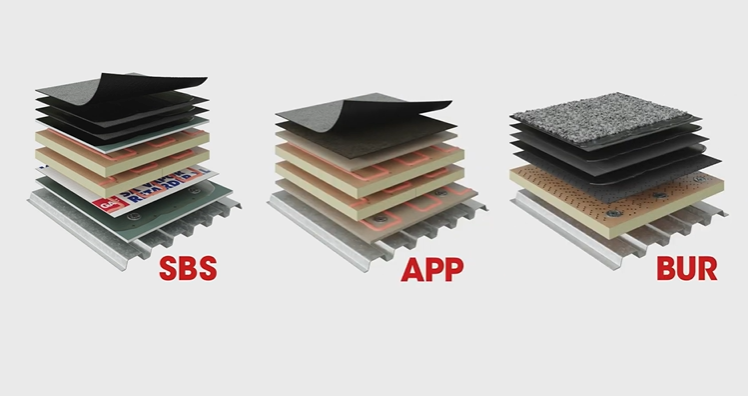
Most San Francisco residential roofs are flat or low-slope, and the right question is not “which shingle” but “which system.” A contractor who cannot explain torch-down, modified bitumen, TPO, EPDM and foam is not the contractor for a flat roof in the Sunset or Excelsior (94112).
| System | Best for | Watch out for |
| Torch-down modified bitumen | Most SF flat roofs, proven in fog and rain | Seams and flashing decide its life |
| TPO single-ply | Larger flat roofs, reflective surface | Seam welds matter most |
| EPDM rubber | Simple flat roofs, long track record | Seams and penetrations need care |
| Spray foam | Irregular roofs, adds insulation | Coating must be maintained |
| Architectural shingles | Pitched roofs only | Never on a low-slope roof |
The marine layer decides how long each of these lasts. Fog rolls in from the Pacific most mornings from May through September and keeps roofs damp long after the sun comes up. Salt air corrodes flashing and fasteners. Roughly 24 inches of rain a year falls in San Francisco, most of it between November and March. Ask the contractor how they handle flashing and underlayment for coastal moisture.
Three flat-roof issues deserve attention. First, insurance: ask your insurer what it requires before you choose a system. Second, drainage: flat roofs in this city pond, so ask how the contractor will fix ponding. Third, the “San Francisco shuffle,” a pattern homeowners report from bad installations: exposed nails and shingles that are not staggered, visible from the ground with binoculars.
5. What a Roof Costs in San Francisco
A San Francisco roof costs more than the same roof almost anywhere else in California, and labor is the reason. One rival guide puts SF labor alone at $8,000 to $9,700 for a replacement, almost double the national average. That figure is theirs, not ours: if a quote looks like a Sacramento price, something is missing from it.
Our San Francisco figures, from our own cost guides, are:
| Job | San Francisco range |
| Roof repair | $450–$1,800 |
| Flat roof repair | $350–$2,500 |
| Silicone coating | $3.50–$6 per sq ft |
| Full roof replacement | $17,000–$42,000 |
Homeowners report a wide spread around those figures. One reports about $22,000 to replace the roof on a roughly 1,000 sq ft place in San Francisco. Another reports about $30,000 for a roughly 1,400 sq ft house. A third reports three quotes for one roof: $42,000, $35,000 and $200,000. Another homeowner’s rule of thumb is that anything over $30,000 for the roof alone, including plywood repair and permits, means you are being overcharged. That is a homeowner’s claim, not our figure.
One more homeowner report: a “415 surcharge” of about 15% on San Francisco work compared with elsewhere in the Bay Area, a user claim, not a verified rate.
Set aside a contingency of 10–20% of the budget. Once the old roof comes off, the contractor may find rotted decking or wet insulation: one homeowner reports 330 feet of 1×12 redwood beams that needed replacing after the shingles came off.
6. How to Read Three Quotes Side by Side
Get 3 written, itemized estimates. Then compare scope, not totals. A $3,400 cheaper bid that excludes decking, reuses old flashing and leaves you to pull the permit is not cheaper. It is a different job.
Every quote must name the brand, product line and color of the material, the underlayment, whether flashing is new or reused, the ventilation plan, the pipe boots and skylight flashings, the permit and labor as separate lines, and cleanup including a magnetic nail sweep. If one bidder gives a single number while the others itemize, ask for the line items in writing and drop the bid if they never arrive. For the full method, including the RCV versus ACV insurance figures, read our guide on how to read a roofing quote.
Ask the expensive bidder why they are more expensive, and ask the cheapest bidder why they are so much less. Also ask what is excluded: decking, chimney flashing, skylight flashing, solar panel removal and reinstallation, and disposal fees are the common surprise bills. If you are going solar, do the roof and the panels at the same time, so the panel mounts are properly sealed and included in the roof warranty.
7. Permits, Title 24 and the DBI
Most San Francisco reroofs need a building permit from the Department of Building Inspection, and the permit triggers an inspection, the only independent check that the work meets code. A contractor who suggests skipping the permit is asking you to absorb the risk at resale or claim time.
The permit fee is a mess across sources. One rival guide lists $256.62 for a single-family re-roof permit in San Francisco. Another puts Bay Area permits at 300–800. An earlier draft cost guide on this site listed $514 or more. Fees change, so treat the permit as a pass-through line item and ask the contractor to confirm the current DBI fee before work starts. The contractor must pull the permit in their own name and give you each inspection sign-off.
Title 24 is the second San Francisco rule that national guides ignore. San Francisco sits in Climate Zone 3, and the cool-roof rule for low-slope roofs does not apply here the way it does in hotter zones. One competitor guide claims all low-slope roofs must be cool roofs; that is wrong for San Francisco. For the full picture, see our guide on commercial roof insulation and Title 24.
Homeowners also report the city denying full replacement on wind-damaged 2-layer roofs, and a permit lapses if work does not start within 180 days of issue.
8. Warranties: Material vs Workmanship
Every roof carries two warranties, and they cover different things.
The material warranty comes from the manufacturer and covers product defects: asphalt shingles typically 25 to 50 years, metal 40 to 70 years, single-ply membranes 20 to 30 years. It does not cover installation errors.
The workmanship warranty comes from the contractor and covers installation errors, which manufacturer warranties exclude and which are a leading cause of premature roof failures. Most roofing companies offer 2 to 10 years. Top contractors offer 10 to 25 years. The longest coverage comes from manufacturer-backed programs, which do not depend on the contractor staying in business. Only about 2% of roofers in North America are invited to become GAF Master Elite contractors, unlocking the Golden Pledge warranty: 25 years of non-prorated workmanship coverage on Timberline HDZ and 30 years on Timberline UHDZ. Owens Corning Platinum Preferred is the equivalent top tier, and homeowners report it lets a contractor offer lifetime coverage on shingles and workmanship.
Require the workmanship warranty in writing, and read what it covers. A warranty that covers only leaks in the field of the roof but excludes flashing, valleys, penetrations and ridge details is barely worth the paper. Ask what voids it, whether it transfers if you sell, and who honors it if the company closes.
9. Red Flags: The San Francisco List
Some red flags are universal. These are the ones that matter here.
- No C-39 license, or one that does not verify. Walk away.
- No workers compensation certificate for the crew. If a worker is hurt on your roof and the contractor is uninsured, the claim can reach you.
- The San Francisco shuffle on a past job. Exposed nails and shingles that are not staggered, visible from the ground. It is a named local pattern for sloppy work.
- A deposit over $1,000 or 10%, whichever is less. California law caps it. Pay a deposit only once materials have arrived on your property.
- Pressure to sign today. A roof is not a limited-time offer. For a sale of $25 or more made at your home, federal rules let you cancel by midnight of the third business day.
10. The 15 Questions to Ask Before You Sign
Take this list to every interview.
- What is your CSLB license number, and is it C-39?
- Can your insurance agent email me the certificate directly?
- Does your workers compensation cover everyone on my roof, including subcontractors?
- How long have you been in business under this name?
- Are you certified by a manufacturer, such as GAF Master Elite or Owens Corning Platinum?
- How many roofs like mine have you done in San Francisco in the last 2 years?
- Can I drive past 5 of your recent jobs within 25 miles?
- What system do you recommend for my roof, and why not the alternatives?
- Will you pull the permit in your name and give me the inspection sign-offs?
- What is the decking allowance per sheet, and what if you find rot?
- Is flashing new or reused, and what pipe boots are you using?
- What is the workmanship warranty, and who honors it if you close?
- What is the payment schedule, tied to which milestones?
- Who is my single point of contact, and who supervises the crew daily?
- What is the cleanup plan, including the nail sweep?
One more test: ask the contractor what could go wrong. A contractor who says “nothing” is either inexperienced or dishonest.
How We Checked
This article was built from six published competitor guides, about 140 homeowner discussion titles, four instructional videos from roofing professionals, eight community Q&A threads, and local business listings, all reviewed in November 2026. Every figure from a homeowner discussion is labeled as a homeowner report. Every figure from a rival guide is labeled with its source. Where sources disagree, on the permit fee and on replacement cost, the disagreement is shown, not smoothed over. The San Francisco cost figures in Section 5 come from our own published cost guides on this site.
How to Choose a Roofing Contractor in San Francisco FAQs
Who is the best roofing contractor in the Bay Area?
There is no single best roofer for every home: the best contractor for a flat roof in the Sunset is not the best contractor for a pitched Victorian in Noe Valley. Build a shortlist of 3, verify each license on cslb.ca.gov, check insurance, and compare itemized quotes.
How much does a roof replacement cost in San Francisco?
Our San Francisco figures put a full replacement at 17,000–42,000, depending on roof size, system, pitch and decking condition. Homeowners report about $22,000 for a roughly 1,000 sq ft home and about $30,000 for a roughly 1,400 sq ft home.
What license does a roofing contractor need in California?
An active C-39 Roofing classification from the Contractors State License Board, for any job over $500 in labor and materials. Verify it on cslb.ca.gov.
How much can a roofing contractor ask for as a deposit?
In California, no more than $1,000 or 10% of the contract price, whichever is less, under Business and Professions Code 7159.5. Tie later payments to milestones: materials delivered, tear-off complete, final inspection passed.
Should the roofing contractor pull the building permit?
Yes, in the contractor’s own name, with the fee as a separate line item. The permit triggers the city inspection.
How do I verify a roofing contractor’s insurance is real?
Ask the contractor’s insurance agent to email the certificate directly to you, naming you as certificate holder. Then call the carrier and confirm the policy is in force today.
What is the difference between a workmanship warranty and a material warranty?
The material warranty comes from the manufacturer and covers product defects, typically 25 to 50 years for shingles. The workmanship warranty comes from the contractor and covers installation errors, typically 2 to 10 years.
Can I put shingles on a flat roof in San Francisco?
No. Shingles are for pitched roofs only. A low-slope or flat roof needs a flat-roof system: torch-down or self-adhered modified bitumen, TPO, EPDM, spray foam, or a silicone coating on a sound roof.
Will my insurer drop me because of a flat roof?
Homeowners in the Bay Area report being dropped by their insurer because of a flat roof, and very few carriers accept them. Ask your insurer what it requires before you choose a system.
Should I pay for a roofing estimate?
A quote should be free. A detailed inspection is different from a quote: the inspection diagnoses the roof, the quote prices the fix.
Modified bitumen vs TPO vs foam: which is best for a San Francisco flat roof?
It depends on the roof. Torch-down modified bitumen is the proven default for most SF flat roofs. TPO suits larger flat roofs and reflects heat. Spray foam adds insulation but needs its coating maintained.
Bottom line: Choosing a roofing contractor in San Francisco comes down to five checks: an active C-39 license, $1,000,000 in liability plus workers compensation for every worker, 3 itemized quotes, a deposit inside the $1,000 or 10% California limit, and local references you can drive past. NAICS Code 238160 – Roofing Contractors. Call +1 833-804-6249 to book a detailed inspection.