SBS vs APP Modified Bitumen San Francisco — Which Is Better for SF Flat Roofs
This question comes up constantly in San Francisco roofing conversations. And it deserves a straight answer — not a manufacturer’s spec sheet dressed up as advice, not a generic comparison written for a contractor in Indiana that has never dealt with Karl the Fog.
SBS or APP. For a San Francisco flat roof. In this specific city’s specific climate.
The answer is SBS. Almost always. And this guide explains exactly why — what the technical differences actually mean in real-world SF conditions, where APP has a narrow legitimate role, what the community of experienced roofers says about both systems, and what you need to know before signing any modified bitumen proposal for a property in this city.
What Modified Bitumen Actually Is — Before the SBS vs APP Debate Makes Sense
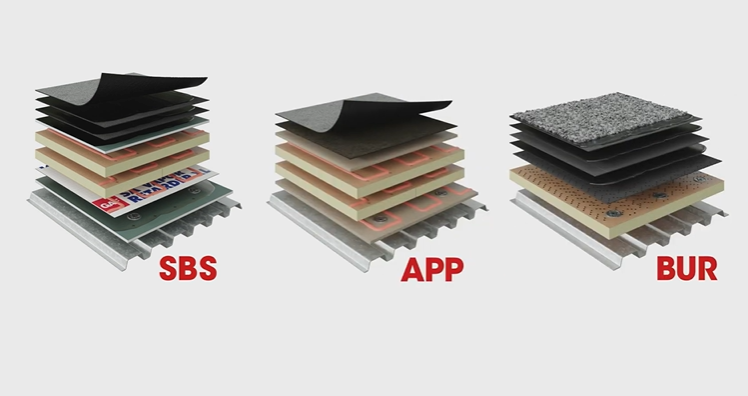
Modified bitumen roofing evolved from built-up roofing, the dominant commercial flat roof system throughout most of the twentieth century. Traditional BUR worked by alternating layers of hot asphalt and reinforcing felt applied on-site, one layer at a time. It was effective but slow, labor-intensive, and heavily dependent on crew skill at every layer.
Modified bitumen improved on BUR in one critical way: the polymer modifier. Adding either a rubber-based or plastic-based polymer to the asphalt changes the material’s performance fundamentally. It becomes more flexible, more resistant to temperature extremes, and more durable under ongoing weather exposure. The modified material is manufactured into reinforced rolls at a factory — consistent, quality-controlled — then brought to the job site and applied to the deck.
The result is a more consistent system that still delivers the multi-layer waterproofing redundancy that made BUR the commercial standard for decades. Where a single-ply membrane like TPO is exactly one layer thick, a 2-ply or 3-ply modified bitumen system gives the roof multiple lines of defense against water intrusion.
That redundancy is part of why modified bitumen remains one of the most widely installed flat roofing systems across San Francisco’s residential and commercial building stock. Victorian flats, Edwardian duplexes, warehouse conversions in Dogpatch and Potrero Hill, older commercial buildings throughout SoMa and the Mission — a significant percentage of these roofs are some form of modified bitumen.
Two modifier types are available: SBS and APP. They are not interchangeable. They behave differently under the specific conditions San Francisco creates.
The Technical Difference — What SBS and APP Actually Are
SBS — Styrene-Butadiene-Styrene (The Rubber-Modified System)
SBS modifies bitumen with synthetic rubber. The rubber content gives SBS membranes their defining characteristic: elasticity. SBS stretches and returns to shape under thermal stress. It flexes under wind loading and weather cycling. It accommodates movement in underlying materials and substrate without cracking.
The rubber modifier also gives SBS a lower softening point than APP — meaning it becomes sticky and workable at lower temperatures rather than requiring the high heat that melts APP into a flowing liquid. This characteristic affects installation behavior significantly, which we will come back to.
SBS can be installed by multiple methods: torch application, hot-mop, cold-process adhesive, self-adhered peel-and-stick, and mechanical attachment. This installation flexibility is one of SBS’s genuine practical advantages.
APP — Atactic Polypropylene (The Plastic-Modified System)
APP modifies bitumen with plastic rather than rubber. This gives APP membranes different mechanical behavior — they are stiffer at ambient temperature, have a higher softening point than SBS, flow like liquid wax when heated with a torch above approximately 300°F, and cool into a hard, dimensionally stable waterproof layer.
APP’s higher softening point translates to better performance in sustained high-heat environments. Its UV resistance once cured is excellent. The plastic modification gives APP good dimensional stability — it holds its shape well under prolonged heat exposure.
APP is almost always torch-applied. The torch heats the underside of the membrane until the bitumen reaches its flow point, then the crew rolls the membrane into position as it bonds to the surface below. APP does not work with cold-process adhesive or peel-and-stick methods the way SBS does.
Why San Francisco’s Climate Makes SBS the Clear Choice for Most SF Properties
This is where generic national comparisons stop being useful and local knowledge becomes everything.
The roofing community data from San Francisco is consistent on this point. A Bay Area roofing thread on Reddit — specifically a discussion titled “Silicone or Modified Bitumen? Mainly flat roof (Bay Area, CA)” — drew a recommendation that has appeared repeatedly across SF roofing discussions:
“Tear it off. Build up the perimeter walls with wood nailers to gain more flashing height. Install tapered insulation to create proper positive drainage. Mod bit base and cap is going to be your highest quality membrane.”
The consensus among experienced SF roofers is clear. And when they specify modified bitumen for San Francisco flat roofs, they are specifying SBS — not APP. Here is why.
Reason 1: Temperature flexibility in SF’s fog-belt neighborhoods
San Francisco’s marine layer keeps ambient temperatures significantly lower in the western neighborhoods than most California markets ever experience. The Outer Sunset (94122), Outer Richmond (94121), Inner Sunset (94122), and Ocean Beach-adjacent areas regularly see rooftop surface temperatures 20 to 30 degrees cooler than the rest of the city for extended periods.
APP modified bitumen has a higher softening point — which sounds like an advantage until you understand what it means in cooler ambient conditions. APP becomes more brittle at lower temperatures. In the fog belt of the Outer Sunset and Outer Richmond, APP membrane in the cooler months can develop surface crazing and lap failures driven by thermal contraction that a more flexible SBS membrane would accommodate without damage.
SBS rubber-modified bitumen stays flexible at lower temperatures. That is not incidental — it is the defining performance advantage for San Francisco’s cooler coastal neighborhoods. The synthetic rubber content allows the membrane to flex through thermal contraction without cracking or separating at the laps.
Reason 2: Seismic building movement accommodation
San Francisco sits on the Pacific Ring of Fire. The constant low-level microseismic activity creates cumulative stress at roofing connections over time — at parapet wall terminations, at HVAC equipment curbs, at any point where the membrane transitions to a fixed structural element.
SBS’s rubber-like elasticity accommodates seismic building movement. The membrane stretches and returns to shape rather than resisting the movement rigidly. APP’s plastic modification makes it stiffer under stress — better at resisting sustained UV and heat, but less forgiving of the micro-movements that SF’s seismic environment creates continuously.
This is not a catastrophic failure mode — seismic movement does not tear roofing membranes in typical events. But over 15 to 20 years of cumulative micro-stress at rigid connections, the more flexible SBS system maintains integrity at those critical termination points better than APP.
Reason 3: Crack bridging over concrete and aging substrates
A significant portion of San Francisco’s commercial building stock sits on concrete decks or older structural systems that develop micro-cracking over time. Victorian and Edwardian buildings settle. Concrete decks develop hairline cracks through thermal cycling and age.
SBS membranes have strong crack-bridging ability — the elastomeric rubber modification allows the membrane to span small substrate cracks without transmitting them through to the surface. APP’s plastic modification does not offer the same crack-bridging performance. Over older SF building substrates, this difference shows up in long-term leak performance.
Reason 4: Marine moisture and lap integrity
San Francisco’s persistent fog creates sustained moisture exposure that tests every lap and seam in a modified bitumen system. SBS modified bitumen installed with proper overlap and cold-process or self-adhered installation methods maintains lap integrity in high-humidity coastal conditions effectively.
SBS installation noted using “Karnak 66” cold adhesive coverage across the entire floor and parapet walls on a new SBS flat roof installation in the Bay Area — full coverage application specifically to eliminate any moisture infiltration points. That kind of installation attention reflects the SF roofing community’s understanding of what the marine environment requires.
Where APP Modified Bitumen Has a Legitimate Role in San Francisco
APP is not wrong for every SF application. Being honest about this matters.
SoMa and east-facing commercial buildings with higher solar exposure. The eastern neighborhoods of San Francisco — SoMa, the Financial District, parts of the Mission — experience significantly more direct sun exposure than the fog-belt western neighborhoods. For flat commercial roofs on buildings in these areas that get sustained summer sun and where UV resistance is the primary long-term performance concern, APP’s higher UV resistance and dimensional stability under heat are legitimate advantages.
Simple torch-applied cap sheet over SBS base. Some experienced SF roofers install a 2-ply system with an SBS base sheet and an APP granule cap sheet. The SBS base provides the flexibility and crack-bridging performance at the deck level. The APP cap sheet provides UV resistance and a reflective granule surface at the weather-exposed layer. This hybrid approach captures advantages of both systems.
Quick patching and repair situations. APP’s flow characteristics at torch temperature make it easier to work with for inexperienced applicators in small repair situations. The liquid-like flow of heated APP means it fills voids and bonds to existing surfaces without the technical judgment that properly heated SBS requires. For small isolated repairs by contractors who are not modified bitumen specialists, APP may produce more consistent results.
The Installation Conversation — What Torch-Down Actually Means for SF Properties
“Torch-down” is the term most SF property owners know. Most do not know it is only one of four installation methods for modified bitumen, and that the right method depends heavily on the building type and circumstances.
Torch-applied. A propane torch heats the underside of the membrane roll as the crew unrolls it. The bitumen melts and bonds to the surface below. Standard commercial application for APP and some SBS systems. The fire risk is real — open propane flame on a roof requires a trained crew, proper fire watch protocol, and awareness of combustible materials. Responsible contractors manage this with practiced technique and designated fire watch personnel during and after application. On older SF structures with wood decking or in situations with combustible materials nearby, this risk deserves direct discussion with the contractor before work begins.
Self-adhered (peel-and-stick). Factory-applied adhesive backing. No heat required. Ideal for occupied buildings, wood decks, and any situation where fire risk must be eliminated. Faster application and produces no fumes or combustion risk. Substrate must be clean, dry, and properly primed — cold or damp conditions at application time reduce adhesion quality. A genuine consideration in San Francisco where morning fog can keep substrates damp into mid-morning.
Cold-process adhesive. Solvent or water-based adhesive spread on the substrate, membrane rolled into it. No heat, no flame. Useful for reroofing over existing systems where torch heat poses a risk. The Reddit Bay Area flat roof discussion specifically referenced cold-process application as the method of choice for a full SBS installation, with Karnak 66 adhesive applied across the entire roof field and parapet walls for complete coverage.
Hot-mopped. Molten asphalt mopped onto the deck, membrane rolled into it. The traditional BUR method. Less common on new SF installations but appears on reroofing projects over older BUR systems.
Ply Count — What the Bid Needs to Specify
One of the most important variables in any modified bitumen proposal is ply count. It directly affects performance, longevity, and cost — and low-ball bids cut it.
2-ply system (base plus cap):
Commercial minimum. Adequate for most low-traffic applications with proper drainage and maintenance. The right starting point for simple SF residential flat roofs with good drainage.
3-ply system (base, interply, cap):
The right specification for higher-traffic commercial roofs with HVAC access, larger commercial buildings, buildings in high-wind coastal exposure, and projects seeking 20-plus year system warranties.
The cost difference between 2-ply and 3-ply is roughly $2 to $3 per square foot. On a 2,000 square foot SF flat roof, that is $4,000 to $6,000. It is also the difference between a roof that performs reliably for 15 years and one that holds up for 22.
The Reddit community data on this point is clear. A user discussing “4-ply modified bitumen vs TPO” at $33,000 received the community consensus that modified bitumen is “old school, tough, and better for heavy foot traffic — resists puncturing and can be patched with basic materials.” For roofs with regular HVAC service access, the additional ply count is the right investment.
SBS vs APP vs TPO — The Full SF Flat Roof Comparison
| Factor | SBS Modified Bitumen | APP Modified Bitumen | TPO 60-mil |
| Flexibility at low temps | ✅ Excellent | ❌ Limited | ✅ Good |
| UV resistance | 🟡 Moderate | ✅ Excellent | ✅ Good |
| Seam type | Lapped adhesive/torch | Torch-welded | Heat-welded |
| Seam frequency | Every 3 feet | Every 3 feet | Up to 20 feet |
| Crack bridging | ✅ Excellent | 🟡 Moderate | 🟡 Moderate |
| Seismic movement tolerance | ✅ High | 🟡 Moderate | ✅ Good |
| Marine moisture performance | ✅ Strong | 🟡 Moderate | ✅ Strong (welded seams) |
| Fire risk installation | 🟡 Torch or cold-process | 🔴 Torch required | ✅ No open flame |
| Repairability | ✅ Easy — basic tools | 🟡 Requires torch | 🟡 Requires welder |
| Title 24 cool roof | ✅ With white cap | ✅ With white cap | ✅ Standard |
| SF fog-belt performance | ✅ Recommended | ❌ Not preferred | ✅ Good |
| 2026 SF cost per sq ft | $10 – $18 | $10 – $16 | $10 – $22 |
| Realistic SF lifespan | 15 – 25 years | 15 – 20 years | 20 – 30 years |
What This Means for Your SF Property — Practical Decision Guide
You own a Victorian flat or Edwardian duplex in the Outer Sunset, Outer Richmond, or Inner Sunset:
SBS modified bitumen. No question. The fog-belt temperature conditions, the older building substrate likely developing micro-cracking, the seismic movement considerations — all of it points to SBS. Self-adhered or cold-process installation eliminates torch fire risk on older wood-structure buildings. A 2-ply system is adequate for most residential applications in this category.
You own a commercial building in SoMa or the Financial District with significant solar exposure:
Consider the hybrid approach — SBS base sheet for flexibility and crack bridging at the deck level, APP granule cap sheet for UV resistance at the weather-exposed surface. Alternatively, 60-mil fully adhered TPO is a strong competitor for this building type given its heat-welded seam performance.
You are deciding between modified bitumen and TPO for a flat SF commercial roof:
Both are legitimate. Modified bitumen has more seams — every three feet versus TPO’s up to 20 feet between seams — which creates more potential failure points dependent on installation quality. TPO’s heat-welded seams eliminate this variable but require skilled welding execution. Modified bitumen is more repairable with basic tools after the fact. The installer quality question applies to both systems.
The Permit and Licensing Reality for Modified Bitumen Work in San Francisco
Any full modified bitumen roof replacement in San Francisco requires a building permit from SF DBI. California Building Code. Not optional.
Torch-applied installation specifically requires your contractor to carry appropriate liability insurance covering open-flame roofing work. Verify the C-39 California Roofing Contractor License at cslb.ca.gov before signing any contract. Active status, C-39 classification, no disciplinary history. Free public search, 30 seconds.
California Title 24 cool-roof requirements apply to most low-slope re-roofing projects in SF. A white or light-colored granule cap sheet on modified bitumen systems satisfies Title 24 requirements. Dark-colored cap sheets require a qualifying reflective topcoat to comply.


