
How Long Does a Roof Last in San Francisco? (2026): Lifespan, Cost
Key Facts
- A “30-year roof” is a warranty term, not a forecast. A 30-year architectural shingle realistically lasts 20–25 years in San Francisco.
- Manufacturers moved to “limited lifetime warranty” in 2012. The warranty covers defects, not wear, storms, or bad installation — and it is prorated.
- The fastest clock decides: material, weather, or workmanship. Fog, salt air, and poor ventilation do more damage than age alone.
- Tile and slate last 50–100 years, but the underlayment under them dies after 20–30 years.
- A full roof replacement in San Francisco runs 17,000–42,000. $30,000 sits in the middle of that range.
- Checked November 2026. Cost figures are labelled by source and date, never presented as a single national price.
Quick Answer: how long does a 30 year roof really last?
About 20–25 years, not 30. That is the real-life figure for a 30-year architectural shingle in San Francisco. The number on the packet is a warranty against manufacturing defects, not a service-life prediction — and it does not cover hail, wind, storms, bad installation, or poor ventilation.
In hot, storm-prone places the same shingle can fail at 12–15 years; in San Francisco, fog and salt air do the same job more slowly.
If your roof is 19, the honest answer is probably 3–5 more years if it is sound — less if it shows the signs below. Judge the roof by its condition, not its birthday.
What does “30-year roof” actually mean?
For decades, “30-year” meant the manufacturer expected the product to last around 30 years under ideal conditions. Then, in 2012, the industry moved to a “limited lifetime warranty” model.
“Limited lifetime” does not mean your roof is covered for your lifetime. It typically means the period the product is expected to perform under normal conditions — often described as 25 to 50 years — with significant conditions and depreciation. A defect in year 15 might be reimbursed at only about half the material value. The warranty covers material defects only, never storms, bad installation, or bad ventilation.
Roofers still quote the old benchmarks: 3-tab about 25 years, architectural about 30, luxury asphalt about 50, screw-down metal about 30, standing-seam metal about 50 years of paint warranty. None of those numbers is a promise. They are the period the manufacturer will cover defects.
How long does each type of roof last in San Francisco?
Rated figure, real-life figure, and what usually ends each roof — the real-life figures are the consensus of the sources checked, adjusted for San Francisco’s fog and salt air.
| Material | Rated / warranty | Real life in San Francisco | What usually ends it |
| 3-tab asphalt shingle | 25 years | 15-20 years | Granule loss, wind, seal failure |
| Architectural asphalt shingle | 30 years | 20-25 years | Granule loss, seal failure, storms |
| Luxury asphalt shingle | 50 years | 25-30 years | Granule loss, age, ventilation |
| Standing-seam metal | 50 years | 40-70 years | Corrosion at cuts and fasteners |
| Screw-down metal | 30 years | 20-25 years | Fastener leaks, paint wear |
| Clay and concrete tile | 50-100 years | 40-50+ years | Underlayment fails at 20-30 years |
| Natural slate | 75-100 years | 75-100 years | Underlayment, flashing, weight |
| Wood shake and shingle | 20-40 years | 20-30 years | Rot, moss, fire risk |
| Synthetic slate and shake | 50 years | 50+ years (unproven) | New product, long-term life unproven |
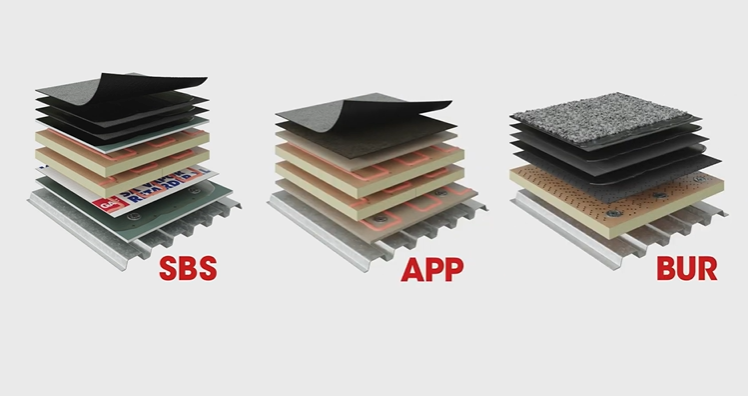
| Flat roof (TPO, EPDM, foam, bitumen) | 15-30 years | 15-30 years | Ponding water, seams, drains |
| Roll roofing | 5-10 years | 5-10 years | Leaks, not recommended |
Three things matter most. First, the underlayment clock: tile lasts 40–50 years or more, but the underlayment beneath it usually needs replacement after 20–30 years — the same applies to slate. Second, the flat-roof clock: flat roofs live or die by drainage. Third, the synthetic warning: synthetic slate and shake are warrantied to 50 years, but no one has watched one age for 50 years yet.
What kills a roof early in San Francisco?
Every roof runs three clocks at once — material, weather, and workmanship — and the fastest clock decides when the roof is done.
Poor attic ventilation is the number one killer. If hot, moist air is not drawn out of the attic, a roof will not meet its stated lifespan — one roofing contractor puts it at a hundred percent guarantee. Shingles can burn up before their warranty date, and a box vent alone is not good ventilation.
Improper installation is the worst killer, because it is the one you cannot fix yourself and the one that costs the most. Nails driven wrong let wind get under a shingle, and the shingle flaps “like a little hammer” until the nails pop out and the shingles slide down. Shingles that are not staggered, exposed nails, and flashing without steps all show up in Bay Area inspection reports. A new roof leaking a year after installation, or a roof on its sixth repair with four leaks, is almost always an installation problem.
Storms, wind, and trees. Strong gusts lift shingle edges and drive rain into places that normally stay dry.
Salt air and fog. Fine salt particles settle on roofing materials and accelerate corrosion where finishes are scratched or worn. Fog keeps roof surfaces damp, feeding moss that holds water against the surface. For the full fog-belt picture, read how the marine layer shortens roof life.
Unaddressed problems. A small crack in the flashing lets water in, the decking rots, and a repair turns into a replacement. The fix is annual or semi-annual maintenance from a local roofing contractor. That costs money every year, but it is cheaper than a second replacement in 10–15 years.
How much life is left in my roof?
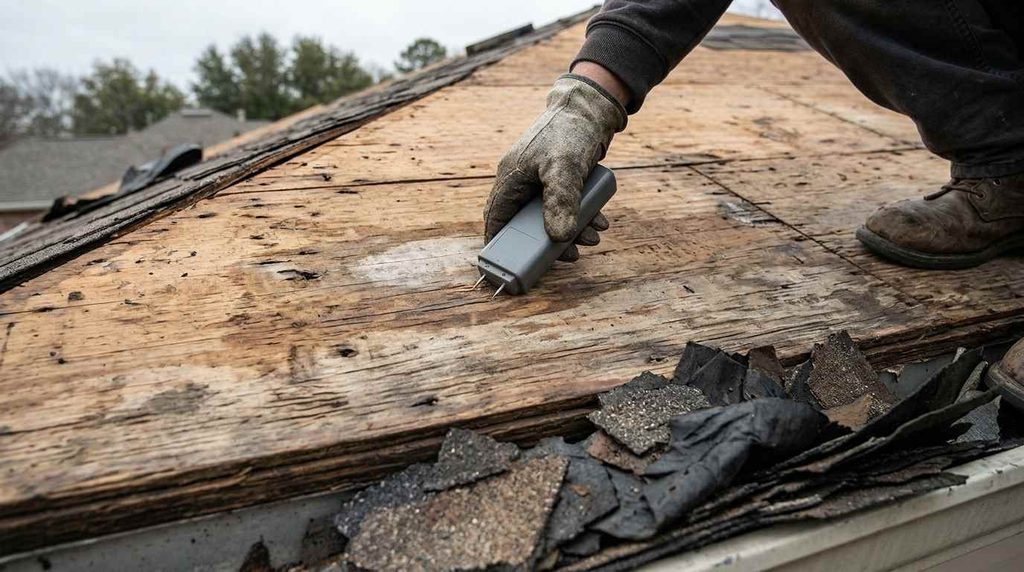
Start with the granules — the clearest age signal on an asphalt roof: light loss at 10–12 years, heavy loss at 15–20, and a 25+ year roof is “way past its prime.” Dark spots from repeated water paths, rust on metal, and worn flashing are the other signs.
Then the seven signs that mean replacement is near: age past 20 with asphalt; granule loss in the gutters; curling or buckling shingles; missing shingles — one or two is a repair, several areas is the end of the roof; water damage inside; a sagging roofline; and two layers of shingles, which hide the deck condition.
A 19-year-old roof with no serious problems “easily has 3–5 years left,” in the words of the most-discussed thread on the subject — 249 votes, 217 comments. An 18-year-old roof in Southern California “doesn’t need to be replaced,” in another thread. Both are user reports — only a detailed inspection by a licensed contractor can tell you your roof’s remaining life.
How often should a roof be replaced in California?
There is no single California answer — California has four climates in one state. Coastal San Francisco and the Bay Area wear roofs with salt and moisture, and an architectural shingle roof here realistically lasts 20–25 years. Inland and desert areas — Walnut Creek, the Central Valley — wear them with triple-digit heat, UV, and thermal shock; a Walnut Creek shingle roof lasts 20–30 years. Mountain areas wear them with snow, ice, and wind. Southern California roofs last about the same as elsewhere, except where severe ice and hail apply — which, in most of the region, it does not.
As a rule of thumb: asphalt every 20–30 years, metal every 40–70, tile or slate every 50–100, with the underlayment replaced at 20–30 years in between. And watch the insurance clock: Bay Area homeowners report insurers require an asphalt roof under 20 years old, and one elderly San Francisco homeowner was told she would lose her home insurance unless her roof was replaced promptly.
Is $30,000 too much for a roof?
No — not in San Francisco. $30,000 sits in the middle of our site’s canonical replacement range of 17,000–42,000. A $30,000 quote is reasonable for a large, steep, complex, premium, or metal roof, and high for a simple asphalt roof — scope, area, pitch, decking, and material decide.
Bay Area homeowners report paying:
- Flat roof, $29,000 for 3,000 sq ft = $9.67 per sq ft (AskSF, 4 months ago)
- Hayward flat roof, ~1,700 sq ft, $16,000, 3 years ago = $9.41 per sq ft
- 800 sq ft roof, $19,000 = $23.75 per sq ft (roof area stated, 1 year ago)
- SF, ~1,000 sq ft house, $22,000 last year — house size, not roof area
- $40,000 quote, $5,000 of it solar, $35,000 for the roof alone
- $30,000 quoted for a leaking SF roof; another homeowner paid $26,000 last year
The cost-per-year test settles the argument:
| Material | Replacement cost (SF) | Real life | Cost per year |
| Architectural shingle | 17,000-30,000 | 20-25 years | 680-1,500 |
| Standing-seam metal | 30,000-42,000+ | 40-70 years | 430-1,050 |
| Clay or concrete tile | 30,000-42,000+ | 40-50+ years | 600-1,050 |
| Flat roof (TPO / EPDM) | 17,000-29,000 | 15-30 years | 570-1,930 |
A metal roof at $30,000 lasting 50 years costs $600 a year; a shingle roof at $20,000 lasting 20 years costs $1,000 a year. The expensive roof is the cheaper roof — if you stay. If you plan to sell in 2–3 years, the maths flips: a bad roof turns buyers off, and the payback is in the sale price.
Two things to check on any $30,000 quote before you sign. First, solar: the quote must include uninstalling and reinstalling the panels — one Bay Area buyer found a quote that said nothing about it, and solar detach and reset runs 200–300 per panel. Second, the decking: a quote that does not mention decking, dry rot, or a second layer is not complete — those hidden costs turn $30,000 into $40,000 after the tear-off. For the full checklist, read how to read a roofing quote.
What is the best time of year to replace a roof in San Francisco?
Fall, then spring. Fall is the ideal window: mild temperatures, lower demand, and the roof sealed before winter rain. Spring is next best, but demand is higher after the storm season. Summer works, though heat affects crew and materials. Winter is hardest — rain delays and slower curing.
Late winter or early spring can sometimes be cheapest — but no season guarantees a discount. And do not wait for the best season if the roof is leaking, missing shingles, storm-damaged, or exposing the deck. A roof that leaks through one more winter costs more than any discount you were waiting for.
Flat roofs in San Francisco
Most San Francisco homes have flat or low-slope roofs. The reports in this guide — $29,000 for 3,000 sq ft, 16,000fora1,700sqftHaywardflatroof,~20,000 for a TPO roof on a typical two-story SF home — all sit inside the site’s flat-repair range of 350–2,500 and the 17,000–42,000 replacement range.
The material question — foam vs bitumen vs EPDM vs Poly Iso vs TPO — has no single right answer; it depends on slope, drainage, foot traffic, and budget. First, pooling water is never a good thing: water that sits on a flat roof is a drainage failure. Second, drains matter more than the membrane: one homeowner’s garage flooded because a clogged roof drain left two trash bags of dirt on the roof. Third, silicone coatings are not a fix for a bad job: one San Francisco homeowner had a flat roof coated with silicone two days earlier and reported that the job “does not look right to me.” For the coating question in full, read the best roof coating for a leaking flat roof.
Black or white? One Bernal Heights homeowner chose a white surface for a 1,000 sq ft flat roof and reports the attic temperature down about 25% from that alone — one homeowner’s report, not a measured study, but consistent with the Title 24 logic for San Francisco’s Climate Zone 3, where a cool roof is a choice, not a blanket requirement.
Sell, insurance, and permits
Selling: if you plan to sell in 2–3 years, replace before selling — a bad roof is a huge turnoff to buyers. If you are not selling, the live roof repair vs replacement guide covers the decision test by test.
Insurance: Bay Area insurers are now explicit — several require an asphalt roof to be less than 20 years old. An elderly San Francisco homeowner was told she would lose her home insurance unless her roof was replaced promptly. If your roof is approaching 20, get the inspection done before the renewal letter arrives.
Permits: any major roof work requires a building permit in California — San Mateo County permits typically run 500–1,200 depending on scope, in one user report. Permit figures conflict across sources — Apollo 256.62/386.22 vs 400–1,000 in another guide vs 514+/714+ in an older draft — so verify the live DBI figure before quoting a number as fact. Close the permit when the work is done: insurers ask for a paid roofing invoice as proof, and a Bay Area mobile-home replacement was stopped by an inspector over a plywood issue.
How we checked this guide
Checked in November 2026 against six competitor pages, the live search results, ~78 Reddit title entries, and three YouTube transcripts. Every lifespan figure is a range from more than one source, every price is a labelled Bay Area report with a date, and no Semrush file was supplied for this topic. If a contractor’s inspection of your roof differs from this guide, the inspection is right for your roof.
Frequently Asked Questions
How long does a 30 year roof really last?
About 20–25 years in San Francisco for a 30-year architectural shingle. The 30-year figure is a warranty against manufacturing defects, not a service-life prediction.
How long does a shingle roof last in San Francisco?
A 3-tab asphalt shingle lasts 15–20 years, an architectural shingle 20–25, and a luxury shingle 25–30 in real-life San Francisco conditions. Fog, salt air, and poor ventilation shorten all three. Granule loss is the clearest sign: light loss at 10–12 years, heavy loss at 15–20, and a roof past 25 is past its prime.
How long do tile roofs last?
Clay and concrete tile last 40–50 years or more, natural slate 75–100. But the underlayment beneath the tile usually needs replacement after 20–30 years, so a tile roof that looks perfect from the street can still need a major job underneath. Judge tile by the underlayment and flashing, not the surface.
How often should a roof be replaced in California?
Plan on an asphalt roof every 20–30 years, a metal roof every 40–70, and a tile or slate roof every 50–100, with the underlayment replaced at 20–30 years. Coastal roofs wear faster from salt and moisture, desert roofs from heat and UV, mountain roofs from snow and wind. Bay Area insurers may require an asphalt roof under 20 years old.
Is $30,000 too much for a roof?
Not in San Francisco. A full replacement here runs 17,000–42,000, so $30,000 sits in the middle of the range — reasonable for a large, steep, complex, premium, or metal roof, high for a simple asphalt roof. Check the quote includes decking, dry rot, and solar uninstall and reinstall if the house has panels.
What is the best time of year to replace a roof in San Francisco?
Fall is the ideal window — mild temperatures, lower demand, and the roof sealed before winter rain. Spring is next best, summer works, and winter brings rain delays. Do not wait if the roof is leaking, missing shingles, or exposing the deck.
How much life is left in my 19 year old roof?
Probably 3–5 more years if it is sound — a user report, not an inspection. Check the granules, look for curling, missing shingles, and water stains inside, and get a detailed inspection. A second opinion is worth it if the first one recommends replacement.
Does salt air shorten a roof’s lifespan in San Francisco?
Yes, mainly on exposed metal parts. Salt accelerates corrosion where finishes are scratched or worn, and fog keeps surfaces damp, feeding moss that holds moisture against the roof. The impact depends on distance from the coast, material, coatings, and maintenance. For the full picture, read the marine-layer guide linked in this article.
How long does a flat roof last in San Francisco?
15–30 years, depending on the system — TPO, EPDM, foam, bitumen, or Poly Iso — and on drainage. Pooling water is a drainage failure. Bay Area reports run $29,000 for 3,000 sq ft and $16,000 for a 1,700 sq ft Hayward roof.
When should I replace my roof instead of repairing it?
When the roof is past 20 years and asphalt, when several areas are missing or curling shingles, when there is widespread water damage or a sagging roofline, or when repairs would cost more than about 30% of a full replacement.
Does homeowners insurance require a new roof in the Bay Area?
Several Bay Area insurers explicitly require an asphalt roof to be less than 20 years old, according to homeowners shopping for cover. One elderly San Francisco homeowner was told she would lose her insurance unless her roof was replaced promptly. Get the inspection done before your renewal, and keep the paid invoice.
Do I need a permit to replace a roof in San Francisco?
Yes. Any major roof work requires a building permit in California. San Mateo County permits typically run 500–1,200 depending on scope, in one user report, and figures conflict across sources, so verify the live figure. Close the permit when the work is done.
Bottom line: a 30-year roof is a 20–25 year roof in San Francisco, and the warranty is not a promise. Judge your roof by its granules, its flashing, its ventilation, and its underlayment — not by the number on the packet. If it is past 20 and asphalt, get a detailed inspection before your insurer asks for one. Call +1 833-804-6249.
NAICS Code 238160 – Roofing Contractors